
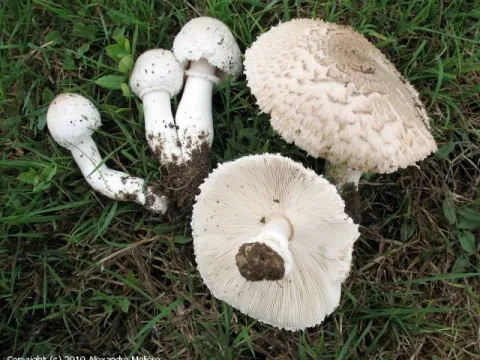
Leucoagaricus barssii
Leucoagaricus barssii
Leucoagaricus barssii is a species of fungus within the Agaricaceae family. It is a soil saprotroph, meaning it obtains its nutrients by breaking down organic matter in the ground.
What the section contains
Leucoagaricus barssii
Unlike true plant pathogens, this fungus does not attack living plant tissues. However, its presence is significant due to its impact on soil structure and aesthetic quality of turf.
The fungus develops an extensive network of mycelium that can colonize nutrient-rich garden soils very rapidly.
Taxonomically, it is distinguished by specific morphological features of its fruit bodies, making it a unique object of study for agricultural mycologists.
As a biological entity, it is highly adapted to human-modified landscapes where organic matter accumulates in the topsoil layer.
The most visible sign of its presence is the emergence of grey-brown scaly caps after rainfall. These mushrooms often appear in groups or organized patterns.
The formation of "fairy rings" is a classic symptom, where the fungal mycelium causes distinct changes in the growth and color of the surrounding turf.
If you disturb the soil, you may observe dense, white or greyish threads of mycelium penetrating the upper horizon of the ground.
Color changes in the flesh of the mushroom when bruised are important diagnostic characteristics for identifying this particular species.
The clustering of fruit bodies can create significant aesthetic issues on professional sports fields or residential lawns.
The growth of Leucoagaricus barssii is driven by the availability of high levels of organic matter, such as compost, manure, or woody debris.
High moisture levels in the soil are essential for the production of fruit bodies, which explains why they appear most frequently after periods of heavy rain.
The fungus thrives in moderate temperature ranges, typical of spring and autumn, allowing it to colonize effectively during the growing season.
Soil compaction can influence the distribution of the mycelium, as the fungus exploits existing soil pores to spread its biomass throughout the area.
Dispersal is primarily facilitated by wind-borne spores, allowing it to colonize new garden plots or park areas quite efficiently.
The harm caused by this fungus is primarily related to the degradation of the visual uniformity and structural health of turfgrass surfaces.
It can lead to the formation of hydrophobic patches, where the water-repellent nature of the mycelium prevents irrigation from reaching plant roots.
While not a direct pathogen, its competition for resources can negatively impact the health and vigor of lawn grasses.
Secondary metabolic products released by the fungus may temporarily inhibit the root development of delicate garden plants.
Increased maintenance costs associated with repairing damage and managing aesthetic issues are the main economic drawbacks for land managers.
Regular aeration is a primary cultural method to control the fungus by physically disrupting the mycelium and improving soil oxygenation.
Management of organic input is crucial; reducing the accumulation of raw organic material makes the soil less hospitable for the colony.
Early physical removal of fruit bodies before they release spores is a simple yet effective way to prevent further spread of the fungus.
In cases of severe infestation, specialized soil-applied fungicides may be considered, although their penetration through the soil matrix is often a challenge.
Maintaining a balanced fertilization program helps strengthen turf, ensuring that it remains competitive and resilient against fungal encroachment.