
Phomopsis
Diaporthe eres
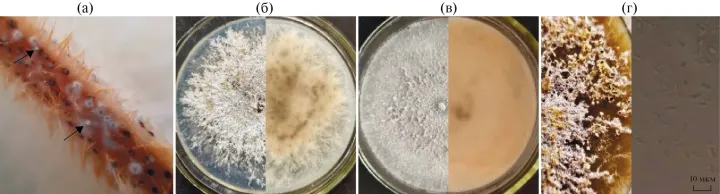
Description
Symptoms
Early symptoms include the appearance of necrotic spots on leaves, which gradually spread to petioles, stems, and flower heads. These lesions typically show a brown or dark gray color surrounded by a chlorotic halo.
Affected stems often exhibit softening, dark discoloration of the bark, and tissue cracking. Small black fruiting bodies, known as pycnidia, frequently develop within these lesions, serving as the primary source for further spore production.
In vineyards, the disease manifests as bleached internodes, bark splitting, and the dieback of shoots. Leaves may curl, yellow, and drop prematurely, causing significant stress to the entire grapevine structure.
A distinctive feature of Phomopsis is the "scorched" appearance of stem sections. Under high humidity, a characteristic white or grayish fungal mycelium may be visible within the cracks of the infected plant tissues.
Severe infestations often cause the structural integrity of the plant to fail, resulting in lodging. This loss of physical strength makes harvesting extremely difficult and reduces the overall yield potential of the field.
Pathogen
The causative agent of this disease is the fungus Diaporthe eres (anamorph Phomopsis spp.). It is a polyphagous pathogen capable of infecting a wide variety of agricultural, horticultural, and ornamental crops, including sunflowers, grapes, and soybeans.
The fungus persists in soil on infected crop residues, in seeds, and within the tissues of perennial plants in the form of mycelium, pycnidia, and perithecia. This high survival rate makes the pathogen extremely resilient in different environmental conditions.
Disease transmission occurs via spores (conidia) that are dispersed by wind, rain splashes, and insect vectors. Infection typically begins when spores land on susceptible plant tissues, entering through natural openings or wounds.
The fungus utilizes various enzymes and toxins to break down plant cell walls, facilitating the colonization of the host tissue. The infection process remains active throughout the entire growing season of the host plant.
Diaporthe eres can often exist as an endophyte, colonizing plant tissues without triggering immediate visible symptoms. The disease becomes apparent once the host plant experiences stress, allowing the fungus to rapidly expand its colony.
Conditions for development
The development of Phomopsis is highly favored by warm, humid weather conditions. Temperatures ranging from +20°C to +25°C combined with frequent rainfall create the optimal environment for spore germination and spread.
Extended periods of wet weather, such as heavy rain or prolonged dew, are critical for the progression of the disease. High relative humidity (above 80%) promotes the rapid production of conidia on the host surface.
Poor agricultural practices, such as excessive plant density, create a microclimate with stagnant air and constant moisture, which are ideal conditions for the disease to thrive and spread rapidly across the field.
Mechanical damage to plants during cultivation, weeding, or insect feeding provides entry points for the pathogen. Healthy, intact tissues are significantly more resistant to initial infection by the fungus.
Unbalanced plant nutrition, particularly excessive nitrogen fertilization, leads to succulent and rapid growth. These tissues are physically softer and lack the structural defenses needed to repel the invading Diaporthe eres mycelium.
Why it matters
Phomopsis causes severe economic losses, with yield reductions ranging from 30% to 50% depending on the severity of the outbreak. Total crop failure is possible in extreme cases of early-season infection.
Beyond quantity, the quality of the harvested produce is severely degraded. For instance, in sunflowers, the oil content decreases significantly while the acid value rises, making the harvest unsuitable for processing.
Stem breakage due to the infection leads to extensive lodging, which causes direct harvesting losses even if the crop is otherwise healthy. This complicates mechanical operations and increases the cost of harvesting.
In woody perennial crops, the disease leads to the gradual dieback of branches and the overall decline of the plant. Long-term infestation significantly reduces the productive lifespan of orchards and vineyards.
Seeds harvested from diseased plants often contain the fungal pathogen, serving as a primary source of inoculum for the next growing season and ensuring the persistence of the disease in the soil for years.
Protection
The primary strategy for controlling Phomopsis is the implementation of a proper crop rotation system. Avoiding the planting of susceptible crops in the same field for at least 4–5 years significantly lowers the pathogen load.
Utilizing resistant or tolerant cultivars is the most effective preventative measure. Modern breeding programs provide options that can substantially reduce the risk of infection and minimize the impact of the disease.
Cultural practices, such as deep plowing to bury crop residues and the timely removal of weeds and volunteer plants, are essential for sanitation. Reducing the amount of infected material helps break the disease cycle.
- Application of systemic fungicides during critical growth stages.
- Use of triazole and strobilurin-based chemical treatments.
- Regular field monitoring to detect early symptoms for prompt intervention.
- Effective pest management to prevent mechanical entry points for the fungus.
Integrated pest management (IPM) is crucial, as the disease is difficult to control once established. Preventative fungicide applications at specific growth stages are often necessary to protect the plant from early infections.
Discussion
No discussions yet — be the first.