
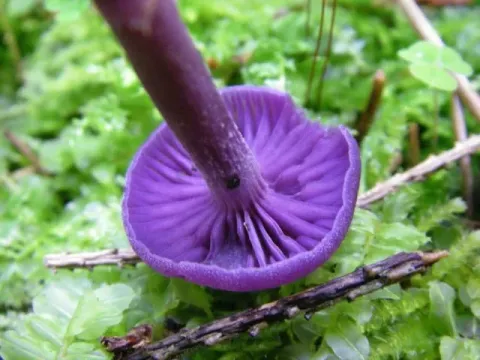
Laccaria
Laccaria
The genus Laccaria is not a plant disease or a pathogen; these are basidiomycete fungi belonging to the family Hydnangiaceae.
What the section contains
Laccaria
These mushrooms are well-known for their mycorrhizal properties, forming symbiotic associations with the roots of various woody plants.
They do not invade living plant tissues in a pathogenic way; instead, they exchange nutrients that support plant health.
The biology of Laccaria involves the development of small, often brightly colored fruit bodies that emerge from the soil.
Botanists and mycologists consider these fungi to be essential symbionts in many forest ecosystems globally.
Laccaria species thrive in moist environments and are commonly found in both coniferous and broad-leaved forests.
They require well-drained soil rich in organic matter to maintain the integrity of their mycelial networks.
Optimal growth and fruiting typically occur during rainy periods, as these mushrooms are highly moisture-dependent.
The spores are dispersed by wind and small invertebrates, allowing the species to spread across forest floors efficiently.
Their growth is synchronized with the seasonal development of their host tree roots, ensuring a constant exchange of nutrients.
There is absolutely no harm associated with Laccaria regarding agricultural, horticultural, or silvicultural plant health.
These fungi are considered beneficial because they help host trees absorb water and minerals from the soil.
There is no economic loss caused by the presence of these mushrooms; they do not cause decay or tissue necrosis.
They are not plant pathogens and pose no threat to the growth or productivity of any cultivated crop species.
In fact, the presence of Laccaria is often seen as a sign of a healthy, functioning mycorrhizal network in the soil.
Since Laccaria is not a disease, there is no need for control measures, fungicides, or any other eradication efforts.
The use of agricultural chemicals to remove these fungi is discouraged as it disrupts the beneficial soil ecology.
Manual removal of fruit bodies is the only method if aesthetics are a concern, but it does not affect the subterranean mycelium.
No prophylactic actions are required because these fungi contribute positively to the environment and plant vitality.
Efforts should focus on preserving natural soil health, which naturally supports the presence of these beneficial mycorrhizal species.