
Laccaria laccata
Laccaria laccata
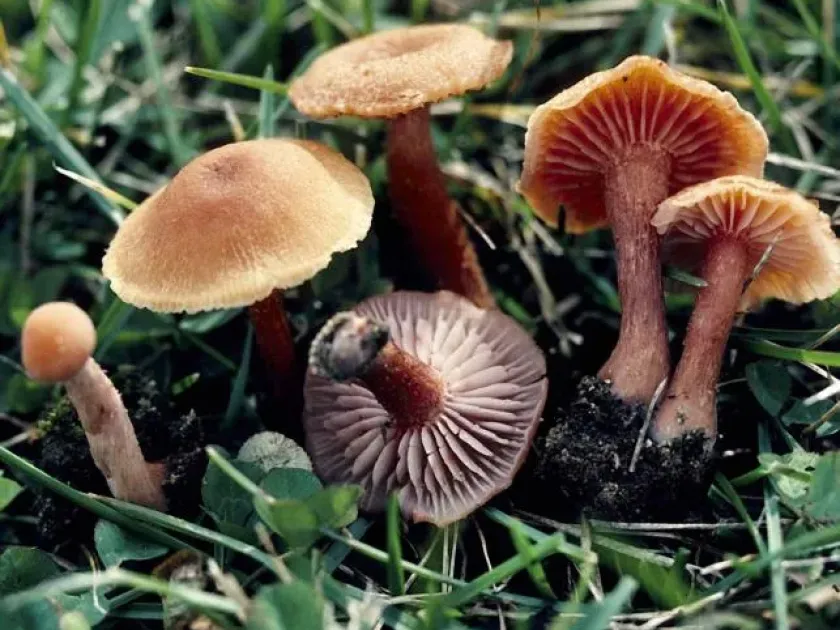
Description
Pathogen
Laccaria laccata, commonly known as the waxy laccaria, is a species of basidiomycete fungus. Importantly, it is not a plant disease. Instead, it is a well-known mycorrhizal fungus that forms beneficial symbiotic relationships with the roots of numerous woody plant species.
The fungus develops an ectomycorrhizal association, where the mycelium encases the root tips. This structure acts as an extension of the plant's root system, significantly improving the uptake of water, phosphorus, and nitrogen from the soil.
Biologically, Laccaria laccata is a pioneer species. It possesses high environmental plasticity, allowing it to establish itself in diverse soil types, including those that are relatively nutrient-poor or disturbed.
Unlike true pathogens that invade host tissues and cause necrosis, Laccaria laccata maintains a mutualistic balance. It depends on carbon sources provided by the host tree and provides essential minerals in return.
Therefore, classifying Laccaria laccata as a disease is scientifically inaccurate. It plays a critical role in forest health, seedling establishment, and long-term ecosystem stability.
Conditions for development
The development of Laccaria laccata is favored by cool, moist conditions with a preference for slightly acidic to neutral soil environments. It is frequently found in forests, nursery beds, and reforestation sites.
The fungus requires the presence of suitable host trees, such as conifers and various deciduous species. Mycelial activity peaks during the spring and autumn months when soil moisture levels are consistently high.
Spores are dispersed by wind and water, allowing the fungus to colonize new areas rapidly. Once established, the mycelium remains in the soil, effectively colonizing the root systems of young, developing trees.
Soil temperature is a key factor for the formation of visible fruiting bodies (mushrooms), which typically thrive in the range of 10 to 20 degrees Celsius. However, the underground mycelium remains active across a broader range of temperatures.
The presence of organic matter in the soil further supports the survival of the fungus, although its primary dependence remains the root exudates of its host plants.
Why it matters
Laccaria laccata causes no harm to agricultural crops or forest ecosystems. On the contrary, its presence is widely considered an indicator of a healthy, functioning soil ecosystem.
There are no known reports of this fungus causing root rot or any other pathogenic symptoms in trees. Observations of "dead" areas near mushrooms are usually related to soil compaction or other environmental stressors rather than fungal damage.
Scientific literature consistently highlights the benefits of ectomycorrhizae for reforestation efforts. Seedlings inoculated with Laccaria laccata often show higher survival rates and superior growth compared to non-inoculated ones.
Misidentifying this fungus as a pathogen can lead to unnecessary and harmful chemical applications. Using fungicides to eliminate this species would indiscriminately kill beneficial soil organisms.
In summary, there is zero evidence of any negative impact of Laccaria laccata on host plants, making it a valuable biological asset in forest management.
Protection
No control measures are necessary for Laccaria laccata, as it is a beneficial organism. Managing it as a pest would be counterproductive to the health of the host plants it supports.
If the appearance of fruiting bodies is aesthetically undesirable in a landscape setting, simple mechanical removal is sufficient. This does not harm the plant or the underlying root system.
Avoid the use of fungicides in areas where beneficial mycorrhizal fungi are present. Chemical control can lead to a collapse of the soil's natural microbial community, leaving plants vulnerable to actual pathogens.
For forestry and nursery applications, the management strategy is actually the opposite: promoting the presence of Laccaria laccata is encouraged to improve sapling health.
In conclusion, the best practice is to recognize the presence of this fungus as a sign of environmental health and to refrain from any intervention that might disrupt its symbiotic activity.
Discussion
No discussions yet — be the first.