
Kellermania leaf spot
Kellermania yuccifoliorum
The causal agent of this disease is the fungus Kellermania yuccifoliorum, a member of the Ascomycota phylum. This pathogen is highly specific, primarily targeting various species within the Agavaceae family.
What the section contains
Kellermania leaf spot
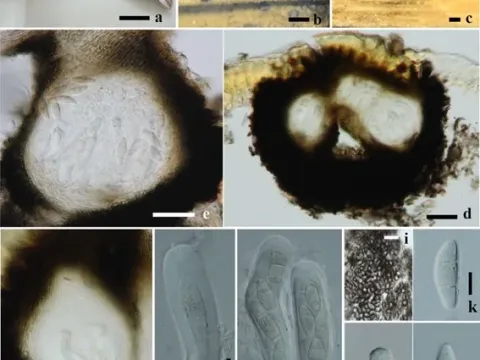
The fungus produces pycnidia, which are asexual fruiting bodies that release conidia. These spores are responsible for the primary and secondary infection cycles in susceptible plants.
The pathogen can persist in infected plant debris for extended periods, serving as a source of inoculum for subsequent seasons if sanitation protocols are neglected.
Once the spores land on a host, they germinate and penetrate the leaf epidermis, colonizing the underlying parenchyma tissue and causing significant cellular damage.
Dissemination occurs efficiently through splashing water during irrigation or rainfall, as well as via air currents within crowded greenhouse environments.
Initial symptoms present as small, discrete spots on the leaf surface. As the fungus colonizes the area, these spots expand, often becoming elliptical or irregular in shape.
A characteristic diagnostic feature is the development of a distinct dark border surrounding a lighter, necrotic center. In advanced stages, small, black, pin-head-sized pycnidia appear within the spots.
Heavily infected leaves begin to yellow at the margins, lose their turgidity, and eventually undergo complete senescence and tissue collapse.
Under humid conditions, the foliage can exhibit a rapid decline, significantly reducing the aesthetic and commercial value of the affected plants.
- Necrotic spots with dark margins.
- Visible black pycnidia on leaf lesions.
- Yellowing and loss of leaf turgor.
- Premature leaf drop.
- Stunted plant growth.
Kellermania yuccifoliorum thrives in conditions of high relative humidity and moderate temperatures, which are common in many greenhouse production environments.
Poor air circulation allows moisture to remain on the leaf surfaces for prolonged periods, providing the necessary conditions for spore germination and infection.
High planting density contributes to an unfavorable microclimate by increasing humidity and preventing proper foliage drying after watering cycles.
Stress factors such as improper irrigation, poor drainage, or low light intensity significantly decrease the plant's natural resistance to fungal invasion.
Mechanical injuries caused by insect feeding or handling provide direct entry points for the fungal hyphae to penetrate the protective waxy layer of the leaves.
The primary harm is the destruction of leaf tissue, which is detrimental for ornamental plants where foliage quality is the main market requirement.
The disease impairs the plant's photosynthetic capacity, leading to weakened physiological states, slow growth, and decreased overall vigor.
In cases of severe infestation, the disease can lead to total plant death, especially in young or sensitive cultivars, resulting in significant financial losses.
Managing the disease requires frequent chemical interventions, which increase production costs and demand careful adherence to application schedules and pesticide safety.
Furthermore, the persistent nature of the pathogen necessitates strict sanitation measures to prevent the buildup of inoculum within the growing facility.
Sanitation is the cornerstone of control. All infected plant parts should be removed promptly and destroyed by burning or deep burial to reduce the spore load.
Improve greenhouse management by increasing spacing between plants and ensuring optimal air circulation to reduce humidity levels around the foliage.
Chemical control involving fungicides, such as copper-based products or systemic triazoles, should be applied preventively or at the earliest onset of symptoms.
Implement a strict quarantine period for all new plant additions to ensure they are free from pathogens before introducing them into existing collections.
Maintain optimal plant health through balanced nutrition and appropriate watering practices to bolster the plant's internal defense mechanisms against potential infections.