
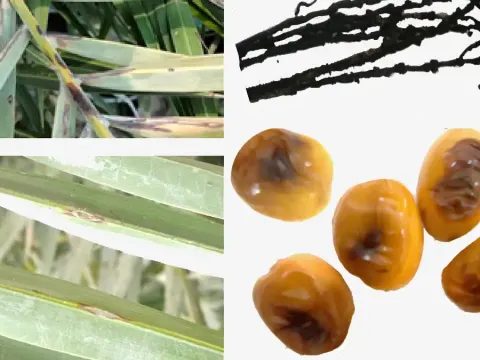
Khamedj
Mauginiella scaettae
The disease is caused by the fungus Mauginiella scaettae, a specialized pathogen belonging to the deuteromycetes group. It specifically targets the reproductive organs of the date palm, Phoenix dactylifera, causing significant agricultural damage.
What the section contains
Khamedj
The fungus colonizes the internal tissues of developing inflorescences, utilizing the host's nutrients for its own growth and reproduction. This interaction directly interferes with the biological processes required for fruit production.
Spore dissemination occurs primarily through wind currents, which carry the microscopic spores across long distances within a plantation. Additionally, insect pollinators play a significant role in spreading the fungus from infected to healthy trees.
Once inside the plant tissue, the mycelium proliferates rapidly, leading to cellular breakdown and decay. This aggressive colonization process results in the total destruction of the inflorescence structure before pollination can occur.
The pathogen is highly resilient and can persist in dried plant debris or on the palm stem bark throughout the dormant season. This ability to survive unfavorable conditions ensures the recurrence of the disease in subsequent growing cycles.
The first symptoms appear within the unopened spathes of the date palm. Affected tissues undergo necrotic changes, turning from a healthy state to a dark brown or grayish color, often appearing water-soaked.
Upon opening the spathe, a white or creamy-colored fungal layer is visible. This mass consists of abundant spores and mycelial growth, which serve as the primary source for further spread of the infection within the palm.
In later stages, the inflorescence branches become soft, rot, and emit a foul odor. The decay weakens the structure of the flower stalks, causing them to blacken and become extremely brittle to the touch.
The deformation of the inflorescence prevents successful pollination. Even if the palm appears healthy externally, the internal destruction of its reproductive organs results in complete fruit loss for the season.
- Darkening and necrosis of tissues within spathes.
- White or creamy fungal sporulation layer.
- Soft rot and foul smell of inflorescences.
- Deformation and brittle decay of flower stalks.
- Total failure of fruit setting.
High humidity and moderate temperatures during the inflorescence emergence phase are the primary triggers for Khamedj development. The pathogen thrives in conditions where moisture lingers around the emerging flower stalks.
Rainy weather during the pollination season significantly exacerbates the infection rate. Moisture trapped within the palm's crown creates an ideal microclimate for the spores to germinate and penetrate the plant tissues.
Poor orchard management, such as a lack of canopy thinning or ventilation, leads to stagnant air and humidity. These environmental conditions are highly favorable for the rapid proliferation of Mauginiella scaettae.
The timing of the pathogen's peak activity coincides with the plant's reproductive cycle, making the trees particularly vulnerable during early spring. Temperature fluctuations can influence the intensity and spread of the outbreak.
High-density planting configurations limit airflow and sunlight penetration into the center of the trees, promoting disease spread. Wind movement between closely spaced palms further facilitates the infection cycle.
The most severe impact of Khamedj is the total loss of the date crop. By destroying the inflorescences before they can be pollinated, the fungus effectively eliminates the reproductive output of the tree.
Economic consequences for date palm growers are devastating, with infection rates reaching nearly 100% in susceptible cultivars during severe outbreaks. This leads to a substantial decline in plantation profitability.
Repeated infections weaken the overall vitality of the palm tree. The energy diverted to localized decay and futile regeneration processes diminishes the tree's capacity for leaf growth and long-term health.
Managing the disease requires significant financial and labor investments for frequent inspections and chemical applications. These costs increase the production burden and reduce the overall efficiency of the agricultural business.
The persistent threat of the disease forces growers to shift toward less productive but more resistant palm varieties, ultimately changing the composition of plantations and long-term production goals.
Sanitation is the cornerstone of disease management. All infected inflorescences must be identified early and pruned immediately upon the first signs of tissue discoloration to prevent fungal spore release.
Disposal of infected material must be handled with care; all pruned parts should be removed from the site and burned. Keeping the orchard free of decaying plant matter is essential to lowering the annual infection pressure.
Preventive chemical treatments using copper-based or systemic fungicides can be applied to susceptible trees before the spathes open. This provides a protective barrier against initial spore colonization.
Improving canopy ventilation by removing dead leaves and debris helps reduce local humidity levels. Proper spacing and airflow make the environment less conducive to the survival and spread of the fungus.
Regular monitoring and integrated pest management (IPM) strategies are vital. Combining precise agricultural practices with diligent inspection ensures that outbreaks are managed locally before they become widespread epidemics.