
Kernoviae phytophthora
Phytophthora kernoviae
Description
Symptoms
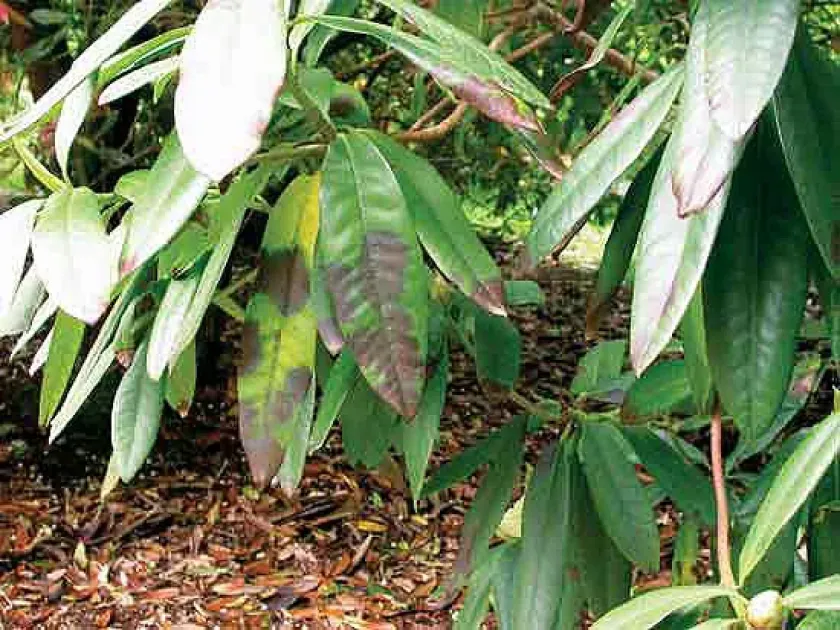
Initial symptoms include the development of dark, water-soaked necrotic lesions on leaves, often leading to premature leaf drop.
Lesions can extend to the petioles and stems, resulting in characteristic twig blight and gradual dieback of entire plant branches.
In mature trees, the pathogen often attacks the root collar, leading to the formation of bleeding cankers that expose the inner tissues.
Infection often causes shoot wilting, which is particularly evident in young plants under humid environmental conditions.
Microscopic examination of infected tissues during moist periods often reveals the presence of sporangia, confirming the activity of the pathogen.
Pathogen
The causal agent of this disease is the oomycete Phytophthora kernoviae, a fungus-like organism known for its significant virulence.
This pathogen has a broad host range, primarily affecting woody ornamental species like rhododendrons, as well as various forest tree species.
The organism reproduces through zoospores, which are motile spores capable of swimming in water films to infect new host tissues.
P. kernoviae is characterized by its persistence in the environment, capable of surviving for long periods in infested soil or plant debris.
Its genetic adaptability poses a constant threat, as the pathogen can evolve to circumvent traditional resistance mechanisms in plants.
Conditions for development
The spread and development of the disease are highly dependent on high humidity, rain, and cool-to-moderate temperature regimes.
Water-saturated soil and leaf surfaces provide the necessary aquatic environment for the zoospores to mobilize and locate their host.
Environmental conditions that favor frequent morning mists or prolonged dew are considered high-risk factors for infection cycles.
Dense canopies and poor air circulation in nurseries exacerbate the impact of the disease by maintaining high surface moisture for extended periods.
Long-distance dissemination is primarily human-mediated, occurring through the movement of infested nursery stock, soil, and contaminated equipment.
Why it matters
Kernoviae phytophthora causes severe economic losses in the horticultural industry by killing valuable woody ornamental plants.
In forest ecosystems, the pathogen threatens biodiversity by targeting sensitive tree species, leading to structural changes in plant communities.
The invasive nature of this oomycete necessitates strict international quarantine regulations to prevent further geographical spread.
Once established, the pathogen is extremely difficult to eradicate, often requiring the destruction of all plants within an infested zone.
The impact extends to nursery certification programs, which are frequently disrupted by the detection of this quarantine organism.
Protection
Prevention is the most effective management strategy, relying on the sourcing of clean, certified nursery stock from pathogen-free regions.
Rigorous sanitation measures, including the disinfection of tools, pots, and machinery, are essential to break the cycle of pathogen dispersal.
Early detection through systematic surveillance and diagnostic testing allows for the rapid containment of small, localized infection sites.
Cultural practices such as improving soil drainage and ensuring proper spacing between plants help to minimize moisture-related infection risks.
While chemical controls like phosphonate-based fungicides can be used, they are generally applied as a preventative tool rather than a cure.
Discussion
No discussions yet — be the first.