
Kernel smut of rice
Tilletia vittata
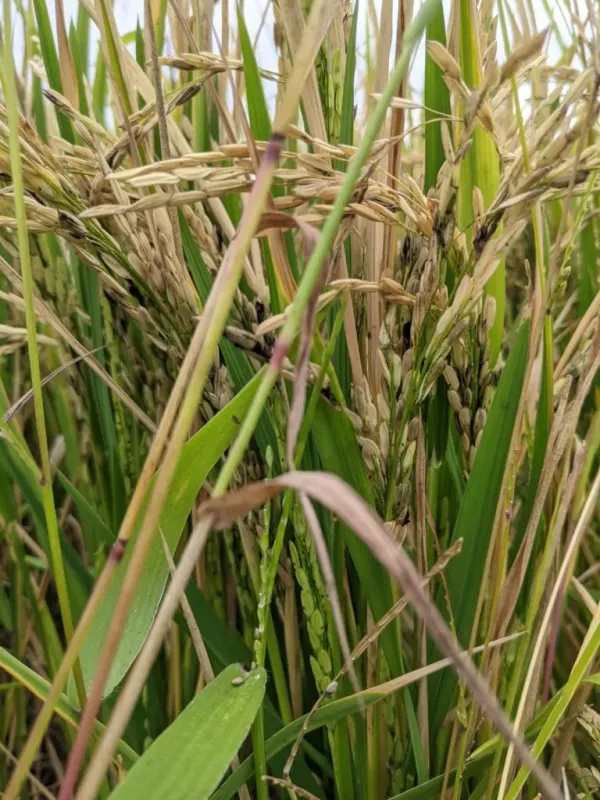
Description
Symptoms
The primary symptom of kernel smut in rice is the specific transformation of individual grains within the rice panicle.
Visually, affected kernels appear swollen and may eventually rupture, releasing a black, powdery mass of fungal spores.
The starch of the rice grain is gradually replaced by these dark brown or nearly black teliospores, characteristic of smut pathogens.
Infection is usually irregular, affecting only a portion of the grains in a panicle, which creates a patchy appearance during the harvest period.
When the infection is severe, the affected panicles become brittle, and the harvested grain loses both its nutritional quality and seed viability.
Pathogen
The pathogen responsible for this disease is a microscopic fungus known as Tilletia vittata, which belongs to the Basidiomycota phylum.
It is an obligate parasite that specializes in infecting rice crops, infiltrating plant tissues during the early stages of grain development.
The infectious inoculum primarily survives in the soil as dormant teliospores capable of enduring harsh environmental conditions for several years.
The biology of the pathogen is closely synchronized with the phenological stages of the rice plant, activating during the flowering and grain-filling periods.
The spread of the fungus in the field occurs mainly via wind dispersal of spores or through contaminated seed lots used for planting.
Conditions for development
High humidity and rainfall during the rice flowering stage are critical environmental factors that promote the development of Tilletia vittata.
The fungus thrives in moderate temperature ranges, which are common in many rice-growing regions during the reproductive phase of the crop.
Frequent precipitation facilitates the germination of spores and increases the likelihood of panicle infection significantly.
Poor agricultural practices, such as excessive nitrogen fertilization, can extend the vegetative growth phase and increase the plant's susceptibility.
Dense planting patterns and insufficient air circulation within the canopy create a microclimate that favors fungal sporulation and spread.
Why it matters
The primary economic impact is the direct reduction of yield due to the replacement of healthy grain with non-nutritive fungal spores.
The disease severely compromises the quality of commercial rice, as the presence of spores renders the grain unsuitable for human consumption.
Contaminated grain often develops an off-flavor and a dark discoloration, which significantly diminishes the market value and processing efficiency.
Seed lots harvested from infected fields lose germination vigor and serve as a dangerous source of inoculum for subsequent growing seasons.
In the event of an outbreak, crop losses can reach significant levels, negatively affecting the overall profitability of the rice-growing enterprise.
Protection
The foundation of effective management is the use of certified, disease-free seed to prevent the introduction of the pathogen into new fields.
Seed treatment with systemic fungicides prior to planting is a standard practice to eliminate surface-borne spores and protect emerging seedlings.
Crop rotation helps interrupt the life cycle of the pathogen, preventing the long-term buildup of teliospores in the field soil.
Field hygiene, including deep tillage to incorporate crop residues and the management of weeds, helps reduce local infection reservoirs.
When environmental conditions favor disease development, prophylactic application of fungicides during the booting stage can effectively reduce infection rates.
Discussion
No discussions yet — be the first.