
Junghuhnia
Junghuhnia
The genus Junghuhnia comprises several species of wood-decay fungi belonging to the family Phanerochaetaceae. These organisms are primarily white-rot agents that break down complex organic compounds in wood.
What the section contains
Junghuhnia
The pathogen reproduces via spores produced in the basidiocarps, which are typically resupinate or effused-reflexed. These spores are dispersed by wind currents, allowing for wide distribution.
Once established, the mycelium colonizes the woody tissue, secreting enzymes such as laccases and peroxidases. These enzymes effectively degrade lignin, resulting in the softening of the wood.
The fungus is highly resilient and can remain dormant in woody tissue for long periods. It primarily targets weakened or injured parts of the tree, such as pruning wounds or frost cracks.
Biologically, these fungi are essential for forest decomposition processes, but they become highly destructive when they colonize living ornamental or agricultural trees.
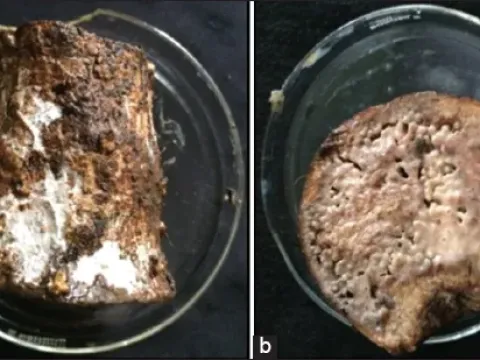
The most prominent sign is the appearance of fungal fruiting bodies (basidiocarps) on the surface of the trunk or larger branches. They often appear as crust-like or bracket structures.
Internally, the wood becomes bleached and loses its mechanical strength, turning into a fibrous, spongy, or stringy mass. This is the characteristic appearance of white rot.
Stunted growth and premature yellowing of leaves or needles are common external symptoms. These reflect the disruption of water and nutrient transport in the tree.
In advanced stages, the tree exhibits increased susceptibility to wind breakage. Cracks in the bark and the presence of oozing sap can also indicate deep-seated decay.
Cross-sections of infected trunks often show localized areas of degradation, sometimes outlined by dark, defensive zones where the tree attempted to wall off the infection.
Junghuhnia species thrive in environments with high humidity and stagnant air. Poorly ventilated orchards or dense urban plantings provide the perfect conditions for infection.
Mechanical injuries to the stem are the primary entry points. Without proper wound treatment, these areas become sites of rapid colonization by fungal spores.
Stress factors such as drought, nutrient deficiency, or prior damage by wood-boring insects significantly increase the vulnerability of the tree to this pathogen.
Warm and moist weather conditions during the growing season facilitate spore germination and mycelial growth, leading to widespread infection within a cluster of trees.
Proximity to decaying logs, stumps, or infected neighboring trees is a major risk factor for spread in both natural and managed forest ecosystems.
The primary impact of Junghuhnia is the structural collapse of trees. This poses significant safety hazards, especially in public spaces, parks, and residential areas.
In orchards, the fungus leads to severe financial losses due to the premature death of productive trees and the inability to harvest fruit from infected branches.
The infection is progressive and eventually terminal for the host tree. Once wood decay is extensive, there is no effective chemical treatment to reverse the process.
Furthermore, the fungus acts as a host for other pathogens and secondary pests, which exploit the weakened state of the tree to cause further damage.
Long-term presence of the fungus in a location can create a reservoir of inoculum, making it extremely difficult to establish healthy new plantings in the same area.
The foundation of management is early detection through regular visual inspections. Once fruiting bodies are spotted, the severity of the internal decay is usually already significant.
Pruning wounds and any mechanical breaks in the bark should be treated immediately with appropriate wound dressings or fungicidal pastes to seal the tissue.
Maintaining the overall health of the trees through proper fertilization and irrigation is crucial. A healthy tree can better defend itself against fungal invasions.
- Removal and destruction of all infected wood and stumps.
- Strict sanitation protocols, including the disinfection of tools with bleach or alcohol.
- Ensuring adequate spacing between trees to improve airflow.
- Monitoring for and controlling wood-boring insects.
In high-value landscapes, professional arboricultural management is required to monitor for early signs of decay and evaluate the safety of infected trees.