
Juniper chloroscypha
Chloroscypha chloromela
The disease is caused by the ascomycete fungus Chloroscypha chloromela. It is a specialized pathogen that primarily targets species within the Juniperus genus.
What the section contains
Juniper chloroscypha
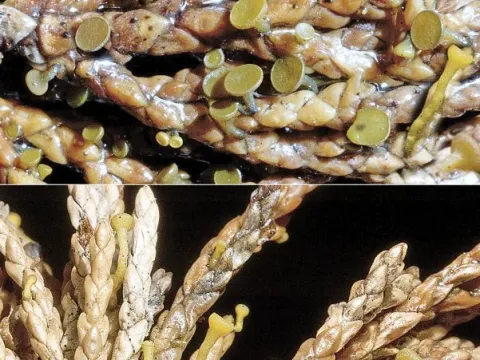
The fungus colonizes the needles of the plant, drawing nutrients from the host tissues. During its reproductive phase, it forms visible fruiting bodies known as apothecia on the needles.
These apothecia appear as small, olive-green to brown, cup-shaped structures. They are the primary diagnostic tool for identifying this specific fungal infection in the field.
The lifecycle relies on the production of ascospores, which are dispersed primarily by rain splash and wind. High humidity is a critical factor for successful infection.
The mycelium survives in infected tissues, including fallen needles and dead branches, allowing the fungus to persist in the environment from one season to the next.
The initial symptom of Chloroscypha chloromela infection is discoloration of the foliage. Infected needles turn yellow, eventually fading into a reddish-brown or dark brown color.
Upon closer inspection, particularly on the underside of the needles, you will find tiny, cup-like fungal fruiting bodies. These are distinct signs of the fungus present in the tissue.
As the disease progresses, needles begin to shed prematurely, leading to bare branches. This process can significantly compromise the aesthetic value of the juniper plant.
Severe infestations lead to the dieback of individual branches. If left unmanaged, the dieback can spread, affecting the structural integrity and shape of the entire juniper shrub.
- Yellowing and browning of needles.
- Small, olive-green cup-shaped apothecia.
- Premature needle drop.
- Dieback of twigs and branches.
- Loss of overall plant health and aesthetic appeal.
High humidity and moisture are the primary drivers of Chloroscypha chloromela outbreaks. The fungus thrives in environments where foliage remains wet for extended periods.
Dense planting designs often restrict airflow, creating a stagnant microclimate within the juniper crown. This trapped humidity is ideal for fungal spore germination and spread.
Plant stress also plays a significant role. Plants weakened by poor soil conditions, improper watering, or secondary pest infestations are much more susceptible to the disease.
Shaded locations or areas with poor morning light prevent dew from evaporating quickly, leaving the needles moist and vulnerable to infection for longer durations throughout the day.
The fungus is most active during periods of mild temperatures and frequent rainfall, typically during the spring and autumn months when conditions are most favorable for growth.
The primary concern with this disease is the degradation of the plant's decorative value. Junipers affected by the fungus lose their lush appearance, which is a major issue for landscaping.
Long-term infection leads to significant physiological stress. The loss of foliage reduces the plant's ability to photosynthesize, eventually resulting in stunted growth and weakened immunity.
The disease is highly contagious within a garden or nursery setting. If not addressed early, it can spread rapidly to healthy specimens, leading to large-scale losses.
In nursery production, this pathogen causes economic hardship, as infected stock must be discarded to prevent the further spread of the fungus to other healthy juniper varieties.
Restoring a damaged juniper is a slow process. Even with treatment, it may take several growing seasons for the plant to replace lost foliage and regain its natural form.
Sanitation is the most critical control strategy. Regularly remove and dispose of all infected twigs, branches, and fallen needles to eliminate the source of fungal spores.
Improve air circulation by spacing plants appropriately during installation. Proper pruning techniques can also help open up the crown to facilitate better airflow and light penetration.
Chemical control involves the application of fungicides, particularly those containing copper or systemic agents effective against ascomycetes, during periods of high disease pressure.
Provide optimal care to maintain plant vigor. A healthy juniper is far more capable of resisting fungal attacks compared to one struggling with environmental or nutritional deficits.
Avoid overhead irrigation, especially in the late afternoon or evening. Keeping the foliage dry overnight is a simple but highly effective way to prevent spore germination.