
Juniper Colpoma
Colpoma juniperi
The primary symptom of Juniper Colpoma is the discoloration of needles, which begin to turn yellow and eventually transition to a brown or necrotic state.
What the section contains
Juniper Colpoma
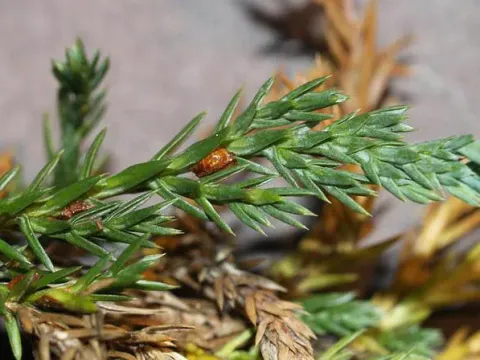
As the infection advances, specific fruiting bodies of the pathogen emerge on the surface of the needles and thin twigs as dark, longitudinal slits or small cushions.
These fruiting bodies are highly characteristic, appearing as hardened, black eruptions that break through the plant's epidermis during the peak of the disease cycle.
Needle drop usually follows the discoloration, resulting in a thinning canopy and the loss of the plant's aesthetic value, especially on lower, shaded branches.
In severe cases, the twigs become girdled by the fungal growth, causing the distal parts of the branches to wither and die back completely.
The disease is caused by the ascomycete fungus Colpoma juniperi, which acts as a specialized pathogen targeting the Juniperus genus.
The mycelium penetrates the host tissue, causing metabolic disruption and cellular breakdown, which leads to the visible symptoms of blight and necrosis.
Colpoma juniperi reproduces by producing ascospores, which are released and dispersed by wind and rain splashes to colonize new susceptible tissue on the same or neighboring plants.
The fungus is adapted to survive under varying climatic conditions, often remaining latent in infected tissue until environmental triggers initiate its reproductive phase.
The pathogen demonstrates high host specificity, meaning it focuses its evolutionary pressure specifically on juniper species, making it a persistent threat in suitable habitats.
High humidity and prolonged periods of wet weather are the most significant factors that promote the germination and spread of fungal spores.
Overcrowded plantings that limit air circulation create a microclimate with high moisture retention, providing perfect conditions for the pathogen to thrive.
Poor lighting conditions in the lower canopy prevent needles from drying out quickly after rain or dew, facilitating the penetration of the fungus into the plant.
Weakened host plants, suffering from drought stress, poor soil conditions, or previous physical damage, are significantly more susceptible to successful infection.
The disease is often most active during the cooler, wetter months of the year, which align with the fungal lifecycle and the dispersal period of its spores.
The aesthetic damage caused by Juniper Colpoma is significant, often rendering ornamental junipers unsightly and unsuitable for landscape purposes.
Continuous infection leads to the permanent loss of foliage and branch structure, which can permanently distort the natural shape of the plant.
In nursery environments, the pathogen can cause substantial economic losses by reducing the quality of plant stock and necessitating rigorous quarantine or disposal.
The overall vigor of the host plant decreases due to the chronic stress and energy loss required to fight the infection, making it vulnerable to secondary pests.
If left unchecked, the disease can spread throughout an entire plantation or garden, leading to the eventual decline and mortality of the host plants.
Sanitary pruning is the most critical control step, requiring the removal and immediate burning of all infected branches to reduce the inoculum load.
Improving the cultural environment is essential, which includes thinning out dense plantings to increase airflow and sunlight penetration into the center of the canopy.
Preventive application of fungicides, particularly those effective against ascomycetes, should be timed with the seasonal periods of high infection risk.
Maintaining optimal soil fertility and avoiding overhead irrigation helps to keep the foliage dry and the plants resilient against fungal colonization.
- Remove and incinerate all infected plant material.
- Improve air circulation through regular pruning.
- Apply copper-based or systemic fungicides.
- Avoid overhead watering of the juniper foliage.
- Monitor plants regularly during wet weather cycles.