
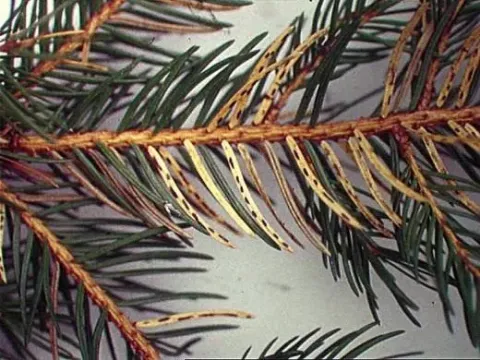
Fir needle cast
Hypoderma labiorum-aurantiorum
The disease is caused by the ascomycete fungus Hypoderma labiorum (and its variant Hypoderma labiorum-aurantiorum). This pathogen specifically targets the needles of various fir species, leading to premature needle shedding.
What the section contains
Fir needle cast
The life cycle of this fungus is centered on the needles, where it produces fruiting bodies known as apothecia. These structures release spores, which are then dispersed by wind and rain to infect new growth during favorable weather conditions.
Once the spores land on a healthy needle, they germinate and penetrate the epidermis, establishing a mycelial network. This mycelium gradually colonizes the interior tissues of the needle, disrupting its physiological functions.
The fungus is highly resilient and persists in infected plant debris, especially in fallen needles. This persistence ensures the pathogen remains present in the environment for multiple seasons, creating a recurring infection cycle.
Biological studies indicate that the fungus thrives during specific stages of the needle development, often causing the most significant damage when environmental conditions align with the period of high spore dispersal.
The primary symptom of fir needle cast is a visible discoloration of the needles, which fade from green to yellow, and eventually to a dull brown. This change often occurs in patches throughout the tree's canopy.
As the disease progresses, small, elongated black lines or spots appear along the length of the needles. These represent the developing fungal fruiting bodies, which are a hallmark diagnostic feature of Hypoderma labiorum.
Premature needle cast, where needles drop while still discolored or shortly after, is a common indicator. The lower branches of the tree are typically affected first, leading to a thin, sparse appearance in the lower crown.
Affected trees often show signs of reduced vigor, including shorter annual growth increments and a general thinning of foliage density. In severe cases, the needles become brittle and break off easily upon touch.
Proper diagnosis is crucial to distinguish this fungal infection from natural needle senescence, which occurs uniformly and lacks the presence of dark, crusty apothecia on the needle surface.
High relative humidity and prolonged periods of wetness on the needle surface are the primary triggers for infection. Frequent rainfall, dew, and fog provide the water necessary for spore germination and colonization.
Poor air circulation, often found in densely planted stands or neglected gardens, creates a stagnant microclimate that encourages fungal development. Dense foliage prevents the needles from drying quickly after rain.
Moderate temperatures, typically between 15°C and 20°C, are optimal for the growth of the fungus. While the pathogen is sensitive to extreme conditions, it can survive through many temperate microclimates.
Trees that are under stress, whether due to poor soil fertility, waterlogging, or insect infestation, are significantly more susceptible to infection. A compromised immune system makes the fir tree unable to restrict fungal growth.
The accumulation of infected leaf litter under the canopy is a critical factor for disease spread. Maintaining a clean site is essential, as the debris acts as a primary reservoir for the fungus to overwinter.
The most immediate harm is the significant reduction in photosynthetic surface area due to premature needle loss. Without sufficient foliage, the tree cannot produce enough energy to sustain its metabolic requirements.
Chronic infection results in a weakened tree that is highly vulnerable to secondary infestations by bark beetles or wood-boring insects. These opportunistic pests can quickly kill a tree already stressed by needle cast.
In forestry, the disease leads to significant losses in timber volume and quality. The stunted growth and reduced health of the trees make the wood less suitable for industrial or structural purposes.
For ornamental landscapes, the aesthetic impact is severe. Trees lose their dense, vibrant green foliage, which diminishes their value and often requires expensive maintenance or the removal of the tree.
Large-scale outbreaks can alter the forest structure, potentially leading to the replacement of valuable fir stands with less desirable vegetation, thereby impacting both ecological diversity and recreational utility.
Cultural control, particularly the sanitation of the planting site, is the most effective preventative measure. Collecting and destroying fallen needles significantly reduces the inoculum level for the following year.
Pruning and site management to improve air circulation are vital. Ensuring adequate spacing between trees allows sunlight and wind to penetrate the canopy, keeping the foliage dry and unfavorable for the fungus.
Fungicidal treatments, such as copper-based sprays or systemic fungicides, should be applied strategically. The best timing is during the period of spore release, typically early in the spring as new foliage is developing.
Promoting tree vigor through balanced fertilization and appropriate irrigation helps the tree develop its own natural defenses. Healthy trees are significantly better at containing and recovering from fungal outbreaks.
Monitoring the trees frequently for early signs of infection allows for localized control. Removing and disposing of individual branches that show severe infection can help prevent the spread of spores to the rest of the tree.