
Fir phytophthora root rot
Phytophthora abietivora
Description
Symptoms
The initial symptom of infection is stunted growth and chlorosis of the needles, which gradually change color from dark green to yellowish-brown or grey.
At later stages, massive needle drop is observed, starting from the lower branches and spreading upwards, giving the fir tree a sickly appearance.
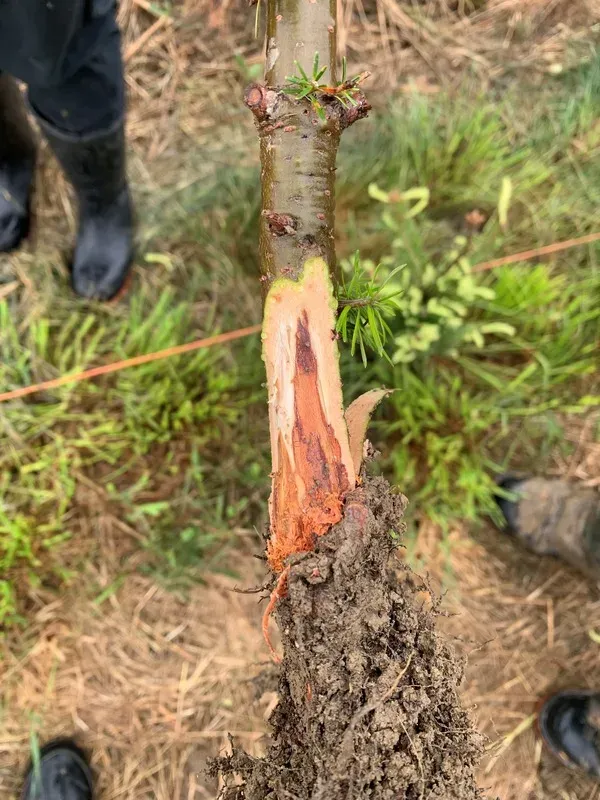
Upon inspection of the root collar, one may notice darkening of the bark and the presence of moist, decaying patches that often emit a distinct acidic odor.
Cross-sections of the roots of affected trees show a reddish-brown discoloration of the tissues, which confirms the necrotic process caused by the colonization of the pathogen.
- Wilting of terminal shoots;
- Softening and peeling of bark near the root collar;
- Disruption of water uptake to the crown;
- Gradual drying and death of the entire tree.
Pathogen
The causative agent of this disease is the oomycete Phytophthora abietivora, which belongs to the genus Phytophthora. This soil-borne pathogen specializes in attacking the root systems of conifer species, particularly various types of fir.
The biology of the pathogen is closely linked to an aquatic environment: its zoospores are capable of actively moving through soil moisture, using flagella to locate the roots of the host plant.
The mycelium of this fungus-like organism penetrates root tissues, destroying vascular bundles and causing necrotic processes. The infection can persist in the soil for a long time in the form of oospores, which are resistant to adverse environmental conditions.
The pathogen spreads through contaminated soil, infected nursery stock, and by water runoff from rain or irrigation in areas with poor drainage.
This species of Phytophthora acts as a specialized parasite, destroying the root bark and cambium, gradually blocking the flow of nutrients to the upper parts of the tree.
Conditions for development
The main factor triggering the disease is excessive soil moisture resulting from a lack of proper drainage or a high water table.
The pathogen is most active during prolonged rainy periods, as soil saturated with water creates an ideal environment for the mobility and survival of zoospores.
Temperature conditions ranging from +15°C to +25°C are optimal for the development of Phytophthora abietivora and the subsequent infection of healthy fir specimens.
Poor horticultural practices, such as planting seedlings too deep or soil compaction around the root zone, significantly increase the risk of rapid disease spread.
Stressful conditions caused by nutrient deficiencies or pest infestations lower the natural resistance of the tree, making it more vulnerable to Phytophthora penetration.
Why it matters
Phytophthora root rot is an extremely dangerous disease, as root damage is often discovered too late when the tree is already beyond saving.
The disease leads to the inevitable death of the plant, as the damaged root system loses its ability to absorb water and mineral elements, causing physiological drought.
The infection can spread throughout nurseries and plantations, causing massive losses of young trees, which causes significant economic damage to the forestry sector.
Affected specimens become a source of infection for neighboring healthy trees, especially if they are planted in dense groups with shared root systems.
Contamination of a plot with Phytophthora abietivora makes the soil unsuitable for planting conifers for a long period due to the high persistence of spores in the soil.
Protection
To prevent Phytophthora, it is necessary to purchase only healthy nursery stock that has undergone phytosanitary inspection.
The key preventive measure is the organization of proper drainage on the site to prevent water stagnation in the root zone of the fir trees.
Upon detecting the first signs of the disease, the soil should be drenched with specialized fungicides containing fosetyl-aluminum or metalaxyl, strictly following dosage instructions.
In case of severe infection, the plant should be immediately removed from the site, including the root ball, and destroyed by burning to prevent the further spread of spores.
It is recommended to use biological products based on Trichoderma to improve soil health and increase the natural immunity of conifers against soil-borne pathogens.
Discussion
No discussions yet — be the first.