
Fireweed rust
Pucciniastrum epilobii
Description
Symptoms
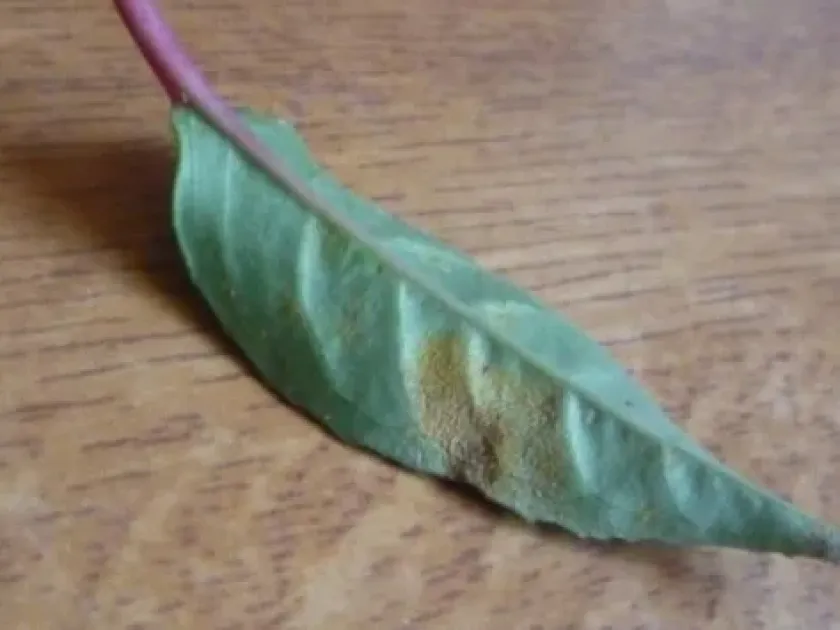
The symptoms of fireweed rust typically appear in mid-summer. The most recognizable sign is the presence of small, yellowish-orange pustules, known as uredinia, on the underside of leaves.
These pustules contain massed spores, which appear as a dusty, bright-colored powder. Corresponding yellow spots often become visible on the upper surface of the leaves.
As the infection progresses, the leaves may show signs of chlorosis, curling, and distortion. The integrity of the leaf tissue is compromised, leading to premature senescence.
In severe cases, the infected leaves dry out and drop prematurely. This results in a significant reduction of the plant's leaf area and overall vigor.
- vibrant orange dusty pustules on leaf undersides;
- yellowish spots on the top side of leaves;
- leaf curling and distortion;
- premature leaf drop;
- reduced growth rate and plant stunting.
Pathogen
The disease is caused by the rust fungus Pucciniastrum epilobii, a member of the Pucciniastraceae family. It is a specialized pathogen that primarily targets the Epilobium genus, especially the common fireweed.
The life cycle of this pathogen is heteroecious, meaning it requires different host plants to complete its complex development. Coniferous trees, such as fir, often serve as alternate hosts for the fungus.
The fungus overwinters in infected plant debris or on living host tissues. In the spring, spores are wind-dispersed, initiating the primary infection on newly emerged fireweed shoots.
Biologically, the pathogen thrives by invading the intercellular spaces of the host leaves. It extracts nutrients, which disrupts the photosynthetic capability of the infected tissues.
The fungal development is tightly coupled with the host's physiological state. Once established, the fungus produces specialized structures that facilitate the rapid spread of secondary infections during the growing season.
Conditions for development
Fireweed rust thrives under conditions of high humidity and moderate temperatures. The fungus requires persistent moisture, such as dew or rain, for the spores to germinate on the leaf surface.
Periods of prolonged fog or frequent summer rainfall are highly conducive to the spread of the disease. These environmental conditions facilitate the rapid germination and infection processes.
Densely planted areas or wild stands with poor air circulation create a microclimate that remains humid for longer periods, providing a perfect environment for fungal growth.
Proximity to conifer-dominated forests increases the infection risk significantly, as these trees serve as reservoirs for the rust fungus.
Plants under stress, whether due to nutrient deficiency or drought, are generally more susceptible to the infection compared to healthy, well-nourished specimens.
Why it matters
The disease causes significant economic loss, particularly when fireweed is harvested for commercial tea production. The rust renders the leaf tissue unfit for high-quality processing.
The disruption of photosynthesis prevents the plant from accumulating necessary secondary metabolites, which are essential for the therapeutic and aromatic qualities of fireweed.
Significant leaf loss leads to a reduction in total harvest yield. In cases of severe outbreaks, the entire crop may be rendered useless for commercial sale.
Repeated yearly infections can weaken the plant's root system, leading to decreased survival rates in overwintering stages and eventual decline of the stand.
The impact is cumulative, as the disease pressure builds up within the area over time, necessitating stricter management practices to keep the stand productive.
Protection
Effective management begins with spatial isolation of fireweed stands from alternate host trees like fir. Avoiding these areas for cultivation reduces the initial inoculum pressure.
Maintaining adequate spacing between plants improves air circulation, which helps foliage dry faster after rain or dew, thereby reducing the chances of spore germination.
Sanitation is critical; all infected plant debris should be removed and destroyed at the end of the season to minimize the carry-over of spores for the next year.
If chemical control is necessary in a commercial setting, ensure that only approved fungicides are used and that all application guidelines are strictly followed to ensure safety.
Improving the overall health of the crop through balanced fertilization, particularly with adequate potassium, can help plants build natural defenses against fungal invasion.
Discussion
No discussions yet — be the first.