
Fir broom rust
Melampsorella caryophyllacearum
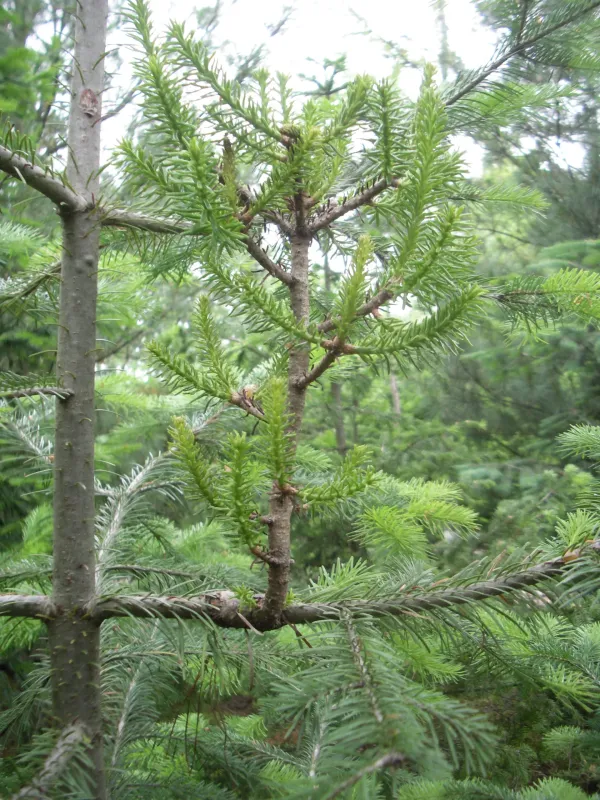
Description
Symptoms
The most distinctive symptom is the formation of witches' brooms, which are dense clusters of hypertrophied, stunted, and profusely branched shoots.
Needles on the affected branches are typically smaller, chlorotic, and may have a yellowish hue compared to the deep green foliage of healthy branches.
During the early summer, bright orange aecia (spore-bearing structures) appear on the undersides of the needles within the witches' broom area.
The stems or branches harboring the fungal mycelium often show significant swelling, cankers, or abnormal growth patterns that lead to structural weakness.
These broom formations remain on the tree for many years, progressively increasing in size and significantly altering the architecture of the host canopy.
Pathogen
The disease is caused by the rust fungus Melampsorella caryophyllacearum, which requires two distinct hosts to complete its complex life cycle.
The primary host is the fir tree (Abies spp.), where the fungus becomes systemic and persists in the woody tissues for the entire life of the tree.
The alternate hosts are herbaceous plants from the Caryophyllaceae family, including genera such as Stellaria and Cerastium.
The fungus is an obligate parasite, drawing essential nutrients from the host's living cells while causing the characteristic tissue deformation.
Spore production occurs in stages, with aeciospores spreading the infection to the alternate host, while other stages reinfect the fir trees.
Conditions for development
High humidity and cool, wet spring weather provide the ideal environment for the germination of fungal spores and the subsequent infection of new host tissues.
Dense, poorly ventilated forest stands create a stagnant microclimate that promotes the long-term survival and spread of the fungus.
The presence of susceptible Caryophyllaceae species in the immediate vicinity of fir trees facilitates the annual cycle of spore transmission.
Young, rapidly growing trees or those stressed by environmental factors are generally more susceptible to successful fungal colonization.
Adequate water availability during the period of new shoot development is critical for the fungus to establish its perennial mycelial colonies.
Why it matters
Fir broom rust drains energy from the tree by diverting nutrients towards the production of the abnormal broom structures rather than healthy growth.
The structural integrity of the wood is often compromised by cankers and internal decay, leading to wind breakage and reduced timber quality.
In heavily infected trees, the foliage density decreases over time, resulting in a decline in photosynthetic capacity and overall tree vigor.
The diseased areas provide entry points for secondary pathogens and wood-boring insects, which can further accelerate the decline of the host tree.
In nursery settings, systemic infection can lead to stunted development, making seedlings unsuitable for outplanting and reforestation efforts.
Protection
The primary method of control is the systematic pruning and destruction of infected branches to remove the inoculum source from the site.
Silvicultural practices, such as thinning, help to improve air circulation and reduce the humidity levels that favor fungal spore germination.
Avoiding the planting of fir trees near sites heavily infested with alternate hosts (stellaia and chickweed) can significantly lower infection rates.
Regular monitoring and early detection of witches' brooms are essential for preventing the spread of the disease to adjacent healthy trees.
- Prompt removal and disposal of infected tissues.
- Improvement of stand hygiene and tree spacing.
- Sanitation protocols in nursery production.
- Weed management to reduce alternate host populations.
Discussion
No discussions yet — be the first.