
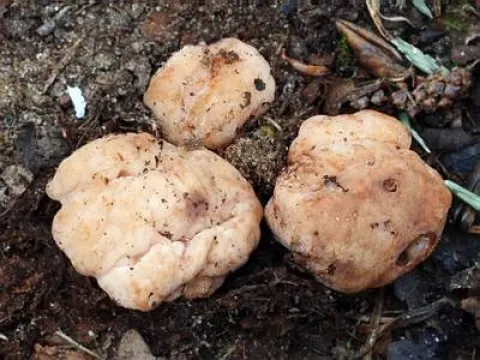
Hydnotrya tulasnei
Hydnotrya tulasnei
Hydnotrya tulasnei is an ascomycetous fungus belonging to the Discinaceae family. It is recognized as a soil-borne pathogen that can cause significant damage to the root systems of various tree species in forest nurseries and woodlands.
What the section contains
Hydnotrya tulasnei
The fungus develops a mycelium within the root zone, where it interacts with the host plant. Unlike mutualistic mycorrhizal fungi, Hydnotrya tulasnei can act as a parasite, negatively impacting the host's physiological functions.
Its life cycle involves the formation of subterranean fruiting bodies, known as apothecia, which contain spores. These spores are highly resistant to environmental stress and can persist in the soil for extended periods.
The dissemination of the fungus occurs primarily through soil water, movement of contaminated soil, and human activity. The pathogen is capable of colonizing weakened roots, eventually causing structural decay.
Studies show that its biological activity is tied to the presence of decaying organic matter and root exudates in the soil. Under favorable conditions, the mycelium can rapidly colonize the rhizosphere of susceptible hosts.
Visible symptoms often begin with a general lack of vigor in seedlings, including stunted growth and pale foliage. These signs indicate that the root system is failing to support the plant's metabolic needs.
Upon examination, roots affected by the fungus exhibit necrosis and tissue discoloration, often appearing dark brown or black. The loss of fine feeder roots is a hallmark of the damage caused by the pathogen.
In the soil surrounding the affected roots, one may find small, irregular, and folded fruiting bodies. These are often difficult to detect due to their subterranean nature and resemblance to soil clumps.
Advanced stages of infection result in premature yellowing and dropping of leaves or needles. In mature trees, the loss of root function can lead to crown thinning and increased susceptibility to secondary pests.
Field diagnosis usually requires carefully washing the root system and examining it for fungal growth or characteristic tissue decay. Laboratory analysis is necessary to confirm the identity of the fungus.
The development of Hydnotrya tulasnei is highly dependent on soil moisture levels. Waterlogged and poorly drained soils provide an ideal environment for the fungus to spread and colonize roots.
Moderate temperatures ranging between 15°C and 22°C are optimal for fungal growth. During these intervals, the risk of new infections significantly increases in damp and shaded nursery environments.
Soil structure plays a critical role, as compacted and low-oxygen soils favor the pathogen. The presence of abundant decaying organic matter can also act as a nutrient reservoir for the fungus.
Mechanical injuries to the root system, often caused by improper handling or root-disturbing pests, create entry points for the pathogen. Once introduced, the fungus can proliferate rapidly within the damaged tissues.
The density of planting also influences the rate of spread. In crowded nursery beds, spores can easily move from one seedling to another through the soil layer, leading to the formation of localized infestation patches.
The most immediate harm caused by this fungus is the loss of seedlings in forestry operations. High mortality rates lead to significant financial losses and require expensive replanting procedures.
Infected trees suffer from reduced nutrient and water uptake, resulting in diminished annual growth increments. This physiological stress makes trees more vulnerable to extreme weather conditions like drought.
The fungus disrupts the natural balance of soil microbial communities. By inhibiting the development of beneficial mycorrhiza, it degrades the soil's potential for natural forest regeneration and productivity.
Infested areas become reservoirs of inoculum, which can lead to long-term site contamination. This makes the affected soil unsuitable for the cultivation of sensitive tree species for several years.
The indirect costs associated with monitoring, soil remediation, and the loss of land utility are substantial for forestry managers, especially when the disease outbreak is widespread.
Effective management begins with proper site selection and soil drainage improvements. Reducing soil moisture is the most efficient way to suppress the development and spread of Hydnotrya tulasnei.
Strict quality control during the selection of planting stock is essential. Only vigorous, asymptomatic seedlings should be used to minimize the introduction of the pathogen into new areas.
Chemical control involving systemic fungicides applied to the soil can be used as a targeted measure when an infestation is detected. It is crucial to follow local regulations and application guidelines.
Sanitation practices, such as cleaning all tools and machinery between work areas, are vital to preventing the spread of spores. This simple step is highly effective in managing the disease footprint.
Encouraging a diverse soil microbiome by using compost or biological agents like Trichoderma species can create a competitive environment that discourages the dominance of the pathogen.