
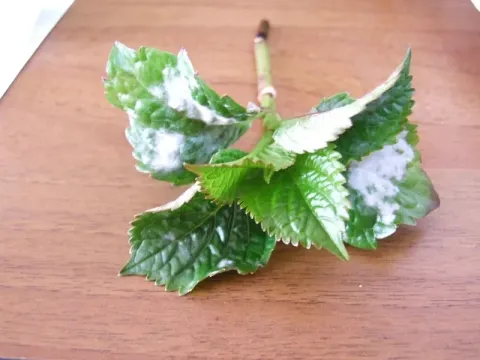
Hydrangea powdery mildew
Erysiphe hydrangeae
The disease is caused by the obligate parasite Erysiphe hydrangeae, a species of fungus that specifically targets hydrangea species and their relatives.
What the section contains
Hydrangea powdery mildew
This pathogen survives on the host plant by extracting nutrients through microscopic structures known as haustoria, which penetrate the epidermal cells.
The fungus produces masses of conidia, which act as the primary spores responsible for the rapid spread of the disease during the growing season.
The mycelium grows externally on the plant tissues, appearing as a characteristic white or greyish dusty layer that covers the foliage and stems.
Overwintering occurs primarily through the production of specialized structures called chasmothecia, which allow the fungus to survive in dormant buds or debris until the next spring.
The primary symptom is the appearance of white, powdery spots on the upper leaf surface, which look like a fine dusting of flour or talcum powder.
As the infection progresses, these spots expand and coalesce, eventually covering the entire leaf, which then may turn yellow or brown and wither away.
Young, developing shoots can become stunted, distorted, or curled, and the overall plant growth slows significantly due to the metabolic burden of the infection.
Floral development is often severely hampered, leading to deformed or necrotic inflorescences that fail to display the plant's characteristic beauty.
- White, dusty mold patches on foliage.
- Leaf curling, twisting, and premature yellowing.
- Stunted shoot elongation and structural deformation.
- Necrotic spots on leaves and stems.
- Reduced flowering and poor aesthetic quality.
Hydrangea powdery mildew thrives in environments with high humidity and moderate temperatures, typically between 18°C and 25°C.
Poor air circulation, often caused by overcrowding shrubs or planting in dense, low-light areas, provides the perfect microclimate for rapid fungal spread.
Fluctuating temperatures and damp nights contribute to the activation of dormant spores and increase the likelihood of recurring infection throughout the season.
Plants under high nitrogen stress, which exhibit lush, soft new growth, are significantly more susceptible to being colonized by the pathogen.
Excessive overhead watering during evenings can leave moisture trapped on foliage, facilitating the germination of fungal spores on the leaf surfaces.
The fungal mat blocks essential sunlight and reduces the leaf's ability to undergo photosynthesis, thereby starving the plant of critical energy.
Severe infestations weaken the hydrangea's overall structural integrity, making it more vulnerable to secondary infections and winter damage.
The aesthetic value of the garden is severely degraded as the foliage turns sickly and the characteristic vibrant blooms fail to develop or fully open.
Untreated infections can lead to the eventual dieback of entire branches, permanently altering the shrub's shape and reducing its lifespan.
Persistent infestations deplete the plant's carbohydrate reserves, resulting in significantly reduced vigor and poor blooming performance in subsequent years.
Sanitation is the first line of defense; it is crucial to remove and dispose of infected leaves and prune away heavily damaged branches to lower inoculum levels.
Ensuring proper plant spacing and thinning out the canopy improves air movement, which helps keep the foliage dry and limits fungal colonization.
Apply specialized fungicides at the first sign of symptoms, focusing on products that provide both preventative and curative activity against powdery mildew.
Rotate fungicides with different modes of action to prevent the fungus from developing resistance, ensuring more effective long-term disease management.
Maintain plant vigor through balanced irrigation and nutrient management, avoiding excessive nitrogen fertilization that promotes overly succulent, vulnerable growth.