
Hydnum
Hydnum
Description
Symptoms
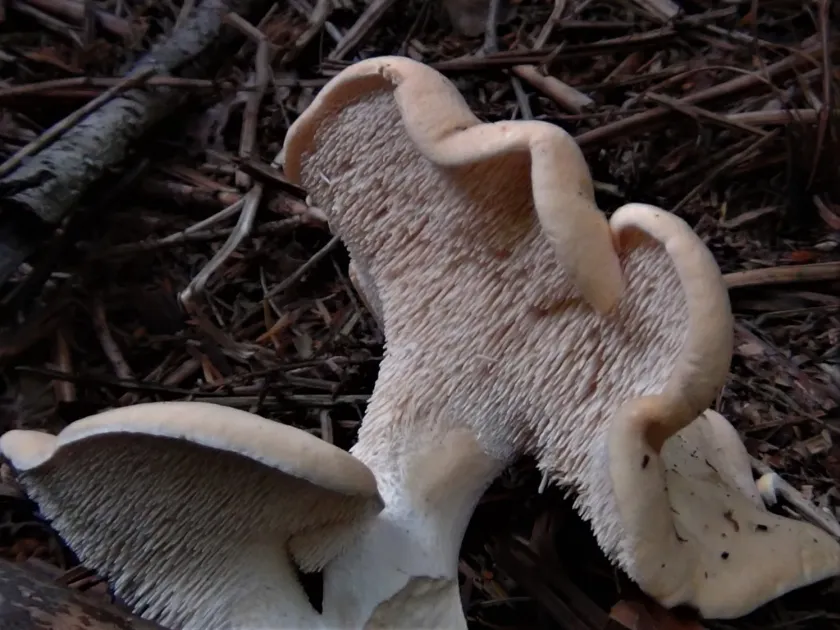
The most diagnostic sign of an infestation is the emergence of fleshy, often cream or orange-colored fruiting bodies featuring distinct downward-pointing spines.
Internal symptoms include the development of white or brown rot within the trunk or branches, causing the wood to lose its structural integrity and firmness.
Externally, affected plants often show symptoms of decline such as chlorosis, thinning of the canopy, and premature leaf drop due to impaired water transport.
Cankers or necrotic patches on the bark may develop, serving as entry points for further damage or as sites where the fungus emerges.
Branches may become brittle and break under minor wind loads, indicating advanced internal decay caused by the fungal colonization.
Pathogen
Hydnum is a genus of fungi belonging to the Hydnaceae family, known primarily as wood-decaying organisms that can affect weakened or stressed woody plants.
As a pathogen, it is characterized by the presence of a spiny hymenophore on the underside of its fruiting bodies, which produces spores for dispersal.
The fungus typically initiates infection through wounds, pruning cuts, or bark cracks that expose the underlying wood to colonizing mycelia.
Once established, the mycelium breaks down structural components of the tree such as lignin and cellulose, leading to decay of the internal woody tissue.
The biology of Hydnum is adapted to saprotrophic or opportunistic parasitic lifestyles, allowing it to survive in dead wood before attacking living trees.
Conditions for development
Hydnum fungi thrive in environments characterized by high humidity, poor air circulation, and moderate ambient temperatures favorable for mycelial growth.
Woody plants experiencing environmental stress, such as drought or waterlogging, are significantly more susceptible to infection by these fungi.
Improper pruning techniques that leave large, untreated wounds provide an open pathway for fungal spores to reach the inner woody tissues.
The presence of necrotic wood, fallen logs, or old stumps in the vicinity provides a constant source of inoculum for the spread of the pathogen.
Dense planting schemes that reduce sunlight and airflow create a microclimate that promotes the development and sporulation of the fungus.
Why it matters
The primary harm caused by Hydnum is the structural degradation of the host plant, leading to increased risk of trunk failure and limb breakage.
By disrupting the xylem and phloem, the fungus severely limits the plant's ability to transport water and nutrients, resulting in gradual decline.
Prolonged infection reduces the lifespan and productivity of orchards and forest stands, causing significant economic losses for growers.
Beyond physical damage, the fungus renders the plant a reservoir of spores that can threaten adjacent healthy vegetation in the nursery or garden.
Advanced rot is often irreversible, necessitating the removal and destruction of the infected specimen to protect the remaining plantation.
Protection
Effective management begins with rigorous sanitation, which includes the prompt removal and disposal of all infected wood and fruiting bodies.
All pruning wounds should be treated with appropriate sealants or fungicides to prevent opportunistic colonization by fungal pathogens.
Strengthening the plant's health through optimal irrigation and balanced fertilization can enhance its natural resistance to fungal invasion.
Regular monitoring of the site for early signs of decay allows for targeted intervention before the fungal infection becomes systemic.
- Maintain proper plant spacing to ensure adequate airflow and light penetration.
- Disinfect pruning tools with a bleach solution between trees to prevent cross-contamination.
- Avoid damaging the bark of trees during maintenance activities to prevent entry points.
Discussion
No discussions yet — be the first.