
Hydrangea rust
Pucciniastrum hydrangeae
Description
Symptoms
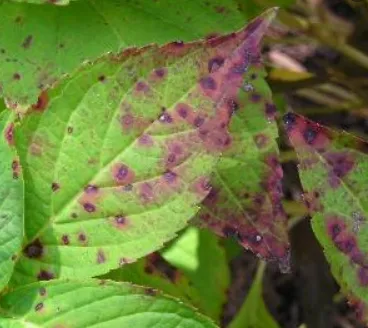
The most prominent sign of hydrangea rust is the appearance of small yellow or light brown pustules on the underside of leaves. These structures contain mass amounts of spores and are the hallmark of the infection.
On the upper side of the leaf, directly opposite the pustules, necrotic spots with yellow halos typically form. As the infection progresses, leaves may turn yellow, curl, and drop prematurely.
In cases of severe infestation, the underside of the leaves becomes covered in a rusty, powdery coating of spores. This severely impairs the plant's aesthetic value and overall vigor.
While stems are less commonly affected, symptoms can appear on young shoots in environments with high humidity. This indicates an advanced stage of infection that requires immediate intervention.
Early symptoms are often mistaken for nutrient deficiencies. Careful examination of the underside of the foliage is necessary to detect the presence of fungal pustules before they spread to other parts of the plant.
Pathogen
The causative agent of this disease is the fungus Pucciniastrum hydrangeae, which belongs to the group of rust fungi. This is a highly specialized pathogen that specifically targets plants of the Hydrangea genus.
The life cycle of the fungus involves the production of several types of spores, allowing it to survive in various environmental conditions. During the growing season, it spreads through air currents, infecting healthy plant tissues.
The fungus penetrates the leaf tissue through stomata, developing a mycelium within the intercellular spaces. Once mature, the fungus ruptures the leaf epidermis, creating characteristic pustules that release spores.
As an obligate parasite, this fungus requires living tissue to thrive. In the absence of host plants, it remains in the soil or leaf debris, waiting for conditions suitable for re-infection.
Understanding the biology of Pucciniastrum hydrangeae is essential for effective management. Its ability to overwinter in garden waste makes sanitation a primary component of disease control.
Conditions for development
High humidity and moisture are the primary drivers of Pucciniastrum hydrangeae development. The fungus requires water films on the leaf surface for spores to germinate and infect the plant.
Temperatures ranging from +18°C to +25°C create the optimal environment for the rapid spread of the disease. Cool, wet weather patterns often lead to significant outbreaks in gardens.
Poor air circulation within crowded plantings creates a stagnant microclimate where humidity remains trapped in the foliage. This environment is perfect for fungal colonization and rapid sporulation.
Over-fertilization with nitrogen can lead to succulent, tender tissue growth that is more susceptible to fungal penetration. Additionally, planting hydrangeas in deeply shaded, non-ventilated areas increases the risk of rust.
Lack of proper sanitation, such as leaving diseased foliage on the ground, allows the pathogen to survive through the winter. These spores become active again as soon as the warm, moist spring weather arrives.
Why it matters
The primary damage caused by hydrangea rust is the loss of aesthetic value. Because hydrangeas are often grown for their ornamental beauty, disfigured leaves significantly diminish their landscape impact.
Chronic infection reduces the plant's photosynthetic capacity, leading to weakened growth. This stress makes the hydrangea less capable of storing energy, ultimately reducing its cold hardiness for the winter.
Rust weakens the plant's overall immune system, making it more vulnerable to opportunistic secondary infections like powdery mildew or various forms of root and stem rot.
If not managed, the disease can quickly spread throughout a collection of hydrangeas. The ease with which spores travel through the air makes it a threat to entire garden beds.
In nursery settings, hydrangea rust is a major economic burden. Infected plants are usually unsalable, leading to direct financial losses and the need for costly containment and eradication measures.
Protection
The first step in controlling hydrangea rust is the immediate removal of infected plant parts. These materials should be destroyed or discarded far from the planting site to prevent reinfection.
Improve air circulation by pruning and proper spacing. Avoid overhead irrigation, as wetting the foliage encourages spore germination; instead, direct water to the base of the plant.
Systemic fungicides containing copper, triazoles, or strobilurins are effective in treating and preventing the disease. Applications should be timed to coincide with high-risk weather conditions.
Maintain rigorous garden sanitation by raking and removing all fallen leaves in the fall. Cleaning the area around the base of the shrubs effectively reduces the potential inoculum for the following season.
- Water at the base of the plant to keep foliage dry.
- Sanitary pruning and removal of debris.
- Preventative application of copper-based fungicides.
- Ensuring proper spacing to improve ventilation.
Discussion
No discussions yet — be the first.