
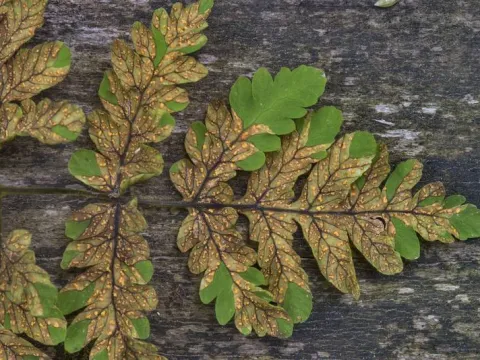
Hyalopsora rust
Hyalopsora
Hyalopsora is a genus of rust fungi belonging to the family Pucciniastraceae. These specialized pathogens are primarily known for infecting various species of ferns, completing their life cycle by developing inside the host tissues.
What the section contains
Hyalopsora rust
The fungus produces mycelium that colonizes the leaves of the host plant. Over time, it develops characteristic fruiting structures known as sori, which serve as the primary source for spore dispersal.
The life cycle of the pathogen often involves the formation of urediniospores and teliospores. These reproductive units are adapted for wind dispersal, allowing the disease to spread rapidly across fern populations.
This fungus is highly host-specific, meaning it has evolved to thrive exclusively on certain fern species. This specialization allows it to efficiently tap into the nutrients of the host plant while avoiding immediate detection.
During the dormant season, the fungus can survive in infected plant debris, ensuring its persistence in the environment and readiness to infect new growth as soon as conditions improve.
The primary symptom of a Hyalopsora infection is the appearance of small, yellow to orange-brown pustules on the undersides of the fern fronds. These pustules represent the fruiting bodies of the fungus.
As the infection progresses, the surrounding leaf tissue may turn yellow or develop necrotic patches. The leaves lose their natural vigor and start to show signs of structural decline.
In severe cases, the undersides of the fronds become densely covered with spore masses. When touched or shaken, the leaves release a fine, dust-like powder consisting of thousands of microscopic spores.
The visible deterioration of the fronds is accompanied by an overall loss of aesthetic value. Infected plants often show stunted growth and may fail to produce new, healthy fronds during the growing season.
Early diagnosis is crucial, as the symptoms are often restricted to the lower leaf surface, which can lead to the disease being overlooked until significant damage has already occurred.
Hyalopsora thrives in environments with high humidity and moderate temperatures. Prolonged periods of damp weather, frequent misting, or heavy rainfall create optimal conditions for spore germination.
Poor ventilation is a critical factor in the development of the disease. In densely planted areas or greenhouses with limited airflow, the moisture trapped on leaf surfaces allows the fungus to establish itself easily.
The infection is most prevalent during the active growing season when new, succulent leaves are forming. These young tissues are highly susceptible to penetration by the fungal hyphae.
The presence of old, infected leaf litter from the previous season provides a steady source of inoculum. If this debris is not cleared, the fungus remains ready to strike as soon as the environment becomes favorable.
Temperatures ranging from 15°C to 25°C are often ideal for the rapid development of the pathogen, which can lead to sudden, severe outbreaks within a confined planting area.
The main impact of Hyalopsora is the significant loss of aesthetic appeal for ornamental ferns. This is particularly devastating for commercial nurseries and professional landscaping projects where appearance is paramount.
Photosynthesis is drastically reduced due to the destruction of healthy leaf tissues. This weakens the entire plant, making it less capable of storing the energy required for healthy growth and winter survival.
Repeated or severe infections can lead to the death of the plant, especially in young or stressed specimens. The loss of foliage reduces the plant's ability to recover, often necessitating total removal.
The high rate of spore production ensures that the infection spreads quickly to neighboring healthy plants, potentially causing a cascade of disease throughout a collection or garden plot.
Beyond the direct impact on the fern, the disease can attract secondary pests and opportunistic pathogens, further complicating the health management of the entire horticultural collection.
Proactive cultural management is the first line of defense. This includes the regular removal and destruction of all infected fronds and plant debris to minimize the available spore load in the area.
Proper spacing and good air circulation are essential for minimizing moisture accumulation on foliage. It is recommended to switch from overhead watering to irrigation at the base of the plant to keep the leaves dry.
In cases where the disease is detected, systemic fungicides belonging to the triazole class or traditional copper-based products can be effective if applied early in the infection cycle.
Maintaining a healthy environment through adequate ventilation in greenhouses significantly reduces the risk of mass outbreaks. Regular monitoring of the foliage for signs of pustules is critical.
If an outbreak is detected, affected plants should be isolated immediately to prevent the spread to healthy sections of the garden, allowing for targeted treatment and management of the site.