
Hyaloria
Hyaloria
Description
Symptoms
The primary sign of Hyaloria infection is the appearance of characteristic light spots on the leaf blade, which eventually acquire a watery structure. In the places of mycelium localization, the leaf tissue loses turgor and begins to yellow prematurely.
On the underside of the leaf, upon careful examination, one can find a powdery or velvety coating consisting of hyphae and reproductive organs of the fungus. Gradually, these zones become necrotic, forming holes or dry patches that contribute to the general weakening of the plant.
When stems are affected, a change in tissue color to a darker shade is observed, which indicates a disruption of the vascular system. The plant slows down its growth rate, terminal buds may deform, and the overall development of the crop becomes stunted.
In advanced cases, the disease spreads to reproductive organs, including flowers and young ovaries. This leads to mass fruit dropping and a significant loss in the market quality of agricultural products even at the ripening stage.
Disease diagnosis is often difficult due to the similarity of symptoms with other fungal diseases, such as powdery mildew or septoria. It is important for an agronomist to carry out regular crop monitoring to detect the first outbreaks of infection.
Pathogen
The causative agent of the disease is a microscopic fungus Hyaloria, belonging to the group of basidiomycetes. In phytopathology, this genus is classified as a specific parasite that affects mainly the tissues of higher plants.
The life cycle of the pathogen includes an active mycelial growth phase, which penetrates into the intercellular spaces of the host organism. The fungus is characterized by the presence of hyaline spores, which ensure rapid spread of the infectious agent in agrocenoses.
This type of pathogen is capable of persisting in plant debris for a long time, entering a dormant state when unfavorable external factors occur. By its biological nature, it is an obligate or facultative parasite depending on the specific host plant species.
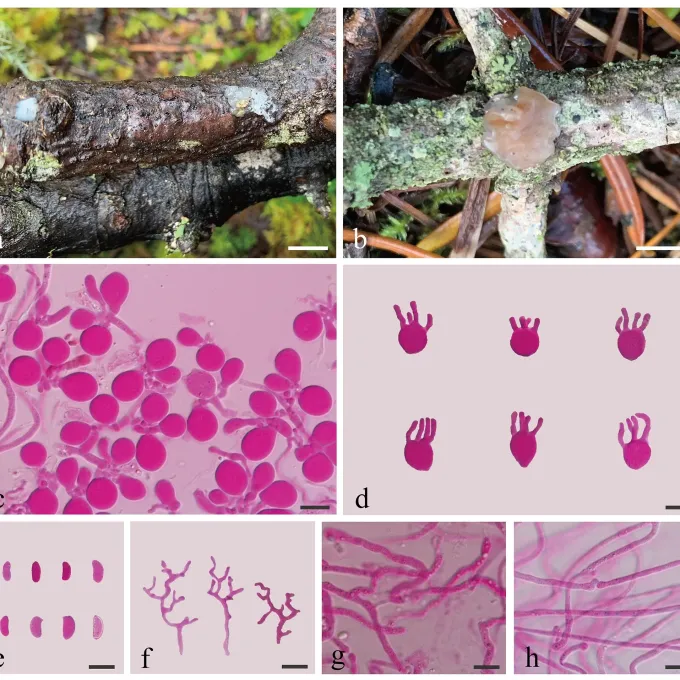
Morphologically, Hyaloria colonies often appear as a whitish or translucent coating, which gave the genus its name. The genetic plasticity of the fungus allows it to adapt to different microclimatic conditions, which complicates the breeding process for developing resistant varieties.
In laboratory conditions, pathogen identification is carried out by analyzing sporulation under a microscope. Specialists note that a high concentration of spores in the air is the main indicator of an active infection focus in a field or greenhouse.
Conditions for development
The development of Hyaloria is favored by high relative humidity, exceeding 75-80 percent. In conditions of stagnant air and poor ventilation in dense crops, the risk of disease outbreaks increases significantly.
The optimal temperature range for aggressive pathogen spread is from +18 to +24 degrees Celsius. Fluctuations between night and day temperatures, which provoke dew formation, create an ideal environment for spore germination on leaf surfaces.
Violation of agricultural practices, such as excessive planting density, excessive nitrogen fertilization, and lack of crop rotation, contribute to the accumulation of infectious background in the soil. Weak plants without immunity become the most vulnerable targets.
The infection is easily transmitted by wind, rain droplets, and through tools during maintenance work. It is important to consider that the presence of weeds serves as a reservoir for maintaining the fungus population in the off-season.
Prolonged periods of rain during the active vegetative growth phase of the crop critically increase the probability of epiphytotic development. Under such conditions, the pathogen is capable of covering significant crop areas in just a few days.
Why it matters
The main damage caused by Hyaloria consists in the reduction of the healthy photosynthesizing leaf surface area. This leads to a disruption of the carbohydrate production process and a sharp drop in the overall productivity of the affected plant.
The disease negatively affects the quality of commercial products, reducing their shelf life and nutritional value. Affected fruits and vegetables spoil faster during transportation and storage, which leads to direct losses for the farm.
In case of mass infection, Hyaloria can lead to the loss of a significant portion of the harvest, making further cultivation of the crop in that area unprofitable. Weakened plants become less winter-hardy and suffer more often from secondary pests.
Accumulation of toxic metabolic products of the fungus in plant tissues can lower the taste characteristics of the produce. In some cases, contaminated products do not pass sanitary control and are declared unsuitable for sale.
Economic damage also includes costs for expensive fungicide treatments and additional labor costs for eliminating disease foci. Preventive measures are often cheaper than fighting the consequences of an epidemic.
Protection
The basis of protection against Hyaloria is the observance of proper crop rotation, which excludes returning a crop to the same field earlier than in 3-4 years. This interrupts the fungus's life cycle, denying it access to its usual food source.
It is important to select resistant varieties and hybrids that have passed state certification for planting. High-quality seed material, free from infection, is the first barrier to the development of pathogenic microorganisms.
The use of systemic and contact fungicides is effective in the early stages of the disease. Agronomists are recommended to alternate preparations with different mechanisms of action to prevent the development of pathogen resistance.
Agricultural measures include deep plowing of crop residues and regular weed control, which can act as intermediate hosts of the disease. Optimal plant density improves ventilation and reduces humidity in the surface layer.
Regular sanitary pruning and timely removal of affected specimens allow localizing outbreaks of infection. Preventive treatments with microbiological preparations also show high efficiency in integrated plant protection systems.
Discussion
No discussions yet — be the first.