
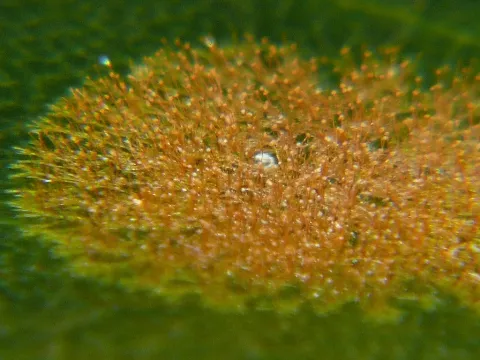
Haptophytes
Haptophyta
Haptophyta, commonly known as haptophytes, are a major group of unicellular eukaryotes that can pose significant challenges in hydroponic agricultural systems.
What the section contains
Haptophytes
While primarily aquatic organisms, they can adapt to greenhouse environments where recirculating nutrient solutions provide an ideal habitat for their proliferation.
These organisms are characterized by the presence of a haptonema, a unique thread-like structure that aids in attachment to various surfaces and nutrient capture.
In a controlled environment, they function as opportunistic pathogens that compete with crops for light and space while altering the chemical balance of the solution.
Their ability to form dense biofilms on internal components of irrigation systems makes them a persistent biological threat to intensive vegetable production.
The primary visual sign of infestation is the appearance of a slimy, often greenish or brownish film on the inner surfaces of irrigation pipes and pump housings.
Plants affected by the presence of these algae often display chlorosis, reduced vigor, and a noticeable decline in their overall growth rate compared to healthy controls.
The nutrient solution itself may become turbid or emit a distinct odor, indicating a high concentration of algal biomass and their metabolites.
Root systems may exhibit signs of stress, such as browning or reduced hairiness, as they struggle to absorb nutrients amidst the competing microbial population.
Surface contamination on the growing medium or rockwool can impede proper aeration, leading to localized oxygen deficiency in the rhizosphere.
Exposure of nutrient solutions to direct or diffuse sunlight is the most significant factor driving the rapid development of haptophyte populations.
High relative humidity and stable warm temperatures within the greenhouse provide an environment that supports continuous vegetative growth of these algae.
Excessive levels of phosphorus and nitrogen in the nutrient solution act as fertilizers that accelerate the formation of massive algal blooms.
Poorly designed systems with stagnant water zones or insufficient turnover rates become hotspots for colonization and subsequent spreading throughout the greenhouse.
Failure to sanitize equipment between growing cycles allows dormant stages or spores to persist, initiating new outbreaks at the beginning of the next crop season.
Haptophytes cause damage by competing with crop plants for essential mineral nutrients, effectively reducing the efficacy of expensive fertilizers.
The excretion of metabolic byproducts and toxins into the solution can induce chemical stress in plants, leading to fruit drop or stunted development.
Mechanical harm is significant, as the accumulation of algal biofilms causes frequent clogging of drippers, emitters, and micro-filters, disrupting irrigation schedules.
These algae serve as a substrate for opportunistic bacteria, facilitating the onset of root-zone diseases that would otherwise be manageable in cleaner systems.
Economic losses arise from decreased yield quality and the increased operational costs associated with frequent cleaning and replacement of plumbing components.
The primary defense strategy is the complete light-proofing of all reservoirs, pipes, and channels to deprive the algae of their necessary photosynthetic energy.
Periodic chemical sanitation using hydrogen peroxide-based agents is highly effective at destroying biofilms without leaving harmful residues on the crops.
Installing high-performance filtration systems and UV sterilizers significantly reduces the concentration of algal cells in the recirculating nutrient flow.
Monitoring nutrient concentrations and maintaining optimal pH levels helps minimize the biological advantage that these algae have over the cultivated plants.
- Use opaque, UV-resistant materials for all water-carrying components.
- Implement routine system-wide disinfection protocols.
- Install inline UV-C lamps to inhibit algal cell division.
- Regularly inspect and clean filters to prevent biomass buildup.
- Optimize nutrient solution strength to avoid excess accumulation.