
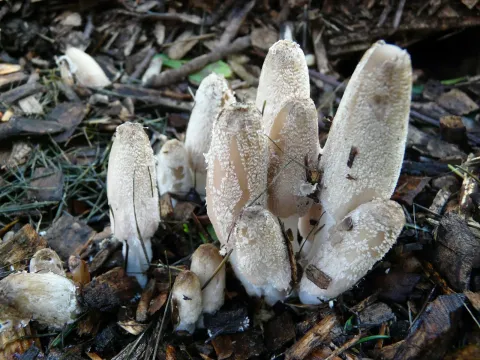
Hare's-foot inkcap
Coprinopsis lagopus
The Hare's-foot inkcap (Coprinopsis lagopus) is a saprotrophic fungus known for its role as a competitor in various substrates. In agricultural settings, it is often identified as a fast-growing occupant of manure-based or organic composts.
What the section contains
Hare's-foot inkcap
Biologically, the organism thrives on nitrogen-rich organic matter. It does not act as a direct parasite to living crops, but its presence signals an imbalance or poor sterilization of the growing environment.
The mycelium of Coprinopsis lagopus colonizes organic materials rapidly, creating a dense network that consumes available nutrients. This makes it a significant competitor in mushroom farming, where it displaces desired species.
The fungus is characterized by a very short life cycle, quickly transitioning from spore germination to the production of transient, delicate fruiting bodies. This rapid progression allows it to exploit temporary niches in a substrate.
Understanding this fungus is important for maintaining high-quality growing standards. It is considered an indicator species for specific moisture and nutrient levels within the agricultural substrate.
Development is heavily favored by high moisture levels in the substrate. Overwatering or improper drainage in greenhouses creates the perfect conditions for the mycelium to establish itself.
The fungus thrives within a temperature range of +18°C to +25°C. In such conditions, spores can germinate and initiate colonization of the organic material within just a few days.
Poor ventilation in greenhouse environments promotes the growth of this species. Stagnant, humid air allows for high spore density, which facilitates the rapid spreading of the fungus across cultivation beds.
Inadequate pasteurization of the substrate is the most common cause of infestation. If the compost is not heated sufficiently to kill existing spores, the Hare's-foot inkcap will inevitably appear once moisture is added.
High nutrient availability, especially free amino acids and simple sugars in the compost, provides an immediate food source. This encourages the fungus to expand until the readily available organic material is exhausted.
The primary damage caused by this fungus is the competitive exclusion of valuable mushroom crops. By occupying space and utilizing nutrients, it prevents the development of commercial fungus cultures.
The appearance of large numbers of fruiting bodies creates a sanitary challenge in industrial growing rooms. This requires extra labor to clean the facilities and properly dispose of the affected substrate.
It can degrade the physical structure of the substrate, turning it into a texture unsuitable for plant or fungal growth. This change in structure disrupts water retention and aeration, which are vital for crop health.
While not a direct pathogen to plants, the presence of the fungus can indicate a breakdown in sterile protocol. This necessitates a full review of growing procedures to avoid further loss of production.
Economic losses are mainly tied to crop failure or significant yield reduction in cases of heavy infestation. Frequent cleaning and substrate disposal also add to the overall operating costs of the farm.
Rigorous pasteurization of the growing substrate is the most effective control measure. Heating the compost to approximately +60°C for a set duration ensures that all biological contaminants, including spores, are destroyed.
Maintaining optimal humidity levels is essential. Keeping the air and substrate moisture within recommended ranges prevents the fungus from gaining a foothold in the growing environment.
Improving airflow and ventilation helps to reduce surface moisture. Drier conditions make it difficult for the fruiting bodies to emerge and help to inhibit overall mycelial growth.
The use of fully mature and well-composted organic matter reduces the risk of colonization. Properly stabilized compost is less attractive to Coprinopsis lagopus compared to fresh, raw materials.
Strict sanitation and hygiene practices, including regular disinfection of tools and surfaces, are critical. By preventing the entry of spores into the cultivation area, farmers can effectively manage this problem.