
Hare's ear
Otidea onotica
Description
Symptoms
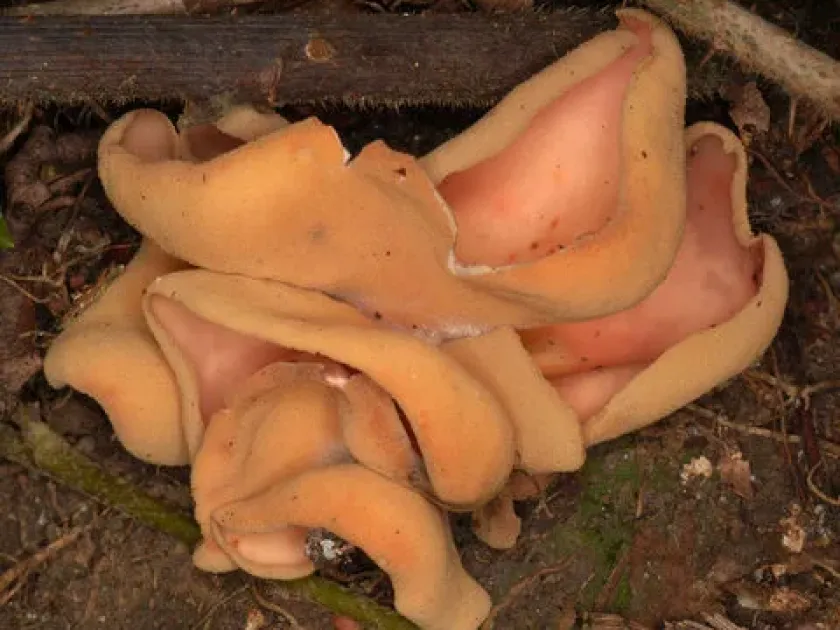
The most distinctive sign of this fungus is its fruiting body, which features an elongated, notched, and folded shape reminiscent of a hare's ear.
The fruiting bodies typically exhibit vibrant ochre, yellow, or orange-pink colors, especially towards the base, and have a smooth or slightly floury surface.
These fungal structures can reach heights of up to 10 cm and are often found growing in clusters or solitary, nestled within mossy areas or shaded woodland floors.
Unlike parasitic fungi that leave necrotic spots, wilted leaves, or stunted growth on host plants, this species grows independently of any plant host.
Observation of the fungal fruiting body shows no signs of tissue destruction in surrounding plants, confirming its status as a non-pathogenic inhabitant of the habitat.
Pathogen
Otidea onotica, commonly known as the Hare's ear, is an ascomycete fungus belonging to the Otideaceae family. It is crucial to clarify that this fungus is not a plant pathogen.
It is classified as a saprotroph, an organism that obtains nutrients by breaking down non-living organic matter such as decaying leaves, twigs, and forest litter.
The fungus does not parasitize living plants, and it possesses no mechanism to infect agricultural or horticultural crops. Consequently, it poses no threat to plant health.
Its biological cycle is centered on the decomposition of organic material, which plays a vital role in nutrient cycling within forest ecosystems.
Since it lacks the ability to damage living tissues, Otidea onotica is considered a beneficial component of the forest floor, contributing to soil fertility rather than causing plant disease.
Conditions for development
Otidea onotica thrives in environments characterized by high humidity, moderate temperatures, and significant accumulations of decaying organic material.
It is predominantly found in deciduous and mixed forests where the soil is rich in humus and protected by a canopy that maintains consistent moisture levels.
The peak period for the development of these fruiting bodies is from late summer through early autumn, following periods of consistent rainfall.
Environmental factors such as prolonged drought, soil compaction, or excessive exposure to sunlight inhibit the fungus's ability to fruit and develop.
Because it requires specific forest conditions to thrive, it is rarely observed in agricultural fields or highly managed urban landscapes lacking rich organic layers.
Why it matters
The Hare's ear fungus causes no harm to agricultural, ornamental, or forest plants. It is completely benign in the context of plant health management.
Concerns regarding this fungus are usually based on misidentification by those unfamiliar with fungal species, but scientific evidence confirms its lack of pathogenicity.
It does not consume vital nutrients from crops, nor does it secrete substances that could adversely affect the growth of nearby vegetation.
There are no recorded economic losses associated with this species; in fact, its ecological role is strictly limited to soil enrichment and organic decomposition.
The presence of Otidea onotica should be viewed as a sign of a healthy, biologically active soil environment rather than a pest or disease issue.
Protection
No control measures are necessary for Otidea onotica as it is not a pest or disease agent. Management of this species is not required in any agricultural system.
Attempting to eradicate saprotrophic fungi is counterproductive, as it can disrupt the natural soil microbiota and reduce the efficiency of organic matter breakdown.
Should the presence of fruiting bodies be undesirable for aesthetic reasons in garden paths, they can be removed manually without impacting the surrounding vegetation.
Integrated Pest Management (IPM) strategies do not include this fungus in their scope, as resources should be prioritized for managing actual plant pathogens.
The recommended approach is to tolerate the presence of these fungi as part of the natural environment and to focus maintenance efforts on proper plant care.
Discussion
No discussions yet — be the first.