
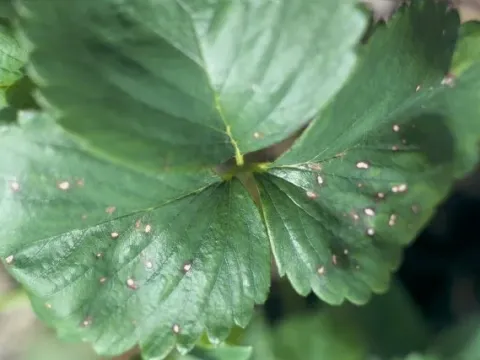
Hainesia leaf spot
Hainesia
The causative agent of Hainesia leaf spot is the fungus Hainesia lythri, often associated with its teleomorph, Discohainesia oenotherae. This pathogen is a significant threat to berry crops, particularly in humid climates.
What the section contains
Hainesia leaf spot
The fungus survives the winter primarily in infected plant debris left on the soil surface, as well as in the soil itself. It produces spores in specialized structures called sporodochia, which are essential for its rapid spread during the growing season.
Hainesia lythri is a versatile pathogen capable of colonizing not just the leaves but also the stalks, flowers, and fruit of the host plant. It secretes enzymes that break down host cells, allowing the mycelium to penetrate deeper into the plant tissues.
This fungus is known for its wide host range, which can include various ornamental and wild plants, making the management of the surrounding ecosystem crucial for control.
Because the fungus is highly adaptable to changing environmental conditions, it can quickly develop resistance to certain fungicides if control programs are not managed with care.
Initial infection manifests as small, reddish-brown spots on the leaves. As the lesion matures, it often develops a darker border, and the center of the spot may turn greyish or light brown, eventually cracking due to tissue death.
Under humid conditions, minute, cushion-like structures known as sporodochia appear on the underside of the leaves or on the infected petioles. These are often pinkish or cream-colored and contain a mass of fungal spores.
Infected stalks and flower stems may wilt and collapse, leading to premature fruit drop. If the infection reaches the fruit, it manifests as necrotic, sunken spots that ruin the aesthetic and commercial value of the harvest.
Severe infestations cause extensive chlorosis and leaf drop, which weakens the plant's overall vigor and inhibits its ability to produce carbohydrates for fruit development.
- Circular to angular necrotic spots on leaves.
- Visible pink spore-producing structures (sporodochia).
- Withered flower stalks and premature fruit decay.
- General plant stunting and early leaf senescence.
Hainesia leaf spot thrives in conditions characterized by high humidity and moderate temperatures, typically between 18°C and 25°C. Poor air circulation in crowded plantings is a primary driver of disease outbreaks.
Water droplets on foliage are necessary for spore germination and infection. Consequently, frequent rain, overhead irrigation, or excessive morning dew significantly increases the risk of the disease spreading within a field.
Plants weakened by poor soil fertility or excessive nitrogen fertilization are much more susceptible to the fungus. Rapid, lush growth induced by high nitrogen levels often results in softer tissues that are easily penetrated by the fungus.
Mechanical damage to plants, whether caused by insects or human interaction during field maintenance, creates entry points that significantly expedite the infection process.
A lack of proper sanitation, such as failing to remove infected material from the previous season, creates a reservoir of inoculum that will infect the new growth as soon as conditions become favorable.
The primary economic impact of Hainesia leaf spot is the substantial reduction in total yield and the loss of harvest quality. Infected fruit are unsellable, and damage to flower stems prevents fruit formation entirely.
By compromising the leaf surface area, the disease reduces the plant's photosynthetic capacity. This leads to smaller fruit size, lower sugar content, and a shorter post-harvest shelf life for the berries.
Plants weakened by this pathogen are significantly more vulnerable to secondary diseases, such as grey mold (Botrytis), which often compounds the damage and leads to total crop failure in extreme cases.
The long-term health of the plantation is also at risk, as persistent infections can exhaust the crowns of strawberry plants, necessitating premature replanting and significantly increasing operational costs.
In nurseries, the presence of Hainesia is a critical issue as it can lead to the quarantine or rejection of planting material, causing direct financial losses and reputation damage.
Integrated pest management (IPM) is essential for controlling Hainesia leaf spot. This begins with sourcing certified disease-free planting material and implementing a strict rotation schedule.
Sanitation is paramount; removing all dead and infected plant parts from the field after the season significantly reduces the amount of inoculum available for the following year.
Application of fungicides should be performed preventatively during periods of high humidity. It is vital to use products with different modes of action to manage the risk of the fungus developing chemical resistance.
Improving air circulation through proper spacing and weed control is a simple but effective preventive strategy. Drip irrigation should be used instead of overhead watering to keep foliage dry.
Balanced fertilization, particularly adequate potassium levels, helps strengthen plant cell walls, making them more resilient to penetration by fungal hyphae.