
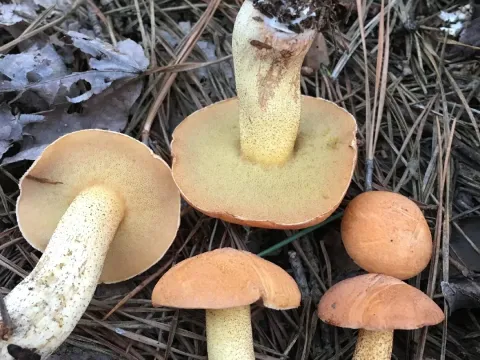
Hairy Bolete
Suillus hirtellus
The Hairy Bolete, scientifically known as Suillus hirtellus, is a basidiomycete fungus that primarily resides in pine forests. It is categorized as a beneficial mycorrhizal symbiont rather than a plant pathogen or disease agent.
What the section contains
Hairy Bolete
Its biological interaction involves the development of an ectomycorrhizal network around the roots of coniferous trees. This connection allows the host tree to absorb essential minerals and water more efficiently from the substrate.
The fungus obtains sugars and carbohydrates from the host tree through photosynthesis, while the tree benefits from the expanded surface area provided by the fungal mycelium.
It is crucial to differentiate this beneficial symbiont from parasitic fungi that cause timber decay or root rot. Suillus hirtellus promotes overall plant health and resilience against environmental stressors.
Taxonomically, it belongs to the Suillaceae family, which is known for its strong affinity with the Pinaceae family. The presence of these mushrooms is often a sign of a healthy, functioning forest ecosystem.
The primary development condition for Suillus hirtellus is the existence of a suitable host, specifically two-needled pine species. The fungus relies on tree root exudates to signal the initiation of the symbiotic process.
It thrives in acidic, sandy soils where nutrient availability is naturally low. The accumulation of pine needles creates an insulating layer that helps maintain consistent humidity levels for the fungal mycelium.
Optimal fruiting typically occurs during late summer and autumn when rainfall is sufficient. The species is sensitive to extreme temperature changes and requires stable environmental conditions to produce mushrooms.
Environmental factors such as soil compaction and pollution can significantly inhibit the growth of the fungal network. Therefore, the mushroom is often considered a natural indicator of soil health.
- Requires symbiotic association with pine species.
- Prefers acidic and sandy soil types.
- Needs stable moisture levels during the vegetative period.
- Sensitive to high concentrations of synthetic fertilizers.