
Gyalecta
Gyalecta
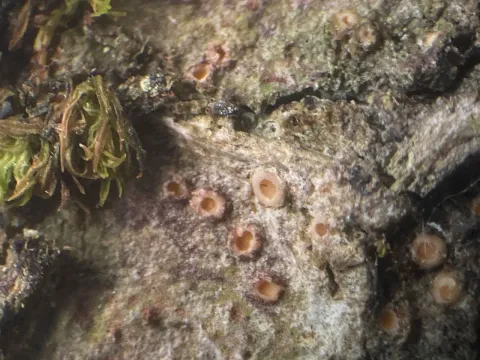
Gyalecta is a genus of crustose lichens that appear as thin, flat, and often inconspicuous patches on the bark of woody plants.
What the section contains
Gyalecta
The primary visible features are small, cup-shaped fruiting bodies known as apothecia, which are deeply immersed in the lichen thallus.
The color of the thallus ranges from grayish-white to pale greenish, helping the organism blend into the natural textures of tree bark.
Unlike parasitic fungi, these lichens do not produce fuzzy mycelium or large growths that would indicate active decay of plant tissue.
They are typically found on the shaded or moist sides of tree trunks, where they can effectively absorb water and minerals from the air.
The organism belongs to the lichenized fungi, which are stable symbiotic associations between a fungus and a photosynthetic partner.
It is not classified as a plant pathogen because it does not derive nutrients from the host tree's living cells or vascular system.
The tree bark serves solely as a substrate for attachment, providing the necessary stability for the lichen to thrive.
The biological activity of Gyalecta is limited to the surface, and it does not penetrate the cambium or wood tissue of the tree.
Reproduction occurs through spores released from the apothecia, which colonize new surfaces when environmental conditions are suitable.
Growth of Gyalecta is highly dependent on environmental humidity, as it relies on atmospheric moisture for metabolic processes.
Shaded, poorly ventilated areas in gardens provide the most suitable microclimate for the colonization and spread of these lichens.
Older trees with rough, fissured bark are more prone to infestation because they provide more anchorage points for lichen spores.
Optimal development occurs in temperate climates with frequent rainfall or high atmospheric humidity throughout the growing season.
Absence of direct sunlight and high air purity are critical factors that facilitate the persistence of Gyalecta on tree surfaces.
The primary concern regarding Gyalecta is its role as a potential harbor for orchard pests that use lichen as a shelter.
The density of the lichen layer can create a micro-environment that holds moisture, potentially complicating the health of the outer bark.
Dense colonies may slightly obstruct the normal respiratory processes of the bark, although this is rarely the cause of tree death.
The presence of lichens often serves as an indicator of an orchard that lacks proper care or exhibits signs of stagnation.
Excessive lichen growth can mask the symptoms of more serious bark conditions, making early diagnosis of diseases difficult.
Effective management begins with proper pruning practices to increase airflow and light penetration throughout the tree canopy.
Mechanical removal of lichens using soft brushes or scraping tools is recommended, followed by a thorough cleanup of the debris.
Applying traditional whitewash or copper-based treatments to the trunks can effectively suppress the growth of lichen colonies.
Improving the overall vigor of the trees through correct fertilization and irrigation schedules makes them less susceptible to epiphytic growth.
Regular monitoring of the orchard ensures that any lichen expansion is controlled before it covers significant areas of the bark.