
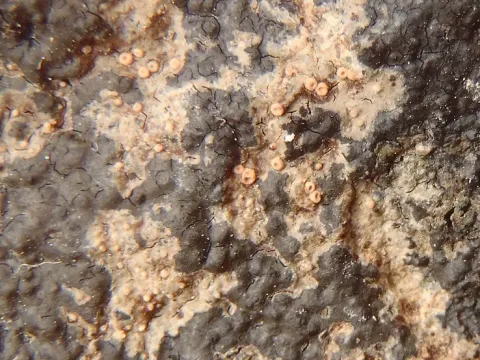
Gyalecta jenensis
Gyalecta jenensis
Gyalecta jenensis is a crustose lichen known for its inconspicuous thallus. The vegetative body is often endoxylic, meaning it grows within the substrate, making it hard to spot without magnification.
What the section contains
Gyalecta jenensis
The primary diagnostic features are the apothecia, which are small, cup-shaped fruiting bodies. These are deeply immersed in the bark or rock substrate and typically feature a distinct margin.
The discs of the apothecia range in color from pale yellow to reddish-brown, appearing as tiny, scattered pits upon the surface of the host material.
Identification in the field requires a high-quality hand lens or, more reliably, microscopic examination of the spores and excipulum structure to distinguish it from related species.
It often grows in small clusters, creating a subtle color change on the substrate, which can easily be mistaken for natural bark discoloration by the untrained eye.
Gyalecta jenensis is not a plant pathogen. It is a symbiotic organism, a lichen, formed by a fungus and an alga, and it has no parasitic nature regarding plants.
This species does not extract nutrients from the host plant's tissues and does not interfere with the plant's metabolism, growth, or structural integrity.
Biological activity is focused on the symbiosis between the mycobiont and the photobiont, relying on atmospheric moisture and light rather than host-derived organic compounds.
It does not produce toxins or enzymes that degrade plant cells, and therefore, it cannot be classified as a cause of any disease.
The presence of this lichen on a tree simply indicates that the tree's surface is a suitable, stable, and long-term habitat for colonization by epiphytic organisms.
Gyalecta jenensis thrives in specific microclimates characterized by high relative humidity and moderate, indirect light levels.
The preferred substrate for this lichen includes the bark of old-growth deciduous trees, especially those with rough, moisture-retentive textures or calcareous rock surfaces.
The species is highly sensitive to air pollution, particularly sulfur dioxide, making it a reliable bioindicator of pristine or high-quality environmental air conditions.
It requires stable environmental conditions, avoiding extremes in temperature or prolonged periods of desiccation, which can inhibit the development of the thallus.
Habitats typically include mature forests, gorges, or shaded woodland areas where the microclimate remains protected from significant fluctuations.
This species poses absolutely no threat to agricultural crops, forestry operations, or ornamental plants. It is harmless and does not affect plant productivity.
The lichen does not cause necrosis, wilting, or any form of decline. It is purely an epiphytic occupant of the surface, similar to mosses or other non-parasitic plants.
Efforts to remove this lichen from trees are unnecessary and provide no agronomic or health benefits to the plant, potentially causing damage to the bark during the process.
In fact, the presence of diverse lichen populations is often a sign of a healthy, functioning ecosystem that supports a wide array of biodiversity.
Treating this organism as a pest is a common misconception that results in the unnecessary use of chemical pesticides, which are detrimental to beneficial garden insects.
No protection or control measures are required for Gyalecta jenensis, as it is a beneficial organism that does not threaten any agricultural or horticultural objectives.
Garden maintenance should focus on standard agricultural practices such as pruning and site management, which naturally regulate the light and moisture levels available on bark.
If epiphytic growth is deemed undesirable, it should be managed through improved ventilation and light exposure for the plant canopy rather than chemical application.
Education regarding the distinction between harmless lichens and actual pathogenic infections is the best strategy for farm management.
The preservation of lichen diversity is generally encouraged in modern sustainable horticulture as part of an integrated approach to ecosystem health.