
Galerina
Galerina
Galerina is a genus of saprotrophic basidiomycete fungi belonging to the Strophariaceae family, common in both forests and gardens.
What the section contains
Galerina
The most notorious member, Galerina marginata, is well-known for containing deadly amatoxins, making it highly toxic to humans.
The fungus acts as a primary decomposer of organic matter, specifically targeting lignin and cellulose within dead or decaying wood.
As a non-pathogenic organism for healthy plants, the fungus utilizes the structure of decaying wood as a nutritional substrate for mycelial growth.
The life cycle of the genus is characterized by the production of sporocarps (mushrooms) whenever environmental conditions meet the required humidity threshold.
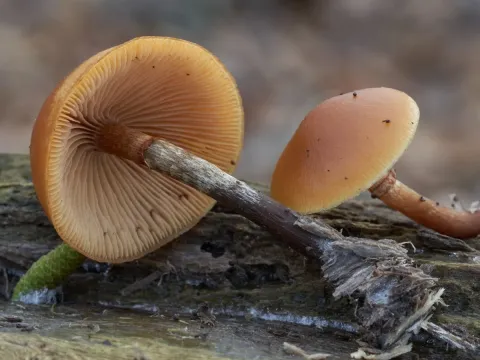
The visual presence of Galerina is marked by small mushroom clusters growing directly from rotting stumps, logs, or decaying bark.
The caps are typically small (1-4 cm), ranging from yellowish-brown to tan, often changing shade according to moisture levels.
A distinctive feature of the fungus is a delicate, membranous ring located on the stipe, which can sometimes erode in older specimens.
The gills are attached to the stipe and release a rusty-brown spore print, which is a key diagnostic characteristic for identification.
The mushrooms lack a distinct or strong odor, often described as mild or slightly mealy, which makes them difficult to distinguish for amateurs.
Galerina thrives in cool, moist climates and is most commonly observed during damp weather in autumn or late spring seasons.
The mycelium resides deep within the wood, allowing the fungus to survive periods of drought or unfavorable temperatures effectively.
Spores are dispersed by wind currents and can easily colonize new wood sources if the material is sufficiently decayed or damp.
Garden environments with excessive wood debris, neglected stumps, and high moisture levels provide an ideal breeding ground for the fungus.
Once established in a stump or large piece of timber, the fungal mycelium can persist for several years until the wood source is fully consumed.
The primary hazard of Galerina is its extreme toxicity, causing severe liver and kidney damage similar to the effects of the Death Cap mushroom.
Consumption of these fungi can be lethal, and there is no simple culinary method, such as boiling, that effectively neutralizes the toxins.
While the fungus does not induce diseases in healthy plants, its presence is a clear indicator that wood decay has compromised plant tissue.
The visual similarity to edible species, particularly some types of wild mushrooms, increases the risk of accidental poisoning.
In a horticultural context, the presence of the fungus highlights a need for better hygiene and maintenance of woody plant materials.
The most effective strategy to prevent Galerina is the removal of old stumps, fallen branches, and decaying wood from the garden area.
Maintaining the health of trees through proper pruning and wound protection prevents the wood from becoming a target for fungal colonizers.
If mushrooms appear, they should be removed and disposed of carefully to prevent the spread of spores, ideally by bagging and discarding them.
Regular sanitation of the garden space reduces the availability of organic substrates that support the growth of wood-decaying fungi.
Strictly avoid gathering wild mushrooms from your garden for consumption unless you are a professional mycologist with precise identification skills.