
Galeropsis
Galeropsis
Galeropsis (Latin Galeropsis) is a genus of fungi belonging to the order Agaricales, which under certain conditions can act as a pathogen affecting plant root systems.
What the section contains
Galeropsis
In terms of agricultural pathology, it often manifests as a soil-borne fungus capable of shifting from a saprotrophic lifestyle to an opportunistic parasitic state.
The pathogen utilizes its mycelium to penetrate plant tissues, often causing decay of the root collar and primary root system, which disrupts the host plant's vital functions.
Survival of the fungus is largely supported by its ability to form sclerotia, which are resilient structures that allow the pathogen to persist in soil for several years.
Dissemination occurs via spores, which are easily transported by water, soil movement, or infected agricultural equipment across field borders.
Early symptoms of infection include unexpected wilting during the daytime and a general loss of vigor in affected plants, despite adequate irrigation.
The root system often exhibits signs of browning or softening, with advanced stages showing a complete breakdown of cortical tissues, making the plant unstable.
A visible mycelial growth or white to greyish coating may appear at the base of the stem, especially in conditions of high humidity or poor aeration.
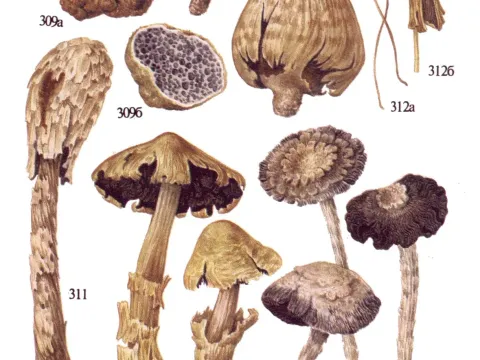
Under specific environmental triggers, small mushroom-like fruiting bodies of the Galeropsis fungus may emerge near the base of the infected plant.
Symptoms usually start in patchy patterns within the field, creating distinct zones where plant growth is stunted or where complete mortality occurs.
High soil moisture and waterlogging are primary drivers for the development of Galeropsis, as these conditions favor fungal spore germination and hyphal spread.
Poorly aerated soils, often characterized by heavy clay structures or compaction, restrict plant root growth and make them more vulnerable to fungal invasion.
Temperatures ranging from 18°C to 25°C provide an optimal environment for the rapid colonization of plant tissues by the fungal pathogen.
The presence of abundant raw organic matter in the soil provides a perfect nutrient base for the fungus to multiply before attacking living crops.
Continuous cropping of the same susceptible species significantly boosts the concentration of inoculum in the field, leading to severe outbreaks.
The economic impact of the disease is significant, as it leads to thinning stands and a direct reduction in the total harvestable yield per hectare.
Plants affected by root damage demonstrate lower stress tolerance, making them more susceptible to subsequent environmental pressures such as drought or heat.
Nutrient uptake efficiency drops drastically, leading to poor development of the vegetative biomass and reduced overall quality of the harvested crop.
In severe infestation cases, entire sections of a field may be lost, necessitating expensive reseeding operations and causing logistical disruptions.
The presence of the pathogen also reduces the marketability of crops due to size inconsistency and overall health degradation caused by root system impairment.
Integrated pest management (IPM) is essential, starting with crop rotation schemes that break the infection cycle by introducing non-host plant species.
Improving soil drainage and physical structure through regular tillage and organic matter management helps to create a less hospitable environment for soil-borne fungi.
Seed treatment with professional fungicides is a critical first line of defense, providing protection during the early, most vulnerable stages of plant development.
Maintaining optimal soil pH and balanced fertilization helps to strengthen the plant's natural defenses, making it harder for the pathogen to penetrate roots.
In cases of high pressure, applying targeted soil-applied fungicides can help manage the inoculum level and prevent the disease from spreading to healthy areas of the field.