
Galerina marginata
Galerina marginata
Description
Symptoms
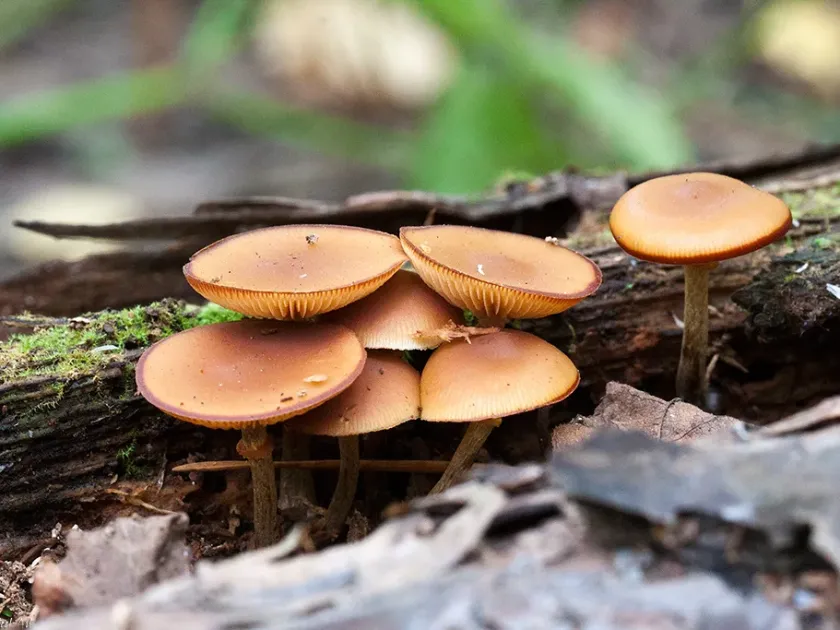
The most visible sign of an infection is the emergence of small fruit bodies (mushrooms) growing in clusters on bark or near the tree base.
The mushrooms feature a yellowish-brown cap and a distinct ring on the stem, which serves as a critical morphological indicator for identification.
Affected wood typically develops brown rot, becoming brittle, darkening in color, and eventually breaking into cubical chunks.
Advanced stages of colonization are characterized by the presence of white fungal rhizomorphs beneath the bark and a general softening of the tree structure.
The fungus frequently establishes itself on decaying stumps, acting as a reservoir for further spread into the root systems of neighboring healthy trees.
Pathogen
Galerina marginata is a basidiomycete fungus belonging to the Hymenogastraceae family, known for its role as a destructive wood-decaying saprotroph.
As a xylotrophic fungus, it actively decomposes lignin and cellulose, which are fundamental structural components of woody tissues.
The mycelium of the fungus penetrates the internal layers of the wood, utilizing advanced enzymatic mechanisms to break down complex organic matter.
It is particularly aggressive towards weakened or dead wood, making it a significant factor in the natural decomposition cycle of forest ecosystems.
While not a parasite of agricultural crops in the traditional sense, it poses a severe threat to orchard trees by causing heart rot and destroying trunks.
Conditions for development
High humidity and moderate temperature levels provide the ideal environment for the active growth and development of Galerina marginata.
Spores require a moist substrate, such as damaged or decaying wood, to successfully germinate and establish a thriving mycelial network.
Shaded garden areas with poor air circulation often experience higher moisture retention, creating perfect conditions for fungal colonization.
Spore dispersal is facilitated by wind, allowing the fungus to spread across large areas and infect new potential hosts throughout the season.
The presence of fallen logs, accumulated debris, and old stumps serves as a primary driver for the increased incidence of this fungus in managed environments.
Why it matters
The primary damage caused by this fungus is the structural compromise of the host plant, leading to a loss of mechanical strength and stability.
Infected trees are highly susceptible to wind-throw and breakage, posing significant safety risks in orchards and public spaces.
By degrading the vascular tissues and roots, the fungus severely impairs the tree’s ability to transport water and nutrients, leading to decline.
Galerina marginata is highly toxic to humans and animals due to the presence of amatoxins, which can cause severe health consequences upon ingestion.
The aggressive expansion of mycelium through soil connectivity allows the fungus to move from dead wood to living roots, threatening entire tree clusters.
Protection
Sanitation is the most effective management strategy, requiring the prompt removal of stumps and decaying woody material from the site.
Preventing mechanical injuries to trunks and roots is crucial, as any surface wound provides an entry point for airborne fungal spores.
Applying antiseptic treatments or pruning sealants to fresh cuts helps to protect the exposed wood from potential fungal contamination.
Any detected fruit bodies should be removed and disposed of safely to prevent the continued release of spores into the surrounding area.
Maintaining optimal tree vitality through proper nutrition and irrigation practices helps plants build natural defenses against fungal infections.
Discussion
No discussions yet — be the first.