
Galzinia pedicellata
Galzinia pedicellata
Description
Symptoms
The initial signs of infection include the formation of thin, film-like fungal growth on the bark. These films may appear subtle but expand over time as the colony matures and establishes itself.
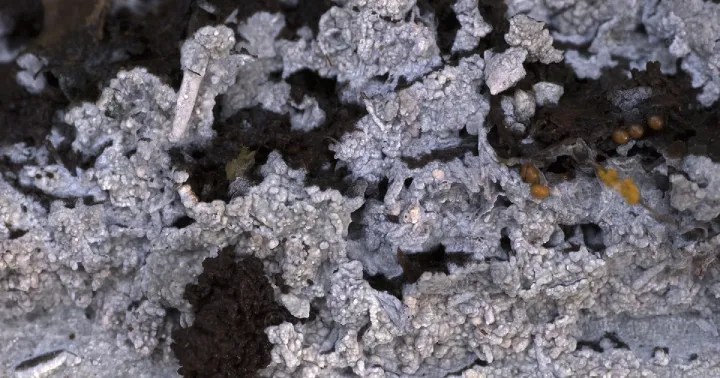
Fruiting bodies appear as flat, spreading patches with a creamy or light-colored appearance. They adhere tightly to the bark surface, making them a diagnostic feature when inspecting tree trunks.
As the infection progresses, bark degradation occurs, leading to peeling or cracking. Beneath the bark, white, thread-like mycelial mats are often visible, signaling that the fungus has colonized the cambium layer.
Crown symptoms are also common, including early senescence of needles or leaves, gradual thinning of the foliage, and eventual dieback of branches in the most affected areas of the tree.
- Thin, crust-like fungal growth on bark
- Bark peeling and cracking
- White mycelial mats under the bark
- Premature foliage wilting and branch dieback
Pathogen
Galzinia pedicellata is a basidiomycetous fungus classified within the order Corticiales. It is primarily recognized as a wood-inhabiting microorganism that plays a significant role in the decomposition of woody tissues.
The fungus develops characteristic resupinate, crust-like fruiting bodies that grow directly on the bark or wood surface. These structures serve as the primary sites for spore production and release into the environment.
Functionally, the pathogen is a lignicolous organism, meaning it has the biological machinery to degrade lignin and cellulose. This process leads to structural damage in the host plant’s stems and branches.
The fungal mycelium permeates the host tissue, disrupting the vascular system and depriving the tree of necessary water and nutrient transport, which ultimately causes the decline of the host organism.
Although it is part of natural decomposition processes, Galzinia pedicellata is considered a pathogen when it colonizes living trees, potentially leading to significant loss of timber quality and forest health.
Conditions for development
High humidity and moisture are the primary drivers for the growth of Galzinia pedicellata. Damp forest environments with limited air circulation provide ideal conditions for the pathogen to thrive.
The optimal temperature range for the development of this fungus lies between +15°C and +25°C. During these warm and humid periods, the fungus is most active in colonization and spore production.
Wounds on the tree trunk caused by mechanical damage, insects, or environmental stress serve as entry points for the fungus. Healthy trees are generally resistant, while stressed specimens are highly susceptible.
Dense forest stands that lack proper thinning prevent air from circulating efficiently, creating a stagnant microclimate that encourages the spread of fungal spores between neighboring trees.
The accumulation of dead wood, slash, and logging residue provides an abundant substrate for the fungus to establish a strong infectious presence, increasing the likelihood of spread to living trees.
Why it matters
The primary economic harm caused by this fungus is the degradation of wood quality. Decay processes compromise the structural integrity of the timber, rendering it unsuitable for industrial or construction purposes.
In forestry, the pathogen contributes to tree mortality, leading to gaps in the canopy. This negatively impacts the productivity and ecological stability of forest stands, especially in managed areas.
By weakening the structural support of the tree, the fungus increases susceptibility to windthrow, which can cause significant damage to the surrounding vegetation and forest floor structure.
The physiological stress induced by the infection makes the trees highly attractive to secondary pests, such as wood-boring insects, which can accelerate the death of the host plant.
Management costs associated with controlling outbreaks include sanitation operations, timber salvage, and the long-term impact on forest biomass growth and regeneration.
Protection
Sanitation logging is the most effective management strategy. Removing infected or dead trees from the stand is crucial to reduce the overall spore load and prevent further spread of the pathogen.
Maintaining a clean forest environment is essential; this involves removing logging residues and fallen branches that might otherwise act as a reservoir for the fungal infection.
Thinning operations help improve stand density and promote better air circulation. Proper spacing between trees reduces the local humidity levels, making the environment less favorable for the fungus.
Regular monitoring of forest health is necessary to identify early infection sites. Prompt intervention at the first sign of Galzinia pedicellata can prevent the development of larger, more damaging outbreaks.
Cultural practices that minimize mechanical damage to tree trunks help prevent infection entry points, thereby maintaining the natural resilience of the stand against fungal pathogens.
Discussion
No discussions yet — be the first.