
Galeropsis lateritia
Galeropsis lateritia
Description
Symptoms
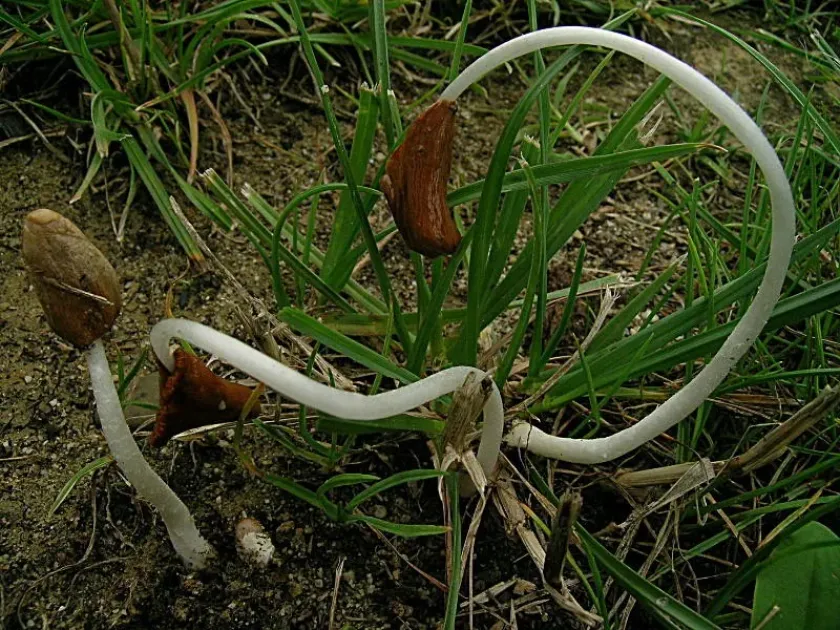
The most distinctive sign of Galeropsis lateritia infection is the emergence of brick-red or ochre-colored fruiting bodies that rise from the soil or thick turf thatch.
Infected areas typically show patches of yellowing or chlorotic grass, which eventually progress into necrotic spots as the fungal mycelium colonizes the root zone.
Closer inspection of the affected area often reveals a dense mat of white or greyish fungal mycelium tightly binding the grass roots and preventing nutrient uptake.
The occurrence of fairy ring-like formations, where grass growth is either inhibited or stimulated in circular patterns, is a classic symptom of localized fungal activity.
- Appearance of brick-red elongated fungal fruiting bodies.
- Development of localized chlorotic or yellowing patches.
- Dense white mycelial growth in the root zone.
- Formation of fairy rings or irregular circular lesions.
- Reduced turf density and vigor in affected sectors.
Pathogen
Galeropsis lateritia is a soil-borne fungus belonging to the Agaricaceae family, which is recognized in agronomy as a pathogen capable of affecting ornamental turfgrass and managed pastures.
This basidiomycete fungus functions as a saprotroph that thrives on organic matter, though it can become detrimental to turf health when environmental conditions favor its rapid colonization.
The pathogen propagates primarily through spores that are dispersed by wind, irrigation water, and mowing equipment, landing on susceptible soil surfaces or thatch layers.
Its biology is closely linked to the decomposition of plant residues; hence, its presence often serves as an indicator of poor soil drainage or excessive thatch accumulation in the turf canopy.
The life cycle involves the vegetative expansion of fungal hyphae through the soil profile followed by the production of fruiting bodies when specific environmental thresholds are reached.
Conditions for development
The development of Galeropsis lateritia is strongly associated with high soil moisture levels, typically resulting from poor site drainage or frequent, shallow irrigation cycles.
Optimal temperatures for spore germination and mycelial spread fall within the range of 15 to 25 degrees Celsius, matching the peak growing season for many cool-season grasses.
Compacted soils with low oxygen availability provide a conducive environment for this pathogen, as the lack of aeration inhibits the recovery of the turfgrass itself.
Excessive organic thatch accumulation provides a perfect nutrient-rich substrate for the fungus to establish and propagate, especially in humid conditions.
Poor air circulation within the turf canopy, often caused by high grass density and lack of pruning, keeps the base of the stems damp, promoting fungal infection.
Why it matters
The primary impact of this pathogen is the degradation of turf aesthetics, which often necessitates significant restoration and reseeding efforts for landscaping projects.
The colonization by the fungus creates a hydrophobic layer on the soil surface, preventing essential water and nutrients from reaching the root zone of the grass.
Chemical substances produced by the fungal mycelium can exhibit phytotoxic effects, suppressing grass metabolism and slowing down the recovery process after mechanical damage.
When the mycelial mat becomes extensive, it interferes with normal root respiration, leading to the gradual dieback of grass patches and the expansion of bare soil areas.
The presence of the pathogen weakens the overall turf stand, making it increasingly susceptible to secondary opportunistic diseases and weed infestations.
Protection
Routine aeration is the most effective preventive measure, as it improves oxygen levels in the soil profile and mitigates the moisture stagnation that encourages fungal growth.
Regular scarification and vertical mowing are essential to minimize thatch accumulation, thereby removing the primary food source for the fungal organism.
Implementing a deep and infrequent watering schedule helps keep the surface layer of the soil drier, which is detrimental to the survival of Galeropsis lateritia spores.
Systemic fungicides labeled for use on ornamental turf may be applied to stop the spread of mycelium, though they must be combined with improved cultural practices.
In cases of severe infestation, removing the affected sod along with the top layer of soil, followed by disinfection and reseeding, is the most reliable strategy to eradicate the pathogen.
Discussion
No discussions yet — be the first.