
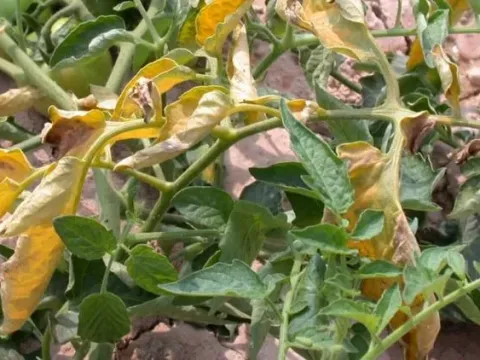
Fusarium wilt
Fusarium redolens
The causal agent of this disease is the soil-borne fungus Fusarium redolens, belonging to the Fusarium genus. This imperfect fungus persists in the soil and on plant debris as mycelium, chlamydospores, or sclerotia, remaining viable for many years.
What the section contains
Fusarium wilt
The disease is classified as a tracheomycotic wilt. The fungus primarily enters the plant through the root system, often utilizing micro-cracks or damage caused by soil-dwelling pests.
Upon entry into the tissues, the pathogen colonizes the plant's vascular system. It actively grows within the xylem, gradually clogging the vascular bundles with its mycelium.
During its life cycle, the fungus secretes specific toxins that poison the plant from within. This leads to metabolic disruptions and suppresses the plant's natural defense mechanisms.
Spread of the infection occurs through contaminated soil as well as poor-quality seed material. Furthermore, rainwater, soil fauna, and unsterilized agricultural equipment act as important vectors for dispersal.
Initial symptoms appear as slight yellowing of the lower leaves, which gradually spreads up the stem. Plants begin to look stunted and wilted, even when sufficient soil moisture is available.
A characteristic sign is the loss of turgor pressure, especially during hot daylight hours when transpiration is at its maximum. By evening or night, the plant may temporarily recover, but as the disease progresses, the wilting becomes permanent.
Cross-sectioning the stem or root of an affected plant reveals a distinct browning of the vascular ring. This is direct evidence of the vascular blockage caused by the fungal mycelium.
Under high humidity, a white, pink, or cream-colored coating may appear on the base of the stem. This is the sporulation of the fungus, which signals an active phase of the pathogen's spread.
Ultimately, the affected specimens wither completely, the roots rot and become brittle. The crop takes on a "burnt" or dried-out appearance, despite adequate irrigation.
Development of Fusarium redolens is favored by temperature ranges from +22 to +28 degrees Celsius. Under these conditions, the fungus shows maximum aggressiveness and growth speed.
High soil moisture combined with warm air temperatures creates an ideal environment for spore germination. However, the disease also frequently breaks out during sharp temperature fluctuations, which compromise plant immunity.
Soil pH plays a significant role: the pathogen develops more intensely in slightly acidic to neutral soils. Heavy clay soils prone to waterlogging also contribute to the disease's advancement.
Lack of lighting or overcrowding of crops creates a localized microclimate conducive to infection buildup. This impedes air circulation and accelerates the root rot process.
Poor agricultural practices, such as lack of crop rotation and the accumulation of undecomposed crop residues, cause a cumulative increase in soil infection levels each season.
Fusarium wilt causes massive economic losses by inducing high mortality in seedlings and mature plants alike. This leads to significant thinning of stands and reduced plant density.
The damage consists not only in the loss of biomass but also in a sharp decline in the productivity of surviving plants. Fruits or seeds often form as shriveled, underdeveloped, and have poor sowing qualities.
Infected plants become extremely vulnerable to secondary infections and pests. Tissue intoxication degrades the shelf life of the harvested produce, making it unsuitable for long-term storage.
The disease is extremely difficult to manage once it has reached the active vegetation phase. Crop losses in heavily infected fields can reach 50–80% or more, depending on the susceptibility of the variety.
The pathogen persists in the soil for years, imposing restrictions on the use of the infested site. Farmers are often forced to stop growing sensitive crops or incur high costs for soil sterilization.
The cornerstone of protection is strict adherence to crop rotation. It is not recommended to return sensitive crops to the same location for at least 4–6 years to break the fungal life cycle.
The use of healthy, certified seed material is critical. Treating seeds with broad-spectrum fungicides allows for the elimination of infection at the earliest stages.
- Optimizing soil pH through liming to create an unfavorable environment for the fungus.
- Applying balanced mineral fertilizers, avoiding nitrogen excess, which lowers plant resistance.
- Thorough removal and destruction of crop residues after harvest.
- Growing resistant or tolerant varieties and hybrids with genetic protection.
The application of biological products based on Trichoderma helps suppress fungal growth in the soil naturally. These antagonists effectively compete with Fusarium for living space.
Chemical control during the growing season is effective only in the early stages. Systemic fungicides applied to the root zone can slow the disease progression, but complete recovery of affected tissues is virtually impossible.