
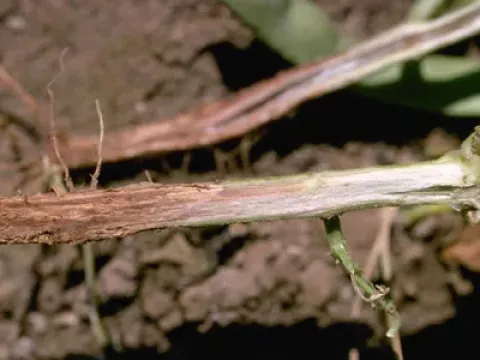
Fusarium wilt and shoot necrosis
Fusarium lateritium
The causal agent is the fungus Fusarium lateritium (also known as Gibberella baccata). This pathogen is highly adaptable and can survive in the soil and plant debris as chlamydospores for several years.
What the section contains
Fusarium wilt and shoot necrosis
The fungus invades the plant’s vascular system through roots or mechanical bark wounds. Once inside, the mycelium proliferates in the xylem, releasing toxic metabolites that inhibit the transport of water and nutrients.
Dissemination occurs via conidia, which are carried by wind, rain splashes, and insects. Horticultural tools are a major vector for spreading the pathogen during pruning and grafting operations.
As a facultative parasite, the fungus can switch to a saprotrophic lifestyle, living on organic matter, which ensures its persistence in a garden environment even when living hosts are unavailable.
The pathogen significantly disrupts the physiological integrity of the plant, leading to a cascade of metabolic failures that culminate in progressive branch dieback and overall plant weakening.
The initial symptom is the sudden wilting of young shoots and foliage during the active growing season. The affected tissues turn brown, exhibiting signs of necrosis, which can quickly spread to larger branches.
A diagnostic feature is the browning of the vascular ring (xylem) visible upon cutting an infected branch. This vascular discoloration differentiates Fusarium infections from other common physiological disorders.
Small orange or pinkish sporulation cushions frequently appear on the bark surface of diseased areas. Over time, the bark splits, dries out, and sloughs off, leading to girdling of the branches.
Leaves on infected limbs may yellow, curl, and hang on the tree long after death, giving it a scorched appearance. In severe cases, the entire tree may collapse within a few seasons.
- Brown vascular streaks on shoot cross-sections.
- Pink or orange sporulation cushions on the bark.
- Sudden wilting and necrosis of shoot tips.
- Bark cracking and premature leaf senescence.
The disease thrives in environments with high humidity and moderate temperatures, typically between 20°C and 25°C. These conditions are ideal for the rapid growth and colonization of the mycelium.
Mechanical injuries caused by frost, hail, or improper pruning serve as entry points for the pathogen. Once wounded, the internal tissues become susceptible to rapid fungal invasion.
Poor soil aeration and waterlogged conditions exacerbate the severity of the infection, particularly in the root zone. High soil acidity is also known to promote the aggressive development of Fusarium lateritium.
Temperature fluctuations can weaken the host plant's immunity, making it unable to mount an effective defense against the invading fungus.
Dense planting configurations that limit airflow within the canopy promote the accumulation of moisture on bark surfaces, further facilitating the cycle of fungal spread.
Fusarium wilt causes severe economic losses in orchards, often leading to yield reductions of over 50%. The disease permanently damages the structure of the trees, making them unproductive.
Infected trees suffer from reduced cold hardiness, which increases the risk of winter mortality. The need to excise large infected limbs negatively impacts tree shape and canopy development.
The quality of fruit harvested from infected trees is often degraded, and the potential for mycotoxin contamination makes the produce unsafe for consumption or commercial distribution.
In cases of severe infestation, the pathogen spreads through the orchard, necessitating the removal of entire trees and leading to high costs for orchard replanting and soil treatment.
Ongoing maintenance costs, including the regular application of fungicides and labor-intensive sanitation, significantly impact the overall profitability of the horticultural enterprise.
The foundation of control is the selection of resistant cultivars and the use of certified disease-free planting stock. Maintaining proper spatial isolation helps prevent the initial entry of the pathogen.
Rigorous sanitation involves the immediate removal and destruction of infected branches. It is crucial to prune at least 15-20 cm below the visible necrosis to ensure the infected tissue is completely removed.
Disinfecting all cutting tools with alcohol or a copper-based solution between every tree is mandatory. This single practice significantly reduces the risk of human-mediated disease spread.
Proactive fungicide programs during the growing season protect healthy tissues and prevent sporulation. Targeting applications before and after bloom, as well as in the autumn, is highly recommended.
Integrating biological control agents like Trichoderma species into the soil helps inhibit Fusarium development. Additionally, maintaining balanced soil pH and nutrition strengthens the tree's natural resistance.