
Fusarium wilt
Fusarium oedipigera
The causative agent of Fusarium wilt is a soil-borne fungus known as Fusarium oedipigera, which is highly specialized in colonizing the vascular systems of vegetable crops.
What the section contains
Fusarium wilt
This pathogen survives in the soil for many years as hardy chlamydospores, remaining dormant until a susceptible host plant is present in the environment.
The fungus typically enters the plant through the root system, often gaining access through small wounds caused by insects, nematodes, or mechanical cultivation injuries.
Once inside, the fungal mycelium colonizes the xylem vessels, multiplying rapidly and creating a physical barrier that prevents water and nutrients from reaching the leaves.
As the pathogen grows, it secretes harmful mycotoxins that poison the plant tissues, leading to systemic wilting, chlorosis, and eventually the death of the vegetable plant.
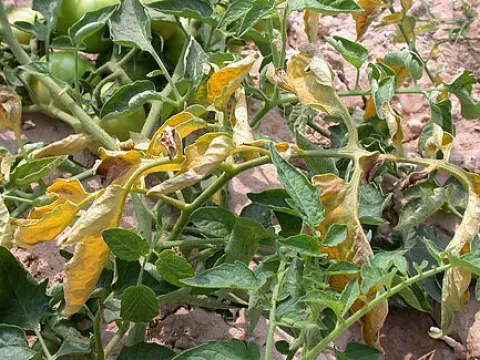
The first external symptom is often the drooping of lower leaves, which eventually turn yellow and exhibit a characteristic one-sided wilt pattern on individual leaves.
Plants appear thirsty or wilted even when the soil moisture is adequate, especially during the hottest hours of the day when transpiration demands are high.
If the main stem is cut crosswise, a distinct dark-brown discoloration is visible within the vascular bundles, indicating that the fungal infection is active.
In highly humid conditions, a visible cotton-like growth or white to pinkish fungal sporulation may appear near the base of the stem or on damaged parts.
As the disease progresses, the root system turns brown and starts to rot, leading to a complete loss of vitality and eventual collapse of the crop.
Fusarium wilt is most prevalent in warm climates, as the pathogen thrives at soil temperatures ranging from 25°C to 30°C (77°F to 86°F).
Excessive moisture in the soil, combined with high temperatures, provides an ideal environment for the rapid germination of fungal spores and the spread of mycelium.
Plants under environmental stress, such as improper fertilization, drought, or waterlogging, are significantly more susceptible to successful fungal penetration.
Monocropping and the failure to practice crop rotation lead to an accumulation of inoculum in the soil, turning the field into a long-term reservoir for the disease.
Poor ventilation and high humidity in greenhouse settings exacerbate the spread of the fungus, making it difficult to control once an outbreak occurs.
The primary harm is the complete loss of productivity, as infected plants rarely recover and usually succumb to the disease before reaching maturity.
The quality of any remaining fruits is severely degraded, making them unmarketable and unsuitable for storage due to the systemic nature of the infection.
Economic losses are compounded by the high cost of soil sterilization and the need for frequent replacement of plant materials in infected areas.
The pathogen can be disseminated through contaminated seeds, which poses a serious risk of spreading the disease to previously healthy agricultural lands.
Because the fungus is extremely persistent in the soil, infected fields may become unusable for susceptible crops for several consecutive growing seasons.
The most effective strategy is the implementation of long-term crop rotation, avoiding susceptible crops in infested fields for at least four to six years.
Using certified, disease-free seed and prioritizing the planting of resistant cultivars are essential measures for preventing initial infection in the garden.
Proper soil management and the use of bio-control agents like Trichoderma species can help maintain a balanced soil microbiome that suppresses fungal growth.
- Immediate removal and disposal of infected plants and surrounding soil.
- Ensuring adequate soil drainage and proper air circulation in greenhouses.
- Application of balanced potassium-rich fertilizers to boost host resistance.
For chemical intervention, systemic fungicides may be applied as a soil drench at the early stages of disease, though prevention remains the most effective tool.