
Fusarium wilt of tomato
Fusarium lactis
The causative agent of this disease is the soil-borne fungus Fusarium oxysporum f. sp. lycopersici, an ascomycete that specifically targets tomato plants.
What the section contains
Fusarium wilt of tomato
The fungus invades the host through the root system, entering the plant's vascular bundles where it colonizes the xylem tissues.
By filling the vessels with mycelium and producing various enzymes, the pathogen disrupts the water supply, causing the characteristic wilting symptoms.
The fungus produces hardy survival structures known as chlamydospores, which allow it to persist in the soil for several years in the absence of a host.
Genetic diversity of the pathogen leads to different races, which complicates the use of resistant tomato cultivars in various geographic regions.
The earliest symptoms include yellowing of the lower leaves, often appearing on only one side of the leaf or plant, followed by progressive necrosis.
Wilting of the upper foliage during the hottest parts of the day is a hallmark symptom, with plants typically recovering during cooler night hours.
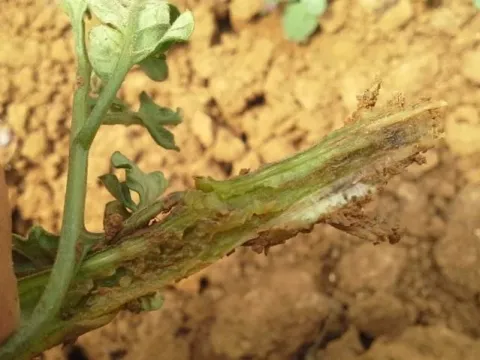
A diagnostic feature is the dark brown vascular discoloration that can be seen when cutting the stem near the base of the plant.
Under high humidity, a faint white or pinkish mycelial growth might appear on the stem surface, especially in the late stages of infection.
Advanced infection leads to the permanent collapse of the entire plant, followed by root decay and eventual death of the tomato shrub.
Disease development is highly dependent on environmental conditions, with the fungus favoring warm soil temperatures between 24°C and 28°C.
High soil moisture and acidic soil pH levels are known to significantly accelerate the spread and colonization rate of the fungal pathogen.
Root injury caused by transplanting, soil pests, or mechanical cultivation provides easy entry points for the fungus to infiltrate the plant.
Low light intensity combined with excessive nitrogen application can lead to softer tissues, making plants more susceptible to initial infection.
Greenhouse environments are particularly conducive to the spread of Fusarium due to the restricted air circulation and stable warm temperatures.
Fusarium wilt is considered one of the most destructive diseases in tomato production, capable of causing total failure of the entire crop.
Seedlings infected at an early stage usually die before reaching transplant size, leading to severe logistical and financial losses for growers.
For plants that survive until fruit set, the yield is significantly reduced, and the resulting tomatoes are often small, misshapen, or prematurely ripened.
The persistence of the pathogen in the soil means that once a field is infested, it requires long-term management or soil replacement to continue cultivation.
It represents a high phytosanitary risk, as the fungus can easily spread through contaminated equipment, water runoff, and human activity.
The most effective strategy is the use of resistant tomato cultivars, often designated with an 'F' or 'Fus' code on seed packets.
Integrated pest management should include long-term crop rotation, avoiding Solanaceous crops in infested soil for at least 4 to 5 years.
Biological control agents like Trichoderma harzianum are widely used to create a competitive soil environment that suppresses fungal growth.
Strict sanitation protocols, including the sterilization of tools and the disposal of infected plant debris by burning, are essential to limit spread.
- Maintain a balanced nutrient program emphasizing potassium over nitrogen.
- Optimize greenhouse irrigation to prevent excessive soil saturation.
- Use heat-treated or fungicide-coated seeds for planting.
- Monitor soil pH and adjust with lime if conditions are too acidic.