
Fusicoccum almond canker
Diaporthe amygdali
Description
Symptoms
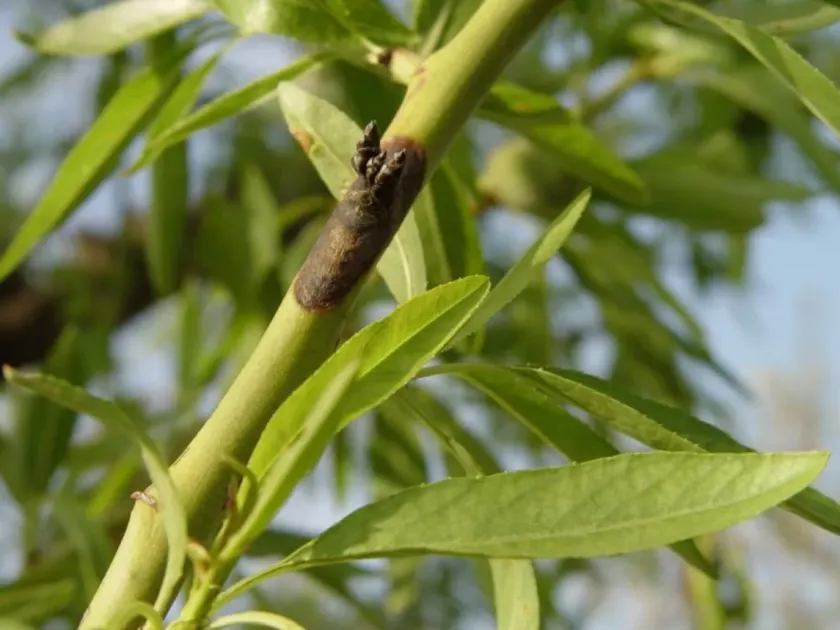
The most characteristic symptoms are reddish-brown, elliptical lesions that develop around buds or pruning wounds. These lesions gradually expand, often girdling the affected branch.
Gummosis, or the oozing of sap from the infected area, is a common reaction. The bark becomes sunken and may crack, revealing the internal decay of the woody tissue.
Affected branches beyond the lesion eventually wilt and die because the fungus cuts off the water and nutrient supply. Leaves on the dead branches turn brown but often remain attached for some time.
Under moist conditions, small, black, pin-head sized reproductive structures known as pycnidia can be seen emerging from the necrotic bark surface.
- elliptical sunken cankers on the bark;
- excessive gumming from wound sites;
- dieback of twigs and branches;
- wilted leaves remaining on dead shoots;
- visible black pycnidia on dead bark.
Pathogen
The disease is caused by the fungus Diaporthe amygdali (formerly known as Fusicoccum amygdali). This pathogen is a serious threat to almond trees, affecting branches, twigs, and stems.
The fungus overwinters in the infected bark tissue, forming pycnidia and perithecia. During the spring and early summer, it produces spores that are easily spread by rain, wind, and insect vectors.
Entry occurs through wounds, pruning cuts, bud scars, or damage caused by pests. Once inside, the fungal mycelium colonizes the cambium, disrupting nutrient transport and leading to tissue death.
The pathogen is highly aggressive and can survive in dead twigs for several years, providing a persistent source of inoculum for new infections each season.
Biological studies suggest that the fungus thrives in diverse climatic conditions, though it is particularly virulent in regions with mild and humid spring weather.
Conditions for development
The disease development is heavily dependent on moisture. Rainfall acts as the primary vehicle for spreading spores from the pycnidia to susceptible plant parts.
Temperatures ranging from 15°C to 25°C are ideal for rapid fungal growth. Extended periods of high humidity during the blooming period significantly increase the infection rate.
Wounds are essential for the initiation of the disease. Pruning during wet weather is particularly dangerous, as the open wounds are highly susceptible to fresh spore colonization.
Poor orchard ventilation and dense canopy structures maintain high humidity levels within the tree, which promotes the development of the pathogen and hinders drying.
Tree stress, caused by drought, poor soil fertility, or insect attacks, renders the trees more susceptible to the fungal invasion, making them easier targets for Diaporthe amygdali.
Why it matters
Fusicoccum canker is a destructive disease that can significantly reduce the yield and lifespan of an almond orchard by killing productive limbs.
The accumulation of dead wood in the canopy provides a sanctuary for the fungus to multiply, leading to an increasing disease pressure that becomes harder to manage over time.
Severe infestations can lead to the death of entire trees. The economic impact includes costs for labor-intensive pruning, repeated fungicide applications, and loss of production.
Orchards that are not properly managed can become completely decimated within a few years, causing long-term financial loss for the growers.
The presence of this disease also compromises the tree's health, making it vulnerable to other opportunistic pests and environmental stressors that further accelerate decline.
Protection
The cornerstone of management is strict sanitation. All dead or cankered wood must be pruned out, with cuts made well into healthy tissue, and removed from the orchard for disposal.
Copper-based fungicides are typically used in preventive spray programs. Timing is critical: applications should be made during the green tip stage and after flowering to protect new growth.
Avoid pruning during wet or rainy weather to minimize the risk of spores infecting fresh pruning cuts, which serve as direct entry points for the fungus.
Promote tree vigor through proper irrigation and balanced fertilization, as healthy trees have better natural defenses against invading pathogens.
Regular monitoring of the orchard is essential for early detection. Once symptoms appear, prompt action to remove infected branches and applying systemic fungicides can help save the tree.
Discussion
No discussions yet — be the first.