
Fusicoccum canker
Fusicoccum
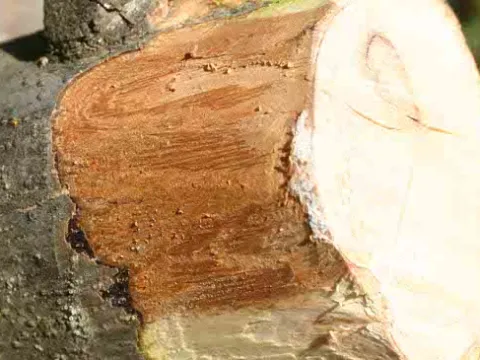
Fusicoccum canker manifests primarily as localized necrotic lesions on the bark of trunks, branches, or shoots. These affected areas often appear sunken, brown, and may eventually split.
What the section contains
Fusicoccum canker
As the disease progresses, these lesions can expand and girdle the branch, cutting off the flow of water and nutrients, which leads to the wilting and death of distal parts.
The surface of the dead bark frequently exhibits small, dark, pimple-like structures known as pycnidia. These are the fruiting bodies where the fungus produces its spores.
Infection sites often coincide with mechanical wounds, pruning cuts, or frost damage. In these areas, the tissue becomes brittle and may detach from the underlying wood.
On young seedlings, the pathogen can cause rapid systemic collapse, often resulting in the death of the entire plant within a short timeframe as the fungus spreads into the vascular system.
The disease is caused by fungi of the genus Fusicoccum, which are classified as anamorphic fungi. These pathogens are highly adaptable to various environmental conditions.
The fungus overwinters primarily in the form of mycelium and fruiting structures within infected bark and woody tissues, remaining viable even during harsh winter months.
Spores are dispersed through raindrops, irrigation splash, wind, and movement of contaminated pruning tools. Moisture is essential for the germination and penetration of these spores.
Upon entering the host through wounds or natural openings, the pathogen colonizes the cambial layer, causing the characteristic necrosis and preventing the tree from healing properly.
The biological lifecycle of the fungus is intricately linked to the tree's physiological state, with infection typically accelerating during humid spring and autumn periods.
Warm, humid conditions accompanied by frequent rainfall create the optimal environment for the proliferation and spread of Fusicoccum spores across an orchard.
Trees that have suffered from winter injury or frost cracks are significantly more susceptible to infection, as these damaged areas provide direct access to the tree's inner layers.
Poor orchard hygiene, specifically failing to disinfect pruning tools between trees, is a primary driver of the rapid spread of the disease within an agricultural site.
High planting density often limits airflow throughout the canopy. Persistent humidity inside the foliage creates a favorable microclimate for the fungus to establish and thrive.
Accumulation of debris, such as infected fallen branches and leaves, provides a continuous reservoir of inoculum, making it difficult to contain the disease without proper sanitation.
Fusicoccum canker significantly reduces the economic value of orchards by causing branch dieback and, in severe cases, the total loss of individual trees.
The disease negatively impacts the overall health and vigor of the plant, making it less productive and shortening the lifespan of fruit-bearing trees.
By interfering with the plant's vascular functions, the pathogen indirectly affects fruit development, leading to smaller crop yields and lower commercial quality.
Affected trees become weakened and are consequently more susceptible to secondary pests and various opportunistic pathogens, leading to a decline in orchard sustainability.
The inability of trees to recover from these necrotic cankers often necessitates costly replacement of nursery stock and intensive, long-term management programs.
The most critical control measure is the immediate pruning and destruction of infected branches, ensuring that cuts are made well into healthy tissue to remove the entire infection.
All pruning tools must be disinfected with alcohol or other effective sanitizing agents between every individual plant to prevent cross-contamination during maintenance.
Applying protective wound dressings and fungicidal pastes to pruning cuts and mechanical injuries is vital to prevent the entry of new fungal spores into the wood.
Preventive spraying with copper-based fungicides during the dormant season helps to reduce the inoculum load on the bark surface and protect the tree from early spring infections.
Balanced fertilization and good orchard management practices, such as ensuring proper spacing and removing debris, help maintain tree vigor and enhance natural resistance to the pathogen.