
Fuscidea
Fuscidea
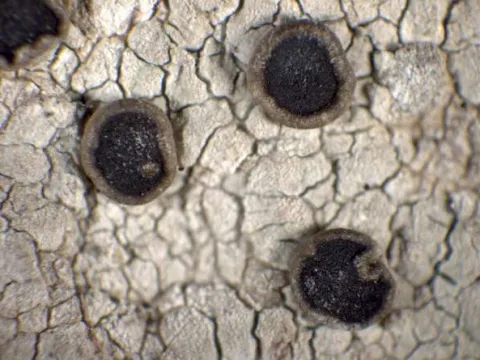
Fuscidea is a genus of lichens that are often mistaken for pathogenic fungi affecting tree bark. Visually, they appear as thin, tightly adherent crust-like layers (thalli) that vary in color from greyish to whitish or brownish.
What the section contains
Fuscidea
The primary sign of the presence of this lichen is the appearance of distinct patches on trunks and main scaffold branches. The surface of the thallus can be smooth, cracked, or granular, creating a unique textural pattern on the bark.
Unlike true fungal diseases, Fuscidea does not cause rot or ulcers within the living tissues of the plant. It develops primarily on dead areas of the bark, utilizing them as a stable substrate for anchoring.
In the early stages of colonization, the lichens appear as small light-colored islands that gradually spread and merge into larger patches. Under high humidity, the coloration of the lichen can become more saturated and noticeable.
The presence of Fuscidea can be identified by inspecting the orchard during the spring or autumn periods, when the lack of foliage allows for a detailed examination of trunks and branches for epiphytic growths.
Biologically, Fuscidea belongs to the group of lichens (Lichenes), which are a symbiotic association between a fungus (mycobiont) and an alga or cyanobacterium (photobiont). This genus includes several dozen species adapted to life on tree bark.
It is important to understand that Fuscidea is not a disease pathogen in the strict sense, as it does not parasitize living plant cells. It is an epiphyte that derives nutrients primarily from atmospheric precipitation and dust.
The life cycle of this lichen lacks the infectious process characteristic of phytopathogenic fungi. Reproduction occurs vegetatively through fragmentation of the thallus or via spores carried by the wind.
The genus Fuscidea is characterized by the presence of specific fruiting bodies called apothecia, which develop within the lichen body. The spores released from these apothecia allow the lichen to colonize new areas of bark on neighboring trees.
The agronomic significance of Fuscidea lies in its role as an indicator. The frequent appearance of lichens indicates high air humidity, crowded plantings, and a decline in the tree's vigor, making the bark more susceptible to epiphytic colonization.
The primary condition for the successful development of Fuscidea is a sufficiently high level of air humidity in the orchard or forest area. Lichens are extremely sensitive to environmental conditions and thrive in shaded, poorly ventilated areas.
Crowded planting of trees, lack of regular pruning, and improper crown training create a microclimate ideal for the growth of epiphytic organisms. A lack of sunlight on the trunks slows the drying of the bark after rainfall.
Tree aging is a natural factor for spread. As trees mature, the bark becomes coarser, fissured, and covered with dead tissues, creating an ideal substrate for lichen spores to anchor.
Air quality also plays a role, as many lichen species are sensitive environmental indicators. In ecologically clean areas with sufficient moisture levels, they can actively cover significant portions of tree trunks.
A decrease in the tree's overall immunity due to mineral nutrient deficiencies or the impact of other pests can indirectly promote colonization by lichens, as a weakened tree is less resistant to external environmental factors.
Although Fuscidea is not a direct parasite, its massive growth can indirectly harm the plant. A dense lichen crust hinders the natural gas exchange of the bark, which may negatively affect tissue respiration processes.
Under the lichen layer, a humid environment is often created, which is favorable for the reproduction of various pests. Larvae of scale insects, mites, and spores of other, more dangerous phytopathogenic fungi can overwinter in the cracks under the thallus.
Extensive coverage of the trunk with lichens visually indicates a decline in the tree's overall health, signaling that the plant requires revitalization. This serves as a warning for the agronomist to review agricultural practices.
The aesthetic component is also important: in decorative gardening, an abundance of lichens on trunks reduces the appeal of the plantings, often requiring sanitary procedures to clean the bark.
In neglected cases, lichens can provoke the gradual death of bark areas due to chronic over-moistening and the creation of favorable conditions for the development of secondary microflora that breaks down wood.
The primary preventive measure is regular pruning of trees. Thinning the crown ensures access to sunlight and better ventilation, which keeps the trunk dry and unsuitable for colonization by lichens.
For the removal of existing Fuscidea colonies, mechanical cleaning of the trunks is recommended. Using special scrapers or stiff brushes, one can carefully remove the lichen from the bark, taking care not to damage the living tissues of the tree.
After mechanical cleaning, it is recommended to apply a whitewash to the trunks and the bases of scaffold branches using lime milk. Lime creates an alkaline environment that is detrimental to the spores and young thalli of lichens.
The use of copper-based preparations (such as Bordeaux mixture or other fungicides) during the early spring period effectively inhibits the growth of epiphytes. Applications should be performed strictly during the dormant period, before bud burst.
Comprehensive care, including balanced fertilization and timely pest control, keeps the tree in a healthy state, preventing premature bark aging and excessive colonization by lichens.