
Fuscidea cyathoides
Fuscidea cyathoides
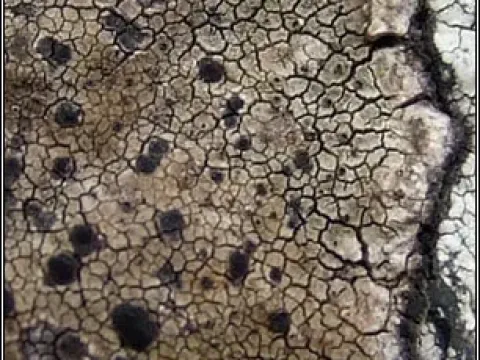
Fuscidea cyathoides is a crustose lichen that forms a thin, granular, or smooth thallus on bark or rock surfaces. It is characterized by a greyish-brown to dark brownish coloration that sits flush against the substrate, making it look almost like a part of the underlying surface.
What the section contains
Fuscidea cyathoides
The most distinct feature of this species is its apothecia, which are small, cup-like fruiting bodies. These are typically black and surrounded by a noticeable thalline rim, which explains its scientific classification and visual identity.
On tree bark, these lichens grow in radial patterns. The edges of the thallus are often sharply defined, and the surface texture can change significantly depending on hydration levels, appearing more vibrant when wet and duller when dry.
Unlike parasitic fungi, this organism does not cause necrosis or tissue death. The structure remains strictly superficial, and there is no evidence of root-like penetrations into the living cambium of the tree.
Observations show that colonies remain stable over long periods, lacking the powdery spores or mycelial threads typically associated with infectious plant diseases like mildew or canker.
It is crucial to clarify that Fuscidea cyathoides is not a plant pathogen. It is a symbiotic organism comprised of a fungal partner and a photosynthetic algal partner, existing as an epiphyte rather than a parasite.
As an epiphyte, it uses the tree trunk as a physical anchor only. It does not extract nutrients or moisture from the host plant's vascular system, meaning the tree remains unaffected by the lichen's presence in terms of nutrient depletion.
The lichen derives all its necessary minerals and moisture from atmospheric dust and precipitation. It does not produce toxic compounds that could inhibit the tree's metabolic processes or suppress its growth.
Confusion often arises in agricultural contexts because any visible growth on bark is frequently misidentified as a disease. However, Fuscidea cyathoides does not possess the mechanisms to breach healthy plant tissues or cause plant decline.
Its presence is actually a bioindicator of high air quality, as this species is extremely sensitive to sulfur dioxide and other industrial pollutants, making it common in pristine or neglected rural environments.
This species thrives in environments with high humidity and stable microclimates. It is frequently found on trees with rough, mature bark, which provides the necessary crevices for spores to germinate and establish long-term colonies.
Shaded or semi-shaded conditions are preferred. In orchards where trees are not pruned regularly and the canopy remains dense, light penetration is reduced, creating an ideal damp habitat for lichen expansion.
Temperature plays a secondary role as Fuscidea cyathoides is well-adapted to temperate climates. It exhibits high cold tolerance, remaining dormant during winter months on the exposed bark surfaces of trees.
Wind and rain act as the primary vectors for spore dispersal. Once a colony is established, it expands slowly, and its ability to cling to the substrate allows it to persist through various seasonal changes.
The absence of frequent fungicide usage in an orchard setting is another factor that encourages the growth of such epiphytic colonies, as these chemicals often unintentionally suppress lichen development.
While not parasitic, a massive colonization of Fuscidea cyathoides can become a nuisance. Dense crusts on the trunk may slightly inhibit the natural gas exchange of the bark through the lenticels, potentially impacting the tree's bark respiration.
These colonies can create a shelter for various pests, including mites, scale insects, and aphids. By hiding in the crevices of the lichen thallus, these pests are protected from predators and may survive treatments more effectively.
Excessive moisture retention by the lichen layer during damp seasons can create a secondary environment for pathogens to colonize the tree, provided that the bark is already weakened or damaged.
For ornamental or high-value fruit trees, aesthetic concerns are paramount. The presence of lichen is often viewed as a sign of neglect, reducing the visual appeal and potentially the commercial value of the orchard.
Ultimately, a heavy presence of lichens serves as a warning that the tree's bark health may need attention, as healthy, fast-growing trees are generally less conducive to dense lichen growth.
Management of this lichen is strictly agronomic. Mechanical removal using soft wire brushes or wooden scrapers during the dormant season is the most effective way to clean the trunk without damaging the underlying bark.
Following manual cleaning, the application of a lime-wash or a low-concentration copper-based solution is recommended to sterilize the bark and create an inhospitable surface for new lichen spores to settle.
Regular pruning of the canopy is essential to improve airflow and increase light penetration. These practices reduce the local humidity levels, making the trunk environment less suitable for lichen colonization.
Maintaining tree vigor through proper fertilization and irrigation helps the bark remain healthy, which naturally discourages the growth of persistent epiphytic crusts compared to weakened, stressed trees.
Copper-based fungicides, often used to prevent common bacterial or fungal infections, also provide excellent incidental control over lichen development, keeping the trunks clean and tidy throughout the growing season.