
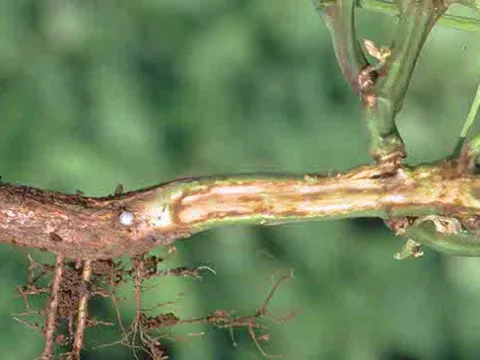
Fusarium wilt
Fusarium inflexum
Fusarium wilt is caused by the soil-borne fungus Fusarium inflexum. It is a persistent pathogen capable of surviving in the soil for extended periods by forming resilient chlamydospores.
What the section contains
Fusarium wilt
The fungus enters plants through the roots, typically by colonizing the root cortex after gaining access via wounds or natural openings. Once inside, it moves rapidly into the plant's vascular system.
The pathogen produces toxic metabolites, including fusaric acid, which directly interfere with the plant's physiological processes, causing severe stress and systemic damage.
Fungal hyphae proliferate within the xylem vessels, physically obstructing the upward flow of water and essential nutrients from the roots to the leaves.
This pathogen is highly adaptable and can be disseminated easily via contaminated water, movement of infested soil, or through the distribution of infected propagation materials.
The first symptom is usually a subtle yellowing of the lower leaves. This chlorosis often occurs on one side of the leaf or branch before spreading throughout the entire plant.
As the disease progresses, plants exhibit distinct wilting. Initially, this wilting occurs during the heat of the day, with recovery at night, but eventually, the plant remains permanently wilted.
If the stem is cut crosswise, a characteristic brown discoloration of the vascular tissue becomes visible. This staining is a clear indicator of the fungal colonization of the vessels.
Under humid conditions, a sparse, whitish or pinkish fungal growth may appear at the base of the plant stem, near the soil line.
Ultimately, the root system decays, becoming brittle and discolored, which disconnects the plant from its water source and leads to death.
Warm soil temperatures, typically ranging from 22 to 28 degrees Celsius, are ideal for the rapid development and spread of Fusarium inflexum.
High soil moisture often favors the initial infection process, though the fungus remains highly active even in dry periods when the host plant is stressed.
Acidic soil environments, specifically those with a pH below 6.0, significantly increase the severity of infection and the rate of fungal spread in the soil.
Continuous cropping of susceptible varieties in the same field leads to a substantial buildup of fungal inoculum, increasing the risk of epidemic outbreaks.
Mechanical damage to roots during cultivation or by soil insects creates entry points that significantly facilitate the success of the pathogen infection.
The primary economic impact of Fusarium wilt is severe yield loss, often resulting in total crop failure in heavily infested patches of a field.
The quality of harvested produce is compromised, as the plant tissue often becomes contaminated with mycotoxins, making it unsafe for human or animal consumption.
Crop stands become uneven and patchy due to the premature death of infected plants, which necessitates costly replanting or crop substitution.
Once the soil is heavily infested with the pathogen, it may remain unsuitable for sensitive crops for many years, forcing farmers to change their entire planting strategy.
Secondary infections are often more severe in weakened plants, leading to a synergistic effect that results in overall farm productivity decline.
The most effective management strategy is the implementation of a rigorous crop rotation program, avoiding the planting of susceptible species for several years.
Using certified, disease-free seed and applying appropriate fungicides as seed treatments can significantly reduce the initial infection rates.
Liming the soil to maintain an optimal pH level is a highly recommended practice to make the environment less hospitable for the pathogen.
Integrated pest management, specifically controlling root-feeding insects, helps to prevent the introduction of the fungus into the plant roots.
- Utilizing genetically resistant cultivars and hybrids.
- Application of systemic fungicides to manage disease pressure.
- Balanced fertilization, with a focus on potassium to strengthen plant tissue.
- Careful irrigation management to prevent waterlogged conditions.