
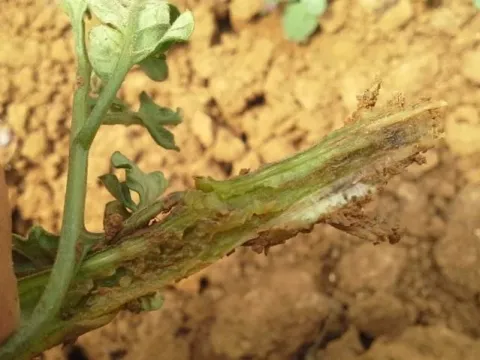
Fusarium wilt
Fusarium falciforme
The causative agent of this disease is the soil-borne fungal pathogen Fusarium falciforme. This fungus is known for its extreme persistence, surviving in soil for many years through the production of durable chlamydospores.
What the section contains
Fusarium wilt
The infection initiates when the fungus invades the root system of a host plant, typically entering through small wounds caused by soil insects, nematodes, or mechanical agricultural practices. Once inside, the mycelium colonizes the vascular tissues.
As the fungus grows within the xylem, it secretes toxic metabolic compounds, specifically fusariotoxins. These toxins are transported throughout the plant, causing wilting, chlorosis, and eventually, the death of the entire plant.
The pathogen is highly adaptable and can survive as a saprophyte on decaying organic matter in the soil. This capability allows it to persist even in the absence of a susceptible host crop for several seasons.
Dissemination occurs via infected seeds, contaminated agricultural equipment, water runoff, and wind. Insects and nematodes act as vectors, further facilitating the movement of spores between different fields.
The initial symptom of Fusarium wilt is the drooping and yellowing of the lower leaves. This yellowing often progresses upward, and in many cases, it manifests on only one side of the plant or leaf.
A definitive diagnostic feature is the browning or darkening of the vascular bundles within the stem. When a stem is sliced open, the internal discoloration indicates that the plant's water-conducting system is blocked.
In humid conditions, a visible fungal growth, appearing as a white, pink, or cream-colored mass, may emerge on the lower stem. This represents the sporulation of the fungus, producing conidia for further spread.
Root systems often show signs of decay, appearing brown or black and feeling soft or brittle to the touch. The plant may become stunted and fail to develop properly compared to healthy neighbors.
In severe infections, the plant wilts completely and dies rapidly. If fruit is present, it may show spotting, disfigurement, or, in some cases, internal rotting, rendering the crop unmarketable.
Fusarium wilt is most prevalent in warm climates, as the pathogen thrives at soil temperatures between +25°C and +28°C. Periods of high heat followed by rainfall are particularly conducive to outbreaks.
Excessive soil moisture, when combined with high temperatures, facilitates the rapid germination of fungal spores. However, drought stress can also make plants more susceptible to the infection.
The pathogen prefers soil that is slightly acidic to neutral. Changes in soil pH can influence the severity of the disease, making management of soil chemical properties a vital part of control.
Low levels of essential nutrients, such as potassium and magnesium, significantly weaken a plant's defenses. When plants lack proper nutrition, their ability to ward off fungal colonization is greatly reduced.
Mechanical damage to roots, often caused by nematodes or improper cultivation, provides easy entry points for the pathogen. Fields with high nematode populations often experience higher rates of Fusarium wilt.
The economic impact of Fusarium wilt is significant, often resulting in devastating yield losses. Entire fields can be lost if environmental conditions are favorable for the fungus.
The disease affects a wide range of crops, including tomatoes, cotton, legumes, and cereals. In agricultural settings, it can lead to massive failure of seedlings, necessitating expensive replanting.
Produce from infected plants is often of poor quality, showing disfigurement and reduced shelf life. Furthermore, the presence of mycotoxins in the harvested product poses a severe risk to food safety.
The longevity of the pathogen in the soil means that the land may become unsuitable for susceptible crops for several years. This forces farmers to change their entire crop rotation strategy.
Costs associated with disease management, including the purchase of fungicides, bio-controls, and resistant seeds, increase the overall cost of production and decrease net profitability.
The primary method of control is the use of resistant or tolerant plant varieties. Breeding programs focus on developing cultivars that can withstand the specific strains of the pathogen present in the region.
Strategic crop rotation is essential, involving non-host crops to starve the fungus. Incorporating specific cover crops can help improve soil health and suppress the population of the pathogen.
Treating seeds with appropriate systemic fungicides before planting is a standard practice to protect emerging seedlings. This provides a crucial window of safety during the most vulnerable stage of plant growth.
Biological control agents, such as Trichoderma species, are increasingly used to compete with the pathogen in the soil. These beneficial organisms help prevent the fungus from establishing a foothold.
- Rigorous sanitation practices to remove and destroy infected plant debris
- Monitoring and controlling nematode populations in the soil
- Optimizing irrigation to avoid saturated soil conditions
- Maintaining balanced soil fertility to boost plant vigor
- Thoroughly disinfecting tools and equipment between fields