
Frenching
Metabolite of
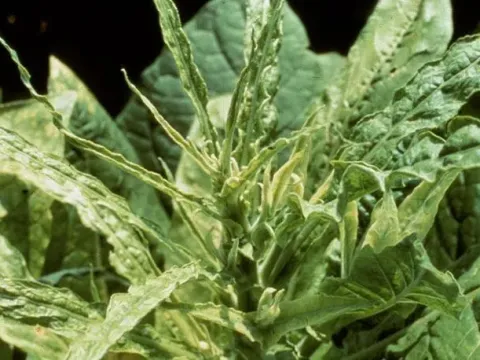
The primary symptom of Frenching in tobacco is the severe deformation of leaves, which become narrow, strap-like, or sword-shaped.
What the section contains
Frenching
The leaf margins often curl downwards, and the leaf tissue feels significantly tougher and thicker compared to healthy tobacco plants.
The apical buds often show excessive growth, forming dense rosettes of tiny and malformed leaves, which gives the plant a distinct witch's broom appearance.
Affected leaves may exhibit chlorosis or mottled coloration, although the veins often remain darker than the surrounding leaf lamina.
As the disorder progresses, the elongation of the main stem is inhibited, leading to a stunted plant with a significantly reduced leaf yield.
Frenching is classified as a non-infectious, physiological disorder rather than a disease caused by fungi, bacteria, or viruses.
It is fundamentally a metabolic disturbance within the plant triggered by unfavorable soil conditions or imbalances in nutrient uptake.
The underlying cause is often linked to the accumulation of toxic concentrations of certain soil elements or a lack of essential micronutrients.
Scientific research indicates that the physiological stress caused by these factors disrupts the hormonal balance required for leaf development.
Because the disorder is physiological in nature, it is not transmissible between plants via vectors or physical contact in the field.
Frenching is most frequently observed in acidic soils where the chemical balance is unfavorable for normal tobacco development.
Poorly drained, waterlogged soils are primary environmental triggers, as they create hypoxic conditions that impair root function.
Fluctuating temperatures and inconsistent soil moisture levels exacerbate the metabolic stress, making plants more susceptible to symptoms.
Improper fertilization practices, such as excessive use of certain minerals or incorrect ratios, can promote the onset of this physiological issue.
High planting density, which limits air circulation and creates a humid microclimate, often correlates with increased incidence of Frenching.
The major economic impact of Frenching is the substantial reduction in total leaf mass and overall crop productivity.
Leaf quality is severely compromised, rendering the tobacco unsuitable for premium manufacturing due to poor physical and smoking characteristics.
Stunted plants are less competitive and more prone to secondary complications, including susceptibility to opportunistic soil-borne pathogens.
Widespread occurrence in a field leads to significant financial losses for growers, as the harvest quality becomes highly variable and low.
The irregular development of leaves complicates the curing process, leading to further losses during post-harvest handling and drying stages.
The most effective strategy for controlling Frenching is the correction of soil acidity through proper liming based on soil tests.
Improving soil structure and drainage is essential to prevent water stagnation and ensure oxygen reaches the root system effectively.
Balanced fertilization programs, tailored to the specific needs of the soil and the tobacco variety, are crucial for long-term prevention.
Implementing a robust crop rotation plan helps maintain soil health and prevents the accumulation of limiting factors in the topsoil.
Regular cultivation and loosening of the soil between rows help to improve aeration and mitigate the physiological stressors on the plants.