
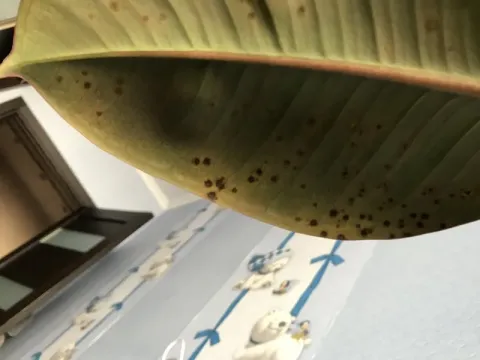
Ficus rust
Neophysopella tropicalis
The causal agent of this disease is the obligate parasitic fungus Neophysopella tropicalis, a member of the Pucciniales order.
What the section contains
Ficus rust
This pathogen specifically targets various species within the Moraceae family, with ficus plants being the primary hosts in indoor environments.
The fungus reproduces through urediniospores, which are easily dispersed by air currents, water splashes, or even by physical contact.
Its life cycle involves the development of pustules, which break through the leaf epidermis to release massive amounts of microscopic spores.
Due to its high reproductive capacity, the pathogen can quickly colonize healthy plants if environmental conditions are conducive to fungal growth.
The earliest signs of infection appear as tiny, raised spots on the underside of the leaves, typically yellow, orange, or reddish-brown.
These spots are fungal pustules; as they mature, they erupt and release dusty spores that can contaminate nearby foliage.
On the upper side of the leaf, matching the spots below, chlorotic patches develop, which eventually expand and turn into necrotic tissue.
Heavy infestations cause leaves to curl, yellow, and prematurely abscise, resulting in significant leaf drop and spindly stems.
The plant's overall vigor declines sharply as the photosynthetic capacity of the foliage is severely hampered by the pathogen.
High humidity and consistent moisture on leaf surfaces are the primary drivers for spore germination and infection establishment.
The fungus thrives within a temperature range of 20 to 25 degrees Celsius, which is typical for indoor and greenhouse cultivation.
Poor ventilation and overcrowded plant arrangements create a stagnant microclimate that fosters rapid fungal spread.
Overhead watering or misting plants often assists the pathogen by facilitating the movement of spores across leaf surfaces.
Plants weakened by low light levels or improper fertilization during the winter months are significantly more susceptible to Neophysopella tropicalis.
The primary harm is the complete loss of aesthetic value, rendering the ficus unattractive for decorative indoor displays.
Chronic rust infection severely stresses the plant, reducing its metabolic efficiency and stunting overall growth patterns.
Weakened plants become increasingly prone to opportunistic secondary pathogens and pests, further complicating the recovery process.
Commercial nurseries often face significant financial losses due to mass contamination and the necessity of discarding infected plant stocks.
Without intervention, severe cases can lead to the total decline and death of the plant due to persistent nutrient exhaustion.
The first step in management is the immediate quarantine of the infected plant to protect the surrounding collection from spore contamination.
All symptomatic leaves should be carefully removed and disposed of immediately; avoid shaking the leaves to prevent spore release.
Chemical control involves the application of systemic fungicides, particularly those containing triazoles or strobilurins, to eradicate existing fungi.
- Improve air circulation around the plants.
- Avoid overhead watering to keep foliage dry.
- Sterilize all pruning tools after contact with infected material.
- Use plant health boosters to enhance systemic resistance.
Maintaining a proactive monitoring schedule and applying preventative fungicide sprays can effectively mitigate the risk of rust outbreaks.