
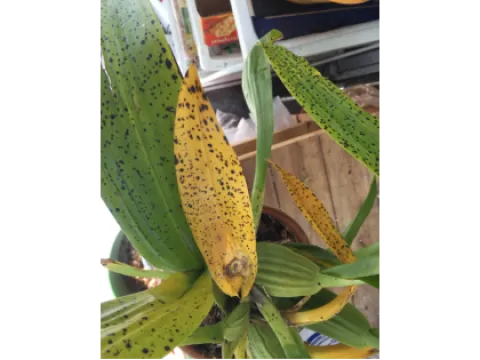
Epicoccum dendrobii spot
Epicoccum dendrobii
The first visible sign of the disease is the appearance of small chlorotic spots on the leaves, which eventually turn brown or dark tan.
What the section contains
Epicoccum dendrobii spot
As the infection progresses, these spots tend to enlarge, forming characteristic rounded or oval shapes often surrounded by a distinct margin.
In the center of the affected areas, fungal sporulation often manifests as a fine powder, which may appear yellowish or reddish in color.
As the disease advances, the infected leaves lose their vitality, turn yellow, and drop prematurely, severely impacting the plant's overall health.
In severe cases, the infection may spread to the pseudobulbs, leading to tissue softening and subsequent necrosis of the stem.
The causative agent of the disease is a microscopic fungus known as Epicoccum dendrobii, classified among the Deuteromycetes (imperfect fungi).
This pathogen is highly specialized and primarily targets members of the Dendrobium genus, although it may occasionally affect other orchid species.
The fungus spreads mainly through conidia, which are disseminated by air currents, water splashes during irrigation, or contaminated gardening tools.
Fungal mycelium penetrates plant tissues through natural openings like stomata or through microscopic wounds on the leaf epidermis, initiating cell decay.
The biological lifecycle of the fungus is strictly dependent on environmental humidity, which facilitates rapid colonization of weakened plant tissues.
High relative humidity, consistently above 70–80%, is the primary factor that promotes spore germination and the onset of the infection.
Temperature ranges between 20–25°C provide the optimal conditions for the aggressive growth of Epicoccum dendrobii mycelium on orchid tissues.
Poor ventilation within greenhouses or indoor growing spaces leads to stagnant, humid air, which significantly increases the risk of a widespread outbreak.
Insufficient lighting and imbalanced nutrition, particularly excess nitrogen fertilization, weaken the plant's natural immune response, making it more susceptible.
Water droplets left on the leaf surface after evening misting create an ideal microclimate for the pathogen to successfully infect the plant.
The primary damage caused by this disease is the disruption of photosynthesis, which results in stunted growth and a general decline in plant vigor.
The infection significantly reduces the aesthetic and commercial value of orchids, rendering them unsuitable for display or market due to unsightly leaf spots.
Without proper management, the infection can lead to total defoliation and the death of the growing point, effectively destroying the orchid specimen.
Infected plants serve as a persistent reservoir of inoculum, posing a constant threat to healthy specimens kept in the same collection.
Plants compromised by this fungus often become highly vulnerable to secondary opportunistic infections, such as aggressive bacterial rots.
The first and most critical step in disease management is the immediate quarantine of the infected plant to prevent the spread of spores.
Affected leaf parts should be carefully pruned using sterilized tools, ensuring a 1–2 cm margin of healthy tissue is removed before sealing the cut.
Treatment with broad-spectrum systemic fungicides containing active ingredients like thiophanate-methyl or copper-based compounds is recommended.
It is essential to optimize growing conditions: ensure proper air circulation, avoid overhead watering, and strictly manage the humidity levels.
- Regular sterilization of pruning tools.
- Maintaining high standards of substrate hygiene.
- Providing adequate spacing between pots.
- Boosting plant resistance with growth stimulants.