
Epicoccum blight
Epicoccum henningsii
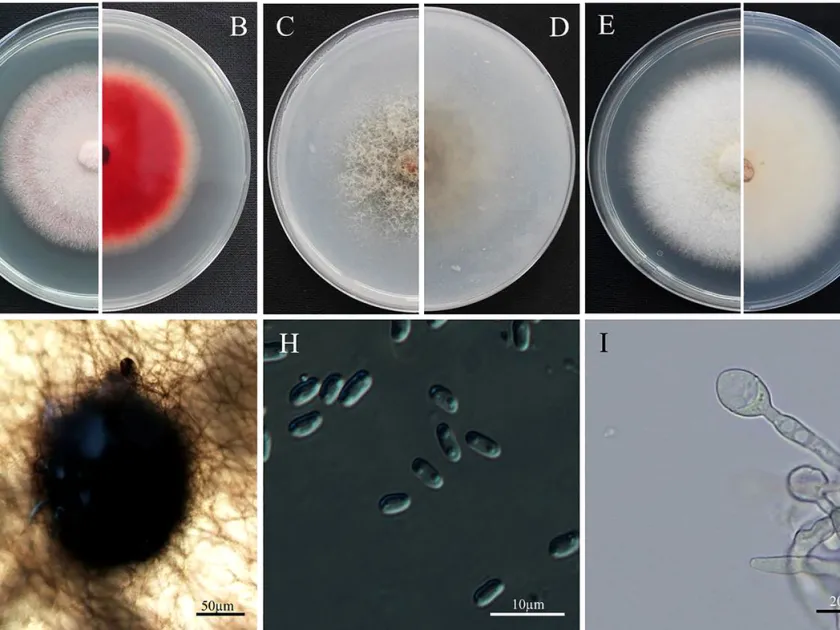
Description
Symptoms
Symptoms of Epicoccum blight typically manifest as leaf lesions. These spots start as small, irregular patches that gradually darken, often developing a distinct border as the surrounding tissue begins to chlorose or necrotize.
A signature sign of infection is the development of a velvet-like growth on the surface of the lesions. This growth is the visual manifestation of the fungal sporodochia and masses of dark conidia, which can range in color from olive-green to black.
As the disease progresses, necrotic areas may coalesce, leading to extensive leaf dieback. In severe cases, the blight affects stalks and petioles, which can cause wilting and premature senescence of entire leaves or secondary branches of the plant.
In fruit-bearing crops, the fungus causes sunken, localized spots that are prone to secondary rot. These lesions can make the affected fruits highly unmarketable, as they quickly lose integrity and become soft or mushy under high-humidity conditions.
- Dark, irregular leaf spots with distinct margins.
- Velvety, dark olive to black spore mass on surfaces.
- Premature leaf yellowing, browning, and necrosis.
- Sunken, rotted lesions on fruit or pods.
Pathogen
The disease is caused by the imperfect fungus Epicoccum henningsii, a member of the class Hyphomycetes. While primarily known as a common saprophyte, it can behave as a opportunistic pathogen when host plants are stressed or damaged.
The fungus produces sporodochia, which are dense cushions that serve as the site for conidia formation. These conidia are multicellular and dark-pigmented, providing them with significant protection against UV radiation and environmental stress, which enhances their survival rates.
Infection cycles begin with the presence of fungal mycelium and conidia on crop residues left in the field. These residues serve as the primary reservoir for the pathogen, from which spores are disseminated by wind, rain splashes, and insect activity to healthy plant foliage.
The pathogen utilizes a complex array of enzymes to penetrate host tissues. By breaking down plant cell wall components, Epicoccum henningsii gains access to nutrients, allowing the mycelium to spread through the intercellular spaces of the plant.
The biological success of this fungus lies in its ability to colonize tissues rapidly. Often acting as a secondary invader, it exploits the weak points in plant defense mechanisms, often associated with prior mechanical damage or infection by other phytopathogens.
Conditions for development
The development of Epicoccum blight is heavily dependent on moisture. High relative humidity (typically above 85%) and frequent rainfall are the most critical factors that trigger spore germination and infection processes in the field.
Optimal temperatures for the growth of this pathogen range between +18°C and +24°C. Under these moderate conditions, the life cycle of the fungus is accelerated, leading to a higher rate of sporulation and increased severity of the blight.
Dense canopy structures provide a shaded and humid microclimate that favors the fungus. In such environments, the air circulation is restricted, keeping the foliage damp for longer periods and facilitating the spread of conidia from lower to upper leaves.
Host susceptibility plays a major role in the outbreak of the disease. Plants subjected to nutrient deficiencies, particularly low potassium and phosphorus, show weakened cell structures, making them significantly more prone to fungal invasion.
Mechanical damage is a key facilitator of infection. Wounds caused by hail, insects, or routine agricultural operations provide direct entry points for the pathogen, allowing it to bypass the plant's cuticle and establish a site for rapid colonization.
Why it matters
Epicoccum blight inflicts significant damage by reducing the plant's photosynthetic capacity. As the fungus destroys leaf tissue, the plant loses its ability to produce carbohydrates, which directly stunts growth and reduces final crop yields.
Marketable quality is severely compromised when fruits are infected. Beyond the physical damage, the presence of the pathogen often triggers post-harvest decay, rendering the harvest unsuitable for long-term storage or shipment.
For cereal crops, the disease can affect the grain filling process. The reduction in leaf surface area leads to shriveled grains, lower test weights, and poor overall quality, which negatively impacts the producer's profitability.
The disease forces producers to invest in additional fungicidal interventions. This increases the total cost of production per hectare, reducing the economic efficiency of the farming enterprise and narrowing the profit margins.
Finally, the accumulation of spores on field debris creates a long-term inoculum problem. Fields with a history of Epicoccum blight require more intensive management in subsequent seasons to prevent recurrent outbreaks and ensure healthy plant development.
Protection
Integrated disease management for Epicoccum blight starts with strict field sanitation. The deep incorporation of crop residues into the soil is essential to ensure that infected material is decomposed and the fungal inoculum is buried below the surface.
A well-planned crop rotation scheme is vital. By rotating with non-host species, growers can effectively break the fungal life cycle and starve the pathogen of its food source, thus significantly reducing the disease pressure in future years.
The use of balanced fertilizer programs, focusing on potassium, helps build stronger plant cell walls, which acts as a physical barrier against infection. Ensuring adequate nutrition is a cornerstone of maintaining high levels of plant immunity.
Chemical control is an important aspect of managing severe infections. Applying effective fungicides at the correct growth stages, especially during prolonged wet weather, can protect the plant from infection and stop the disease from spreading.
Maintaining optimal plant spacing is a practical measure to improve air circulation within the canopy. By reducing humidity levels near the ground, farmers can create a less hospitable environment for fungal growth, thereby suppressing the blight development.
Discussion
No discussions yet — be the first.