
Doassansiopsidaceae
Doassansiopsidaceae
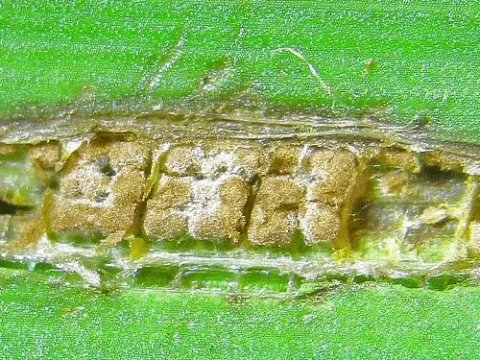
A primary symptom of Doassansiopsidaceae infection is the development of localized galls or pustules on the leaves and stems of aquatic plants. Affected tissues often turn yellow or brown as the fungus disrupts chlorophyll production.
What the section contains
Doassansiopsidaceae
In areas where fungal spores accumulate, characteristic pads or protrusions form, eventually rupturing the plant epidermis. These structures are easily visible to the naked eye during summer monitoring of water bodies.
As the pathogen progresses, affected plant parts begin to die prematurely, which impairs normal photosynthesis. Leaves may curl, lose turgor, and become notably fragile or brittle.
Infections typically spread in clusters, affecting neighboring plants of the same species within a pond. The appearance of spores within pustules can vary depending on the specific fungal species present.
The mycelium is localized mainly within the parenchymal tissues, causing hypertrophy that results in characteristic swelling. These pathological changes are distinct from insect-related damage and are highly specific to the fungal attack.
Doassansiopsidaceae belong to the order Urocystales (smut fungi). These are highly specialized parasites that predominantly affect aquatic and riparian plants, such as pondweeds (Potamogetonaceae).
The pathogen is transmitted via spores that survive in benthic sediments or on plant debris during the dormant winter season. The fungal life cycle is intrinsically linked to the aquatic environment.
The fungus penetrates plant tissues through stomata or minor mechanical injuries. Once inside, the mycelium grows within intercellular spaces, forming spore masses that facilitate the subsequent infection of healthy plants.
The biology of these fungi involves specialized structures designed for germination under high-humidity conditions. Spores are efficiently dispersed through water currents within the habitat.
These organisms are obligate parasites, meaning they cannot develop on substrates other than the living tissues of their host plants. This high degree of specialization makes managing their population challenging.
Infection development is most active in bodies of water with stagnant or slow-moving water. Stable temperatures and high humidity provide the ideal environment for the rapid spread of the disease.
Stagnation in ponds or canals creates perfect conditions for spore accumulation. In such environments, the mycelium colonizes young aquatic plant shoots more effectively.
An optimal temperature range for spore germination is between 18 and 25 degrees Celsius. While extreme temperature fluctuations may slow the process, they rarely eradicate the pathogen completely.
The presence of large amounts of organic debris in the water creates a favorable background for spore survival throughout the year. Water pollution can also weaken plants, making them more susceptible to fungal attack.
Dense clusters of homogenous aquatic vegetation facilitate the rapid transition of spores between plants via water flow, often leading to rapid localized outbreaks.
The primary harm is the degradation of aquatic vegetation, which negatively impacts the entire pond ecosystem. Infected plants lose their ability to oxygenate the water and provide essential habitat.
Massive infection leads to premature decay of plant biomass, causing an excessive accumulation of organic matter on the pond bed. This triggers rotting processes and accelerates the siltation of the pond.
Growth disruption hinders the development of plant populations that serve as a crucial food source for fish and other aquatic wildlife. This can lead to decreased productivity in aquaculture facilities.
The aesthetic value of ornamental ponds is significantly reduced when aquatic plants are infected, rendering them unsuitable for landscaping or decoration.
Chronic infection weakens plants, making them vulnerable to secondary pathogens or pests, ultimately leading to their gradual disappearance from the water body.
To control the spread of the disease, it is essential to promptly remove infected plant specimens from the pond. This reduces the inoculum pressure and prevents further spore dispersal.
It is recommended to avoid overcrowding aquatic plants to ensure good water circulation between clusters. Higher water movement is generally unfavorable for the development of smut fungi.
Cleaning the pond bed of old vegetation debris in the fall helps eliminate the primary source of infection for the following season, as spores should not be allowed to remain in the silt.
In cases of severe infestation in ornamental ponds, the use of permitted fungicides may be considered, though caution must be exercised to avoid harming aquatic fauna. Chemical applications must be strictly dosed.
Prevention includes the careful inspection of new plant stock before introduction to the water. This is the most effective method for preventing the introduction of fungal spores into pristine water bodies.