
Doassansiales
Doassansiales
Doassansiales is an order of fungi belonging to the class Ustilaginomycetes, commonly known as smut fungi, which are obligate plant parasites.
What the section contains
Doassansiales
These organisms develop exclusively within the tissues of their host plants, typically affecting specific organs such as leaves or stems.
The life cycle involves the production of teliospores, which are often grouped into complex structures known as spore balls or sori, providing durability against environmental stress.
Unlike many other smut fungi, members of this order show specialized adaptations for living in close association with aquatic or semi-aquatic plant species.
The taxonomic classification of this group has been refined through molecular phylogenetics, highlighting their unique position within the smut fungi clade.
Typical symptoms include the formation of localized spots, lesions, or swellings on the leaves, often accompanied by chlorosis of the surrounding tissue.
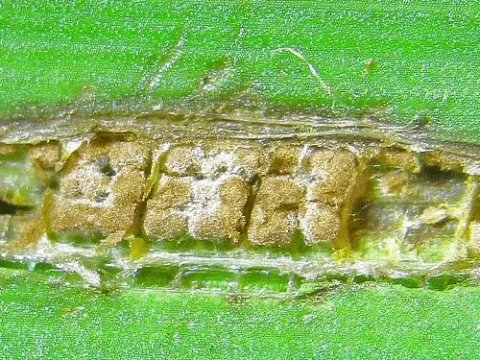
As the infection progresses, the host's epidermis ruptures to release a powdery mass of teliospores, which can be dark brown to black in appearance.
Affected plant organs may show visible signs of distortion or stunted growth, resulting from the fungal interference with normal metabolic pathways.
The infection is generally localized, appearing as patches on the leaf surface rather than systemic colonization of the entire plant structure.
Visual identification is often confirmed by the presence of these characteristic spore-bearing sori visible within the leaf mesophyll.
High humidity and the presence of surface water are critical factors for the germination of teliospores and the successful infection of host tissues.
The development of the disease is favored by moderate temperature ranges and conditions that maintain moisture on plant surfaces for extended periods.
Dense crop stands create a microclimate that promotes humidity, making it easier for spores to spread between plants via rain splashes or wind.
Wet seasons or areas with poor drainage are highly conducive to the establishment and spread of Doassansiales infections in a given area.
The availability of specific host plants in aquatic or moist environments dictates the geographic distribution and seasonal occurrence of these fungi.
The primary economic harm is caused by the reduction of functional leaf area, which decreases the plant's capacity for photosynthesis and biomass accumulation.
Infected plants suffer from reduced vigor and development, leading to lower yields and inferior quality of harvested produce.
The localized tissue destruction and physiological stress predispose the host to opportunistic secondary infections by bacteria or other fungal pathogens.
For ornamental plants, the presence of lesions significantly reduces aesthetic value, making the product unsellable in commercial markets.
Severe infestations require costly interventions and can lead to long-term issues if the spore bank in the soil is not properly managed.
Cultural practices such as crop rotation and the thorough removal of crop residues are essential for preventing the carry-over of inoculum.
Using certified, pathogen-free seeds or planting materials is a foundational step in minimizing the risk of introducing the fungus to new fields.
Managing the site's drainage and optimizing plant spacing can significantly reduce the moisture levels required for the fungus to thrive.
Preventive application of systemic fungicides may be necessary in environments where the disease pressure is historically high.
- Regular monitoring of fields for early signs of leaf spots.
- Sanitation protocols to prevent the movement of contaminated debris.
- Balanced nutrient management to support strong plant immunity.