
Diversispora spurca
Diversispora spurca
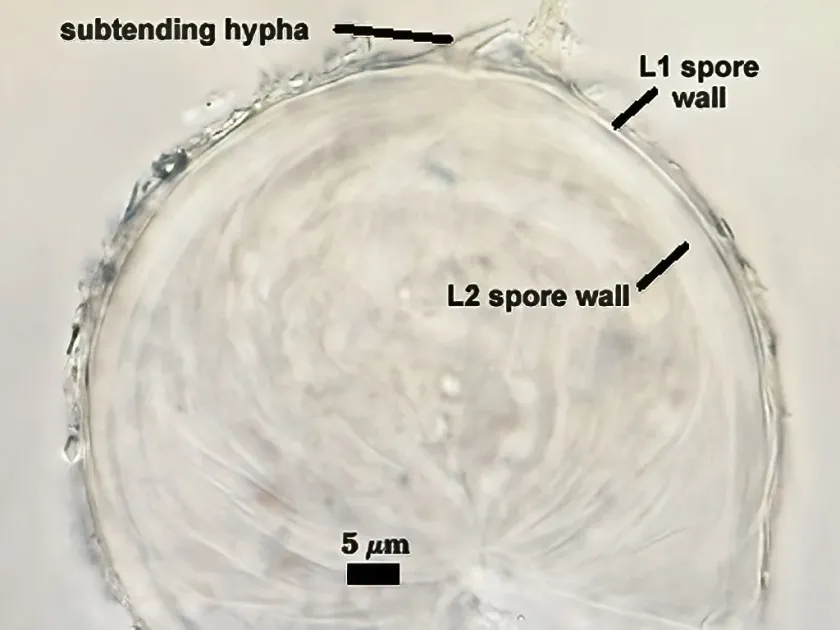
Description
Pathogen
Diversispora spurca is not a plant disease or a pathogen. It is a well-known species of arbuscular mycorrhizal fungi (AMF) that plays a critical role in agricultural productivity by establishing mutually beneficial symbioses with plant roots.
The fungus belongs to the phylum Glomeromycota. It is characterized by the formation of arbuscules within root cells, which serve as the primary interface for nutrient and carbon exchange between the fungus and the host plant.
As an obligate symbiont, Diversispora spurca requires a living plant host to complete its life cycle. It receives carbohydrates from the plant in exchange for water and soil minerals, particularly phosphorus.
Unlike parasitic fungi that invade and destroy plant tissue, this organism colonizes roots to enhance the plant's physiological capacity to withstand environmental stress and improve overall growth rates.
The extensive hyphal network created by this fungus effectively acts as an extension of the plant's root system, allowing for the absorption of nutrients from soil pores that are inaccessible to root hairs alone.
Conditions for development
The establishment of Diversispora spurca is highly dependent on soil environmental factors. A well-aerated soil structure with moderate organic matter content is ideal for the rapid development of its hyphal networks.
Nutrient availability, specifically the level of phosphorus in the soil, significantly dictates the level of colonization. Excessive applications of synthetic fertilizers can decrease the plant's reliance on mycorrhiza, thereby inhibiting fungal colonization.
Optimal temperature ranges for the growth and activity of these fungi are typically consistent with the growing season of most crops, generally between 18°C and 28°C.
Soil pH plays a significant role in the diversity and activity of the fungal community. Diversispora spurca is known to thrive in various soil types, contributing to its widespread presence in diverse agro-ecosystems.
The history of pesticide use on a field, particularly intensive fungicide application, can drastically reduce the viability of mycorrhizal spores, highlighting the need for cautious chemical management.
Why it matters
There is no harm associated with Diversispora spurca. It is categorized as a beneficial soil microorganism that contributes to sustainable agriculture rather than causing damage to agricultural crops.
Confusion often arises when farmers notice structural changes in roots during microscopic observation; however, these changes are functional symbioses (arbuscules and vesicles) rather than lesions or decay typical of diseases.
The absence of such fungi in depleted agricultural soils can be considered a limitation. Without mycorrhizal associations, crops may require higher inputs of fertilizer and irrigation to achieve the same growth results.
Research consistently indicates that the presence of Diversispora spurca is an indicator of soil health, helping to suppress soil-borne pathogens through competition and the stimulation of the plant's natural defense mechanisms.
Therefore, any impact on the plant is strictly positive, fostering better root system architecture and contributing to higher biomass production and crop resilience under field conditions.
Protection
Control measures are directed toward promoting the population of this fungus in the soil, which is essential for healthy and resilient cropping systems in modern agronomy.
Farmers are encouraged to use inoculants containing mycorrhizal spores, especially when planting in soils that have been subjected to intensive chemical cultivation or significant disturbance.
Implementing conservation tillage practices, such as no-till farming, is highly recommended as it protects the fragile hyphal network of the fungi from physical disruption, allowing for continuous and rapid colonization of new roots.
Careful selection and application of pesticides are necessary, favoring products that are compatible with beneficial soil microbiota to avoid killing these critical natural resources.
Maintaining diverse crop rotations that are receptive to arbuscular mycorrhizal colonization ensures that the soil retains a robust population of Diversispora spurca over long-term agricultural production cycles.
Discussion
No discussions yet — be the first.